

The Toyota RAV4 plug-in hybrid launched recently in Cape Town. Recharged as in attendance, where we sampled a few models on the line-up. You can catch the launch post here.
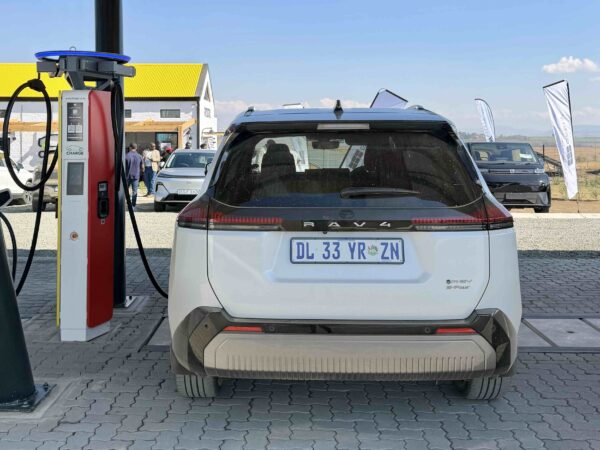
I also had an opportunity to spend time in the RAV4 PHEV ahead of the launch, the week the two Charge N3 solar off-grid sites launched. I was meant to get a Lexus EV on test so this was sent as it was in for repairs.
I started my Living Electric series due to the rise in fuel costs. It will cover the practical, real-world usage of living with an EV/PHEV to help you understand the costs involved, charging situation, tech difficulties/ease, accessing the driving data, etc.
Toyota RAV4 PHEV at a glance
- 2.5L e-Four CVT with 136kW of power, 227Nm of torque
- 25.4 kWh battery with 142km EV range
- Total combined output of 225kW
- 11kW on-board charger
- Home charging cables included; wallbox optional
- 0.7L/100km claimed consumption
1. Who should buy this car?
As with most SUV style PHEVs, it is aimed at families who want to also take roadtrips, business owners who make longer commutes or drive across provinces, and I’d say, couples who love outdoor adventures and need space for biking or other equipment. It is also a trusted brand with a proven track record, so may appeal to an older crowd who values this vs. the younger one who prefers the new Chinese entrants. Interestingly, Toyota says this model was introduced to compete with the Chinese NEV offerings hitting the market.
2. Range Reality
Considering that it’s a PHEV, you don’t really have to worry too much about the battery range as the car has plenty from its petrol engine. What I will say, despite Toyota saying the battery promises 142km of EV range, when I drove it, the reality was closer to 106km. I know the system reserves some for certain functions but you are not getting 142km of pure EV range.
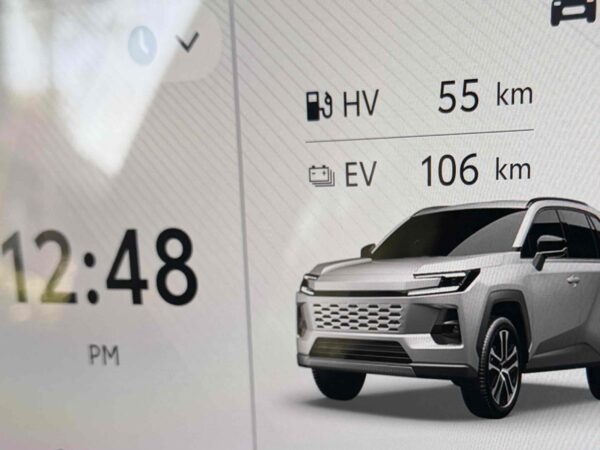
I initially chose to use it in EV mode and regretted it because when it runs out, you hear the droning sound of the e-CVT, its main power source. I toggled between them to find what works for me and draining the battery isn’t very practical either because you would have to charge it consistently – more often than if you had an EV.
This is why I think this vehicle works best in hybrid mode, and not solely in EV, unless you can charge it overnight, daily.
3. Home vs. Public Charging
I charged 22kWh of the battery on my home charger. I have a 7.4kW home wallbox charger, which took me 3 hours and 20 minutes to charge it from mostly empty, it was around 5% I think.
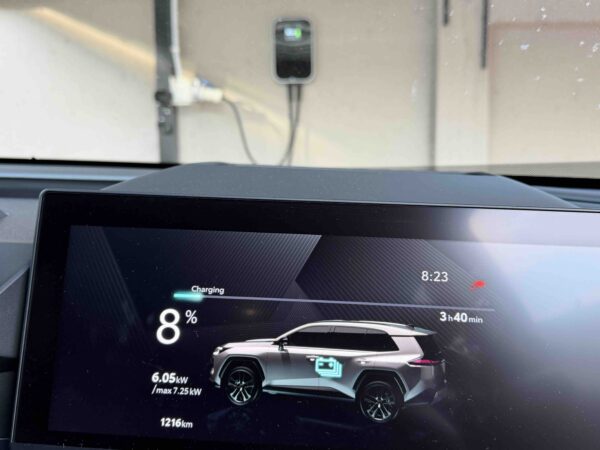
Here’s an indication of possible costings, based on my existing Eskom rate. Yours may be different so the home rate on that will differ, but for all other points mentioned, it should be the same.
A 22kWh charge costings:
| Home Charger | R2.69 per kWh | R59.18 |
| GridCars/Rubicon AC Charger | R5.88 per kWh | R129.36 |
| GridCars/Rubicon DC Charger | R7.35 per kWh | R161.70 |
| Rubicon with a GridCars Charge Card | R8.24 per kWh | R181.28 |
| Zero Carbon Charge | R9.15 per kWh | R201.30 |
Normally, PHEVs cap the speed of the charging and in the past, they used to only support AC charging. Some of the newer models support DC charging, and RAV4 PHEV supports a maximum of 50kW DC charging.
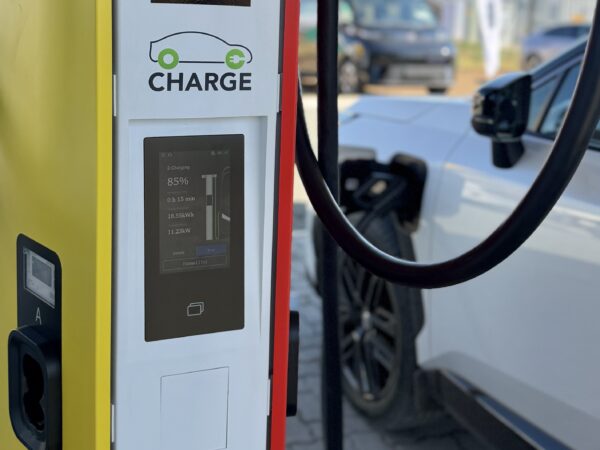
When I took it to the Charge N3 launch sites, I achieved a maximum of 40kW speeds at the peak of my charging in the beginning, as the system automatically prioritises what’s needed, along with the car’s output.
Toyota says it will supply user with a Charge Card that can be used on public EV chargers, the same way BYD, BMW, Volvo, etc. does.
In terms of additional costs, I checked the Naked app as I’m a customer on there, and it would cost R1247 per month to insure, above these charging costs.
4. Living with the tech
The RAV4 PHEV has a large 12.9-inch infotainment screen, wireless phone charging, USB-C ports in the front, and a JBL sound system. It feels luxurious and kitted what everything you need for comfort. There’s also a 12.3-inch digital driver display with useful information that you can toggle between.
The Smartphone Test: I found the connection to be finicky and frustrating. It needs a cable connection for Android Auto or Apple CarPlay to work. And despite the front of the vehicle having a USB-C ports in the front, they don’t work to pair your phone to the car, it’s for charging; so I used the one inside the storage box in the middle. I love that when you are connected, the driver instrument panel can also view your Google Maps directions, which isn’t a common feature in most cars. Excellent touch, so you can then use the infotainment display for accessing other info.
Physical vs. Digital: Most settings can be accessed on the massive touch screen, however there are physical buttons for volume dual climate controls, demisters, etc. The important bits that you want to access directly while driving are all there. It feels ergonomically designed with its multi-functional steering wheel.
The rear-view mirror can also switch to be a digital using mirrors, just like what we’ve seen on some Lexus models.
5. Accessing driving data
Because it’s a PHEV, and unlike an EV, you don’t really get detailed stats about your driving data. There is no historical data that you can go back to. However, you can just view your consumption figures and averages in real-time. There are graphs and you can see battery levels.
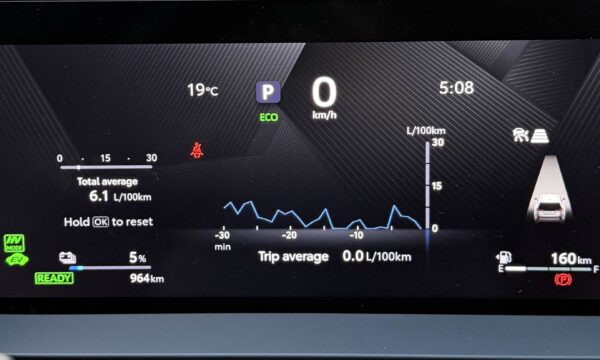
When I drove on Van Reenen’s pass on the N3, I specifically saved my EV range for that and switched to HEV mode as needed. My consumption figures were sitting on 3.1L/100km and for the whole average of my two days attending the Charge N3 launches was 6.0L/100km. It is slightly higher than claimed but I still think it’s pretty decent for a car of this size.
6. City driving vs. open road
The car is great in urban areas, but once you hit the open road, it is best using hybrid mode. I don’t think full EV mode works well in this car only because there’s a good chance you have to drive on the return leg and you may hear the droning sound of the e-CVT.
On the long stretches it was really comfortable, from the spacious cabin, blocking out outside noise to climate controls, plus the RAV4 introduces a panoramic roof. The cherry on top feature was both heated and ventilated seats, and the heated steering wheel. This was very noticeable as I’ve been driving the vehicle in colder climates.
7. Long-term view
Load-shedding readiness: The RAV4 does not support vehicle-to-load features and only powers the vehicle. Surprisingly, the Geely E5 EM-i PHEV supports it, which I previously reviewed on Living Electric.
Maintenance: The RAV4 has a 6 year/90 000km service plan (15 000km intervals); 3 year/100 000km warranty and 8 year/160 000km EV battery warranty.
8. Recharged verdict
| PROS | CONS |
| Extremely fuel efficient | Connectivity is finicky |
| Spacious, comfortable cabin | Pricier than alternatives |
| Panoramic roof | No free wallbox charger |
| Easy to switch between EV/HEV modes |


Recharged is an independent site that focuses on technology, electric vehicles, and the digital life by Nafisa Akabor. Drawing from her 19-year tech journalism career, expect news, reviews, how-tos, comparisons, and practical uses of tech that are easy to digest. Nafisa is a traveller at heart, having been to 46 countries and counting. Find her edutainment videos covering tech, EVs and travel on TikTok.



