
Toyota South Africa previewed the next-gen RAV4 at its inaugural Toyota Matsuri event recently at the Kyalami race track and this week launched the vehicle in Cape Town.
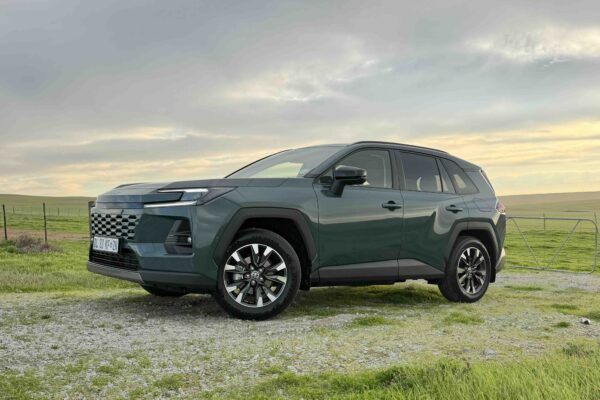
The next-generation RAV4 has been completely redesigned, offers various electrified powertrains, new safety technologies and a more connected digital experience. More than 15 million RAV4 units have been sold globally since its debut in 1994.
The RAV4’s new hybrid variants essentially is Toyota’s answer to the influx of Chinese HEVs and PHEVs hitting the market, for those seeking offerings from a legacy, trusted brand.
Toyota also touched on how each of its models serves a specific purpose:
- Land Cruiser FJ: The rugged, adventure focused off-road model
- bZ4X: The advanced, pure battery electric model
- RAV4: The stylish, urban versatility offering with hybrid and PHEV options
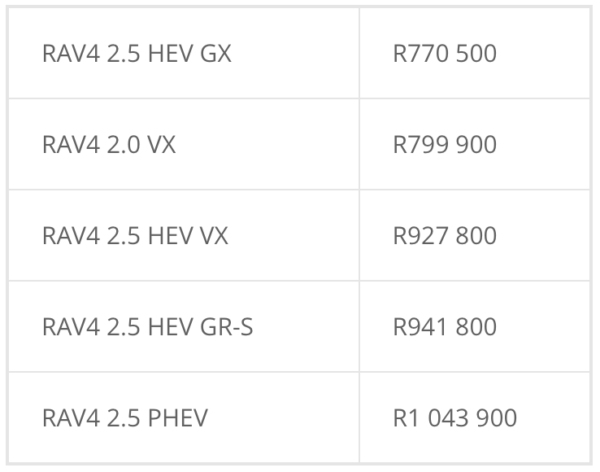
New RAV4 line-up and pricing
RAV4: Who its aimed at
It is aimed at families, active outdoor enthusiasts and commuters, which also handles long distances really well. Toyota has categorised them as follows: the core buyers of the GX and VX variants are around 34-49 years old who prioritise quality, durability, and safety for everyday family and commuting needs. The trendsetters will opt for the GR-Sport option, between the ages of 30-45, who value image, sporty status and distinctive styling, while the tech enthusiast, made up of older males, who prioritise high-end luxury, maximum performance and eco-conscious tech.
Diverse line-up
Tying in with Toyota’s multi-pathway approach, customers can now choose between petrol, hybrid, performance-inspired hybrid and plug-in hybrid derivatives.
The base model has a 2L engine with an output of 126kW and 203Nm of torque, suited for those who want a conventional internal-combustion performance. The next option is a 2.5L HEV that delivers 137kW and 221 Nm of torque, and total system output of 176kW from its new hybrid powertrain with a compact lithium-ion battery.
And the all-new PHEV delivers 242kW of power from its combined system output including the 25.4kWh battery that offers a pure electric mode. Toyota says this model is its most advanced electrified SUV tech offering available in SA.
The PHEV’s 25.4kWh battery is 391 volts and has 104 battery cells, with a promise to deliver up to 142km of range, based on its testing conditions. However, I got over 100km from the test unit provided to me.
The RAV4 PHEV can be charged at home, and in public using both AC and DC charging points. It has an 11kW onboard charger, while each unit comes with home charging cables. A home wallbox charger is available as an option. Toyota SA will provide a charging card to customers, which works at over 600 charging stations nationwide.
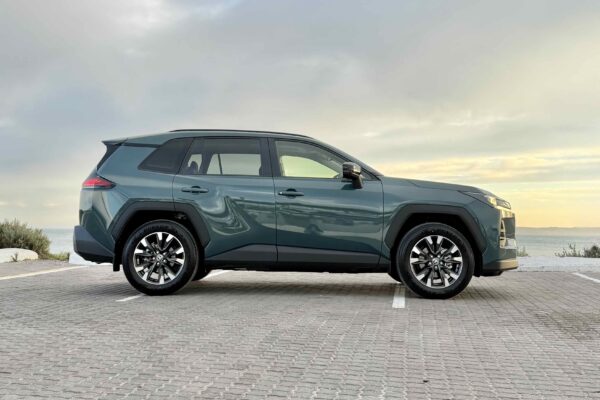
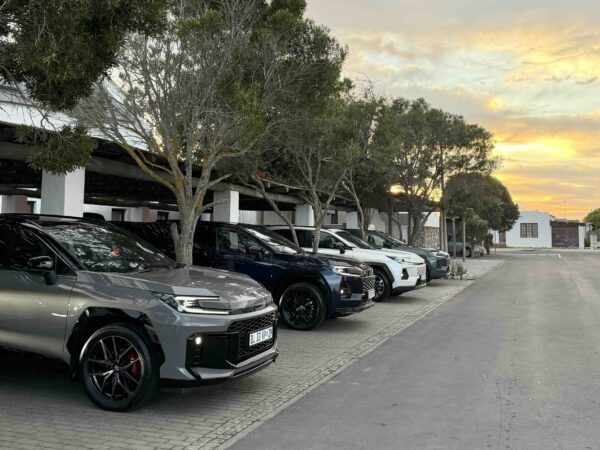
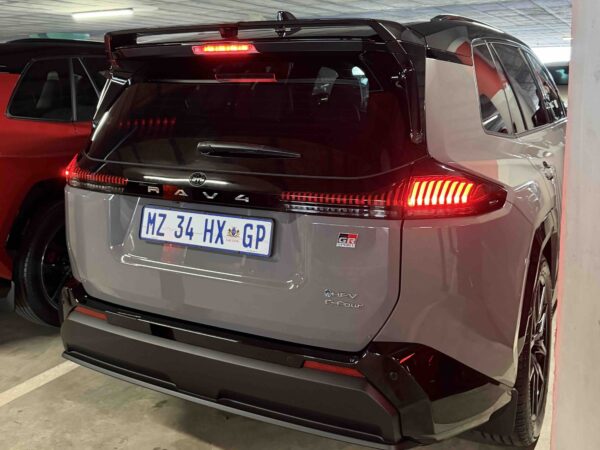
Another first for the line-up includes a GR-Sport edition with a recalibrated suspension and steering systems. It has a unique mesh grille, distinctive aerodynamic treatments, wider gloss-black wheel arch mouldings, GR badging and 20-inch alloy wheels with red brake callipers. And what the eye cannot see: dedicated shock absorbers, revised spring rates, reinforced suspension components and a 15mm reduction in ride height contribute to sharper responses and improved driver engagement.
On the inside, it features GR Sport seats, alloy pedals, red contrast stitching and exclusive trim details to show off this performance-inspired spec.
Launch drive in the Western Cape
For the launch event, we drove in pairs in three of the hybrid guises: the 2.5 HEV GX and GR-Sport versions, and the range-topping PHEV, which Recharged had on test for a bit so look out for a Living Electric post on that.
I quite like the styling of the exterior, and black badges. It has quite an aggressive presence I think.
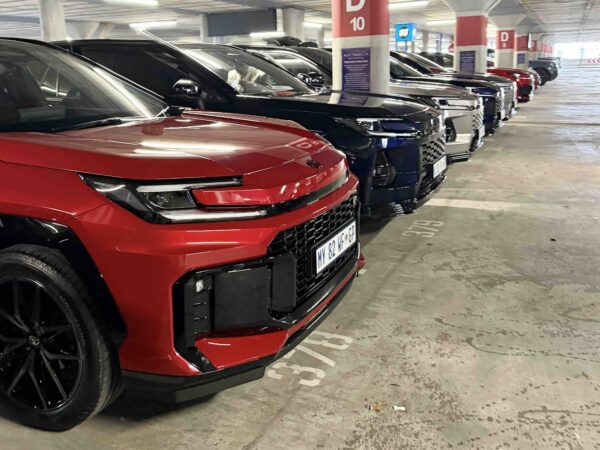
The route started at Cape Town Airport, with a lunch stop in Tulbagh, then onto Paternoster along the West Coast for an overnight, then back to Cape Town Airport the next morning. We took the scenic routes so it was around 500km between the two days, split between two drivers.
Having spent some time in the PHEV, I enjoyed the HEV variants, purely because I didn’t have to worry about “running the battery down”. It can be a bit stressful, though the HEV manages to balance it all out.
The HEVs have a claimed consumption of 4.6L/100km and goes from 0-100km/h in 7.3 seconds, while the PHEV promises 0.7L/100km and goes from 0-100km/h in 5.7 seconds. The power differences were noticeable when taking over trucks on the routes, though the consumption levels in our vehicles remained between 5 and 7L/100km, which I think is great.
There are so many comforts in the vehicle that make it great for long distances – like the heated and ventilated seats, the heated steering wheel, the amount of leg room, and down to the ergonomic layout of the cabin.
Toyota and Lexus tend to still support cabled connections for smartphones for it to work best, example Android Auto is not wireless, so the vehicles did come with a smart box attached to them to connect to the systems. While I did have some connectivity issues on Day 1, I used a USB-C cable on day 2 to avoid the additional pairing between the vehicles.
The cars feature a large 12.3-inch digital instrument cluster that’s colour screen and supports a Google Maps view, which pulls from Android Auto or Apple CarPlay, which I found super handy for the driving we covered. It’s not a common feature in modern vehicles.
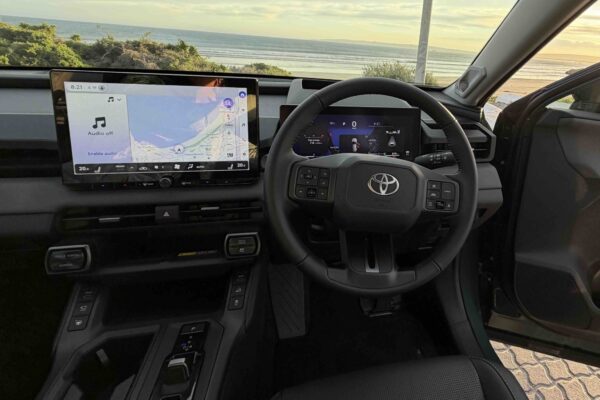
All vehicles have a standard 12.9-inch touchscreen main infotainment display, with the exception of the entry-level GX, along with a premium JBL sound system, USB-C ports, wireless charging and Toyota’s new electronic “Shift-by-Wire” gear selector.
Other nice comforts include memory adjustable seats; a panoramic roof – a first for the line; and a digital rear-view technology so you can switch between a camera or a traditional mirror.
How do you tell the models apart? The GX and VX will come in five exterior colours: Platinum White Pearl, Attitude Black, Moon Grey, Smokey Blue and Midnight Green. The GR-S and PHEV variants will come exclusively in bi-tone finishes with a black roof; colours include: Platinum White Pearl, Smokey Blue, Passion Red, Moonlight Ocean, Avant-Garde Bronze and Moon Grey.
Warranty and Connected Services
The Toyota RAV4 comes with the following:
- 6 year/90 000km service plan (15 000km intervals)
- 3 year/100 000km warranty
- 8 year/160 000km EV battery warranty
Customers can register for their MyToyota profiles to access vehicle information and services. The RAV4’s are equipped with connectivity hardware for in-car WiFi, including a complementary 25GB of data allocation + a suite of Toyota Connect services.


Recharged is an independent site that focuses on technology, electric vehicles, and the digital life by Nafisa Akabor. Drawing from her 19-year tech journalism career, expect news, reviews, how-tos, comparisons, and practical uses of tech that are easy to digest. Nafisa is a traveller at heart, having been to 46 countries and counting. Find her edutainment videos covering tech, EVs and travel on TikTok.