
Toyota has finally launched its heavily delayed first electric vehicle in South Africa, the bZ4X, at an event in Mpumalanga last week. Recharged was in attendance. Prior to that, we drove a previous-gen model at a Women’s Day event in Cape Town. The vehicle delay includes an upgrade to the battery and certain features.
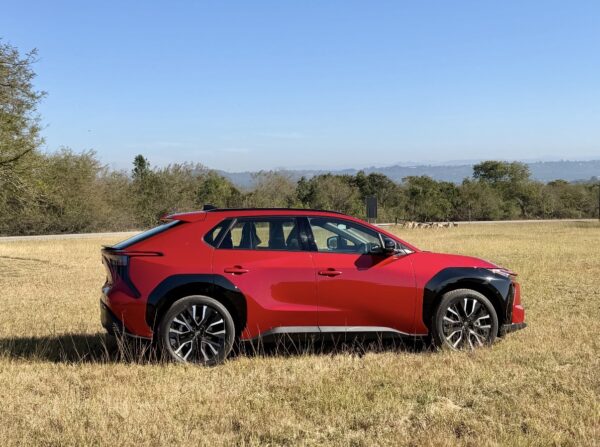
If you’re wondering about the naming convention, the bZ stands for its “Beyond Zero” sub-brand; the 4 is for the mid-size, like the RAV4; while the X represents its body style, which is a crossover/SUV.
The Beyond Zero sub-brand is part of Toyota’s multi-pathway approach that will include hybrid, plug-in hybrids and EVs, alongside its ICE offerings. Before this official stance, the company introduced the Prius in 2005, which was subsequently followed by the Corolla Cross Hybrid and RAV4 PHEV.
The new bZ model are as follows:
- Toyota bZ4X – R1 182 800
- Toyota bZ4X Touring – R1 317 700
Toyota describes the two models as having “two distinct personalities” but built on the same electric architecture, with one being refined and urban, while the other being “purpose-built for customers whose journeys regularly extend beyond the city”.
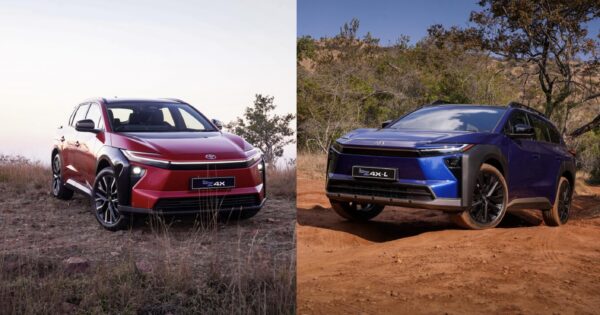
Both run on Toyota’s battery electric e-TNGA platform, which integrates the battery pack directly into the vehicle’s structure, which lowers the centre of gravity.
The company says the bZ4X offers a balance of comfort, everyday practicality and all-wheel drive capabilities, while the Touring is aimed at active families and outdoor enthusiasts, with more luggage capacity, bigger battery and higher performance.
@nafisaakabor The Toyota #bZ4X electric car has finally launched in South Africa at R1 182 800. Powered by @Naked Insurance #ToyotabZ4X #SouthAfrica #EV ♬ original sound – Nafisa | Tech & Travel
I can’t say I’ve ever been a wagon fan, so the original bZ4X gets my pick, despite the Touring being the flagship model in the line-up.
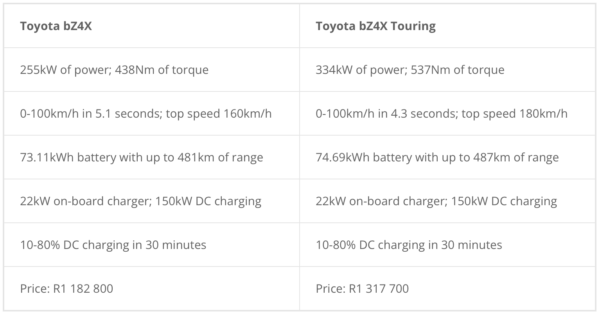
Notably, Toyota says it’s a completely different target market, but in South Africa, we compare spec for spec. The Lexus RZ 500e has the same battery as the Touring, yet it costs R1 649 400.
Charging Information
Toyota will supply a GridCars issued charge card to all customers to use at public charging. There was no mention if an allocation is included, in which case, customers will have to top up those cards. Otherwise, 80% of Toyota dealerships have rolled out EV chargers that customers can use at not extra cost, currently.
Customers will be supplied with a home charging Mode 2 cable, and a faster Mode 3 cable for public chargers. A wallbox charger is optional and can be purchased from Toyota for R15 000.
Charging times, as per Toyota:
- 0-80% on a 150kW DC charger in 29 minutes
- 0-80% on a 22kW AC charger in 3 hour 19 minutes
- 0-80% on a 7.4kW home wallbox charger in 3.5 hours
- 0-80% on a 23.kW plug in 31 hours
Driving Modes
The EVs have an X-Mode system that manages power delivery and braking to maximise traction in conditions that require it, while it offers dedicated driving modes for Snow/Dirt and Deep Snow/Mud.
Toyota says Grip Control maintains steady progress over uneven terrain at low speeds, while Downhill Assist Control automatically regulates braking on steep descents, allowing drivers to focus entirely on steering.
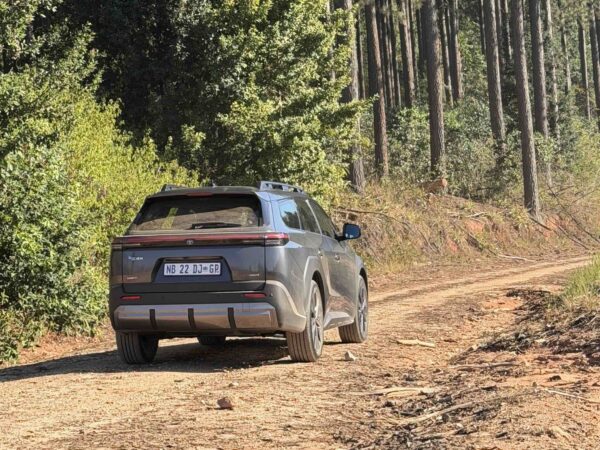
While driving in Mpumalanga, we experienced a bit of gravel as we drove around the Kruger area, and both models were capable of the various road types, something drivers expect from a Toyota.
Interiors and Technology
The dashboard has 14-inch multimedia touchscreen and a 7-inch instrument cluster. It also has a shift-by-wire selector, wireless smartphone charging, and a digital rear-view mirror as seen on certain Lexus models.
Just like all vehicles from Toyota, the car supports wireless CarPlay but a cabled Android Auto connection. There’s also voice command support through the trigger “Hey Toyota” for certain features without taking your hands off the wheel.
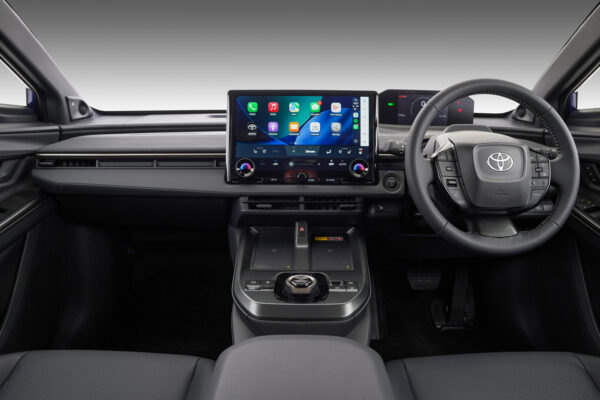
Other cabin comforts include a heated front seats and steering wheel, which we used throughout the launch drive; a panoramic glass roof, lots of storage space and spacious luggage compartments, which is even bigger on the Touring.
Driver Assistance and Awareness Tech
Toyota’s Safety Sense 3.0 is a system acts as a proactive co-pilot, designed to reduce driver fatigue and help prevent accidents. It includes:
- Collision Prevention: Enhanced detection for pedestrians, cyclists, and motorcyclists.
- Driving Support: Adaptive Cruise Control and Lane Trace Assist make highway driving smoother, while Road Sign Assist ensures you stay aware of local speed limits.
- Emergency Handling: The vehicle is equipped with Emergency Steering Assist and an Emergency Driving Stop System to intervene if the car detects an immediate, critical hazard.
Toyota has also added features to help with daily logistics and environmental awareness:
- Visibility: Adaptive High Beams provide maximum illumination without blinding other drivers.
- Parking & Exiting: Advanced Park takes the stress out of manoeuvring by steering the vehicle into spots for you. The Blind Spot Monitor includes Safe Exit Assist, which alerts you to oncoming traffic before you open your doors.
Connected Services and Warranty
Toyota customers can register for a MyToyota profile to access vehicle information and services. All vehicles are equipped with connectivity hardware that allows for in-car WiFi with a complementary 25GB data allocation and a suite of Toyota Connect Services.
The bZ4X range comes with a 6 year/90 000km service place at 12 month/15 000km intervals; a 3 year/100 000km warranty and the EV battery has an 8 year/160 000km warranty.
For more information, visit the Toyota SA website.


Recharged is an independent site that focuses on technology, electric vehicles, and the digital life by Nafisa Akabor. Drawing from her 19-year tech journalism career, expect news, reviews, how-tos, comparisons, and practical uses of tech that are easy to digest. Nafisa is a traveller at heart, having been to 46 countries and counting. Find her edutainment videos covering tech, EVs and travel on TikTok.