
Mini is one of many brands who has committed to becoming fully electric by the early 2030s. In South Africa, Mini has three full electric models: the Mini Cooper, Countryman and Aceman.
If you’re a regular reader of Recharged, you may recall we spent six months in the Mini Cooper SE when this new EV launched. All our articles can be found here. We also spent a week in the Mini Aceman a year ago, it is a new model that is EV only, there are no petrol counterparts to it.
Out of the officially reported 1018 EVs sold in South Africa in 2025 per Naamsa, 167 represented Mini’s electric models. They were as follows:
- Aceman: 79 units
- Countryman: 32 units
- 3-door Cooper: 56 units
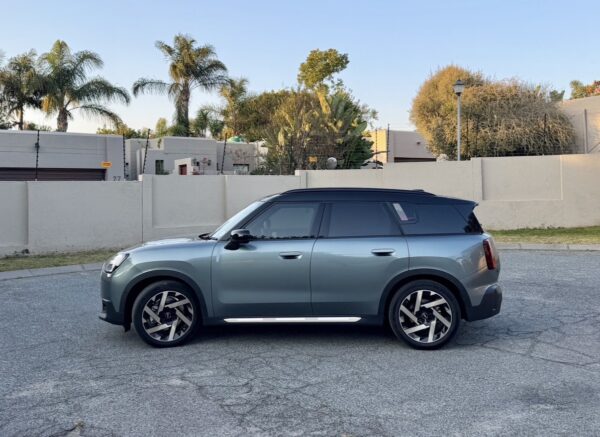
And most recently, as part of our Living Electric series, we spent a week in the Mini Countryman SE ALL4 EV.
Mini Countryman SE ALL4 at a glance
- 230kW of power and 494Nm of torque
- 64.7kWh nett battery, 433km of range (WLTP)
- 0-100km/h in 5.8 seconds
- Top Speed: 180km/h
- 10-80% DC charging in 29 minutes
- Max DC charging 130kW
- Pricing starts at: R1 201 400
1. Who should buy this car?
The Mini Countryman is suited to Mini loyalists, adventure enthusiasts, anyone who loves going off-road or 4×4-ing. It is by no means a typical family car; it is a bit niche and you really have to love the brand to consider its electric line-up.
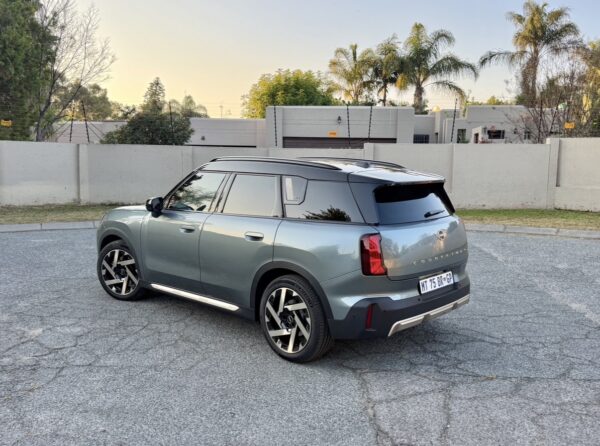
It appeals to the urban professional and style-conscious buyer; those who see their vehicles as more than just getting from A to B since Mini’s are known for their character and charm.
And at R1.1m, there are plenty of other EVs to buy (like 3x Geely E2s), but if you’re considering the Countryman SE EV, you’re likely not on a tight budget.
2. Range Reality
As a writer who works from home, I found the 64.7kWh battery on the large side, compared to what I’ve been testing. With around 430km of range, there was no need to feel range anxiety on this vehicle.
It has a claimed consumption of around 17.0 to 18.5kWh/100km. According to the Mini app, the community average is 18.5kWh/100km and I achieved 21.5kWh/100km during my test window. I know I wasn’t driving as efficiently as when I had the Mini Cooper SE for 6 months.
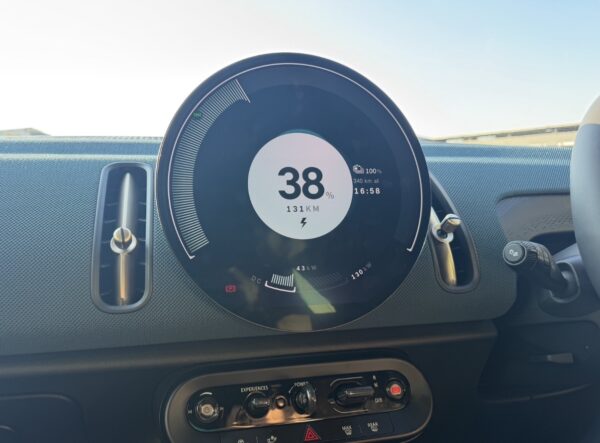
Here’s an example of consumption figures for a 28km trip. There was traffic in the second half:

You can take this car from Johannesburg to Durban and stop to charge once on the N3, there are plenty of chargers along the way now for potential cross country trips. I also think it would be okay to do a trip to Mpumalanga if you stop at Alzu to charge, or if you go to Dullstroom, there are charging options there.
Based on what I’ve shared above, here’s some realistic ranges I would have got from a single charge:
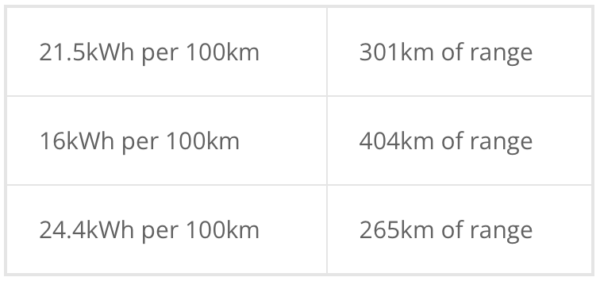
The amount of range you get depends on your driving stye and varies for each person, like whether you use Sport or Eco mode, turn off the air conditioner, drive a lot of uphills, or levels of regenerative braking. You’re entirely in control of how much range you can squeeze out of an EV, which naturally affects how frequently you need to charge it.
3. Home vs Public Charging
The Countryman SE does not come with a home wallbox charger but it is available as a separate purchase. Instead, you get a standard charger that you can you can plug into a wall socket, as with any EV. These figures are available on the Mini site:
- 11kW home charging 0-100% in 6:30 hours
- 22kW home charging 0-100% in 3:45 hours
- 130kW DC charging 10-80% in 29 minutes
I typically prefer using public DC chargers when testing EVs purely because of how quick a charge goes, while running an errand, so they are planned to maximise the time.
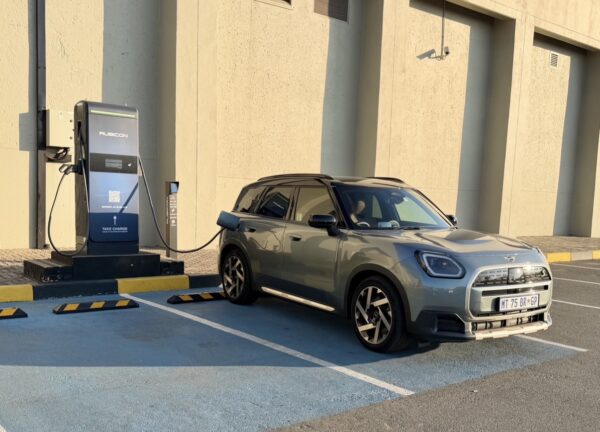
In this instance, I took the vehicle to a 60kW DC charger owned by Rubicon and while I was there, another EV came to charge. I was fortunate that the Mini app lets me check the charging status of the vehicle remotely, and discovered it got disconnected after the other person left. It should not disconnect in that instance, so it was frustrating to leave the coffee shop I was at to connect it a second time.
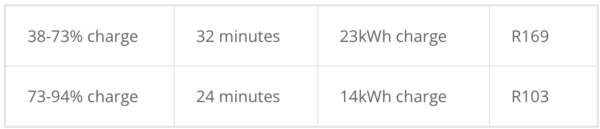
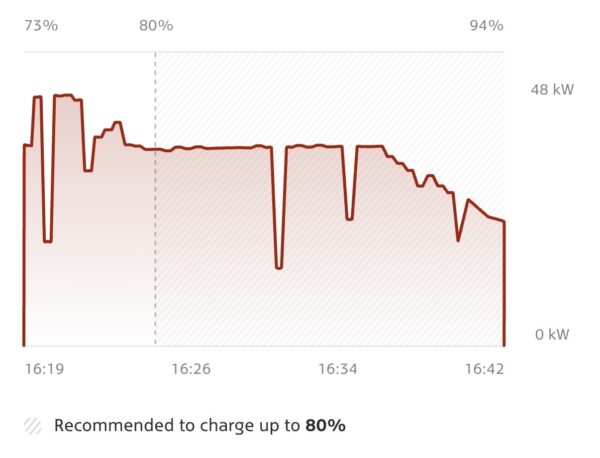
This was my charge during that trip, at a cost of R7.35 per kWh:
If you look at the above, it always charges the quickest between 10/20% to 80%, which is what most manufacturers recommend you charge till. The remaining 20% on an EV is the longest. When I’m in a rush, I just charge till 80%, but that also is a pattern that will ultimately prolong your battery life on an EV.
The charge I stopped for, from 38% till 94% was 37kWh. While it cost R271.95 on the Rubicon charger, it would have cost R99.53 at home on my Eskom rate of R2.69 per kWh or R217.56 via a public AC charger.
This is what it could cost to charge the full 64.7kWh battery, while keeping in mind nobody runs their battery down to 0% so these figures are a bit generous:
- R174 at home (R2.69/kWh)
- R380 on a public AC charger (R5.88/kWh)
- R475 on a public DC charger (R7.35/kWh)
- R592 at Zero Carbon Charge (R9.15/kWh)
4. Living with the tech
The Mini Countryman SE setup is like the Mini Cooper SE I tested over long-term. BMW set the benchmark when it comes to a connected vehicle and it is so slick to get connected.
You simply login to your Mini profile, after scanning the QR Code, and then you can link the vehicle through its VIN on the app. I’ve never experienced such a seamless set-up on any other EV in this country before.
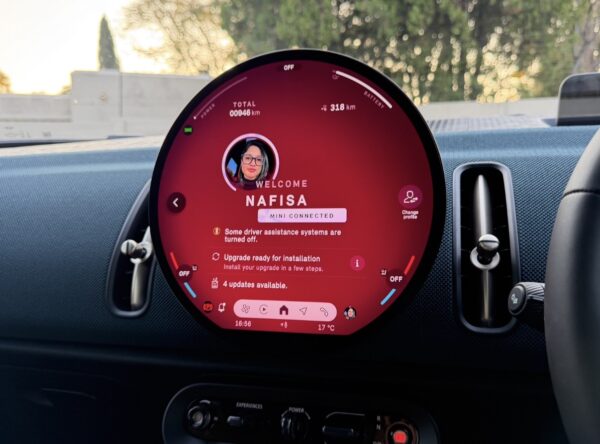
Once that is done, you can control the vehicle remotely for things like preconditioning, lock/unlock the vehicle, honk the horn, etc. But most importantly, you can monitor the state of charge remotely. This feature helped me as mentioned earlier when I realised the car got disconnected after another vehicle left the charging station that I was charging at.
Based on that, you can expect a seamless pairing to use CarPlay or Android Auto, there are 2x USB-C charging ports if you need and there’s wireless smartphone charging.
One unique thing about the next-gen Mini infotainment systems is the round OLED display. Due to the shape, you can still see vehicle information around the area used for CarPlay and Android Auto. Such a clever design that I’ve not seen anywhere else.
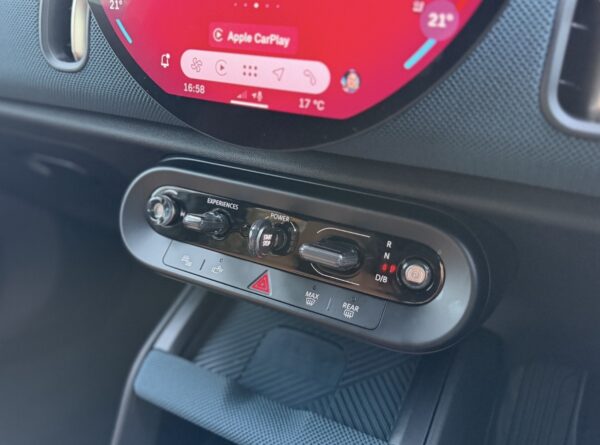
There are physical buttons for accessing the parking cameras, de-misters, and flip button for various driving modes that you can rotate between. There is a touchscreen interface for the rest.
5. Accessing driving data
Drawing from my previous experience on the Cooper SE, the Mini app, once paired to the vehicle, records everything. All your trips and all your charges. You can also export the data if you claim from SARS or log trips with your employer.
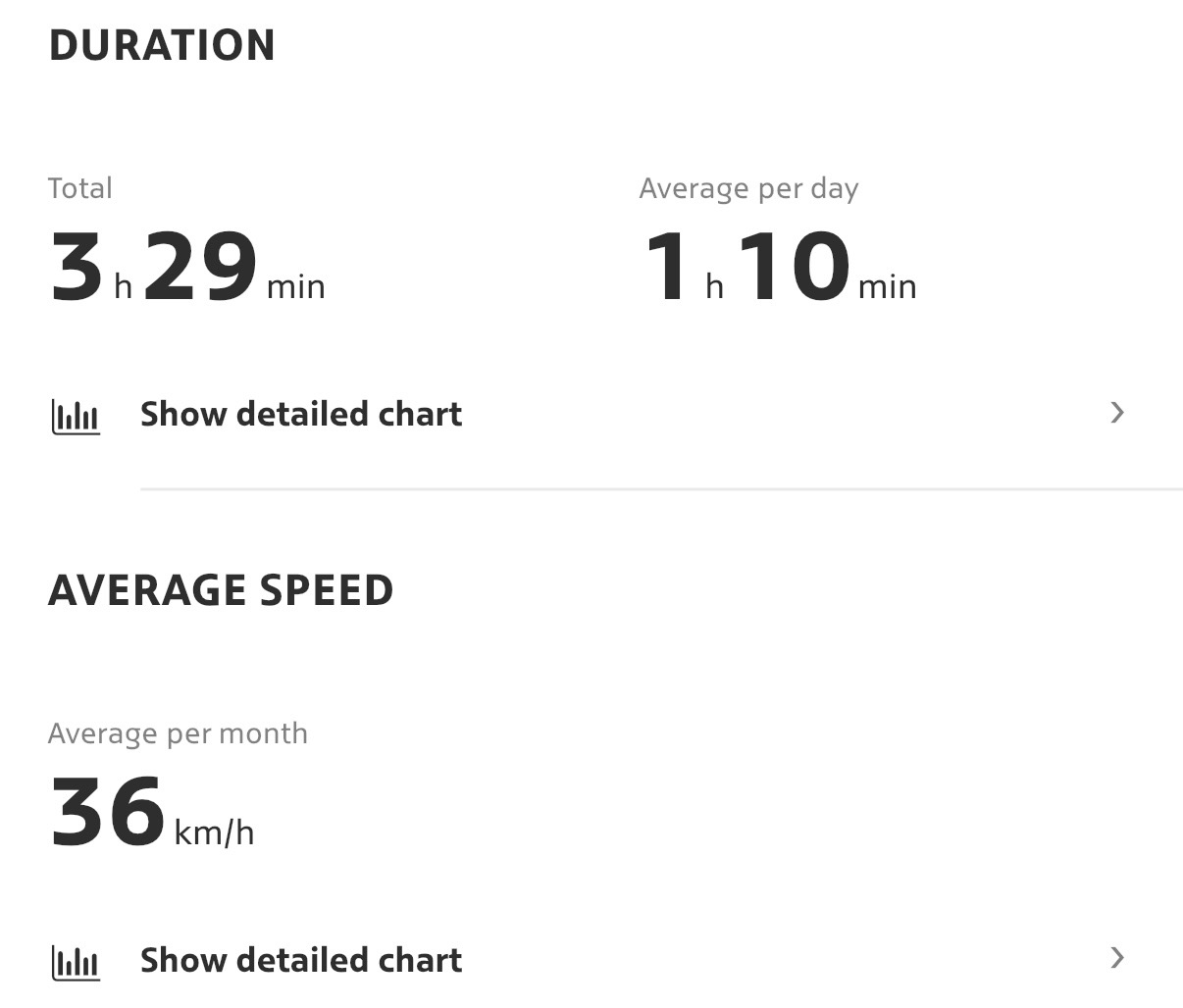
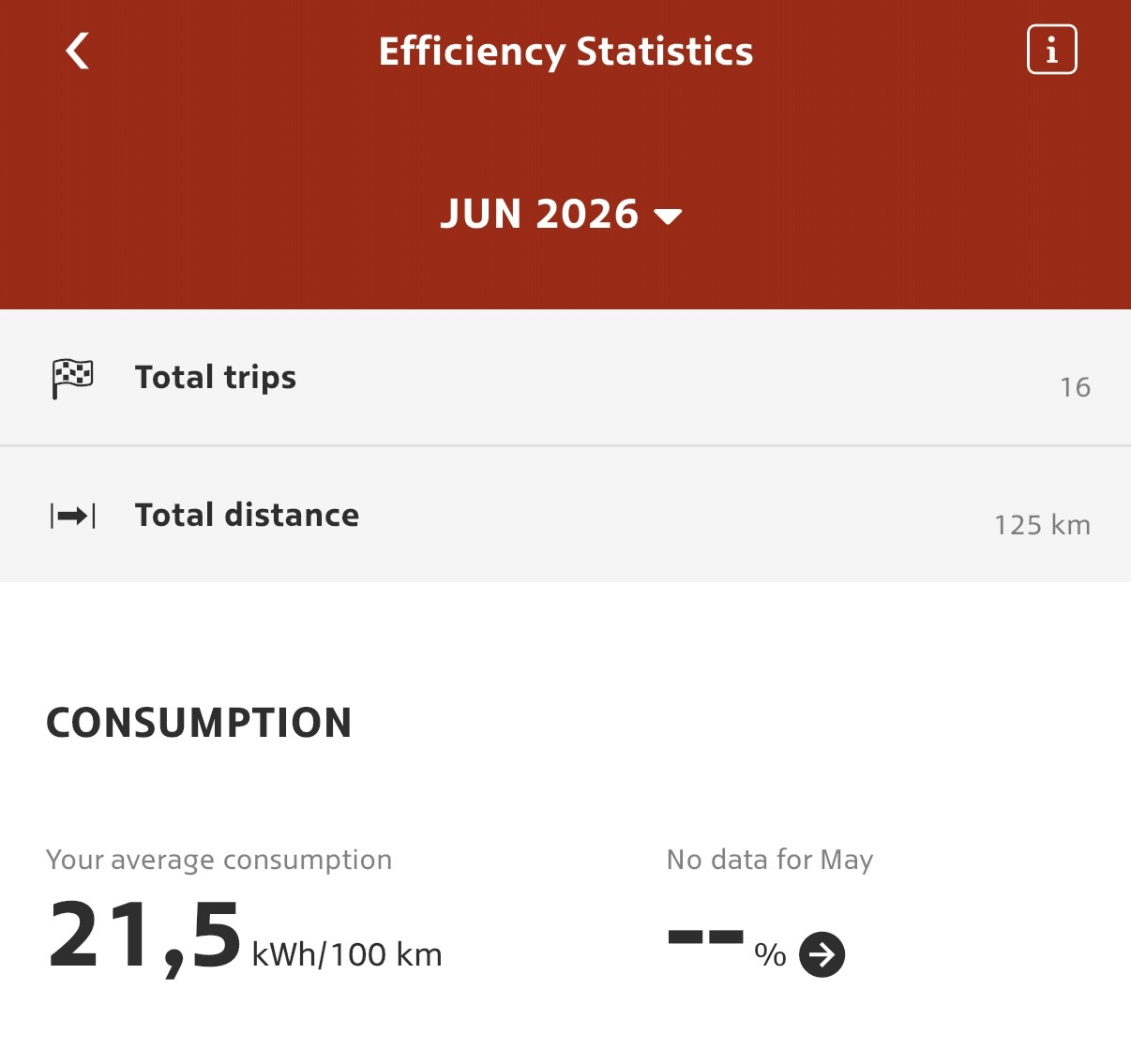
The BMW Group has done a fantastic job with their app, and in all honestly, it set the bar so high that no other app has come close to it. There’s no need to go in and hit save data/refresh or get stats for the last 50/100km, every single trip is logged.
6. City driving vs. Open road
As a Mini JCW driver, I know my own vehicle has a firm suspension, and the Countryman isn’t that different. I like the drive but I know it may not be for everyone. If you want that go-kart experience, that’s what Mini is known for.
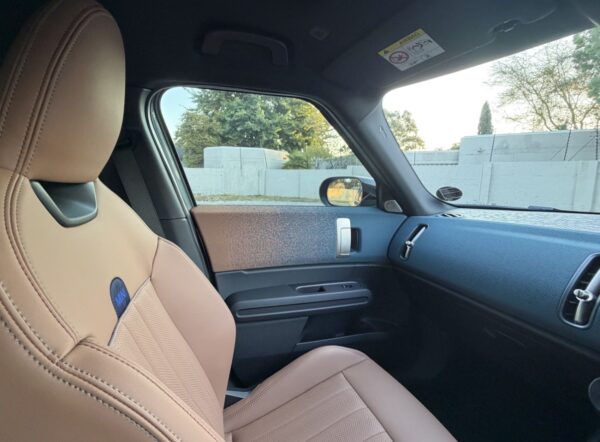
That said, I love driving an EV for the smooth take offs and instant torque, so driving it around was enjoyable. It has 230kW of power; it’s punchy and fun to take off at the traffic lights. The Countryman is the largest vehicle from the Mini line-up but I find it balanced for its size, you won’t struggle to navigate tight spaces.
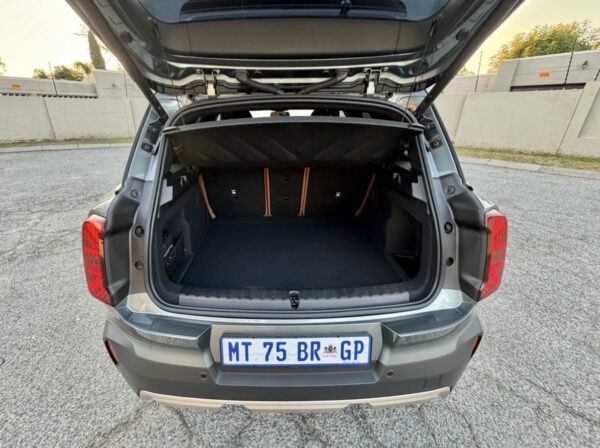
It’s great for your daily commute when you’re using on the higher regenerative braking mode and if you’re on a highway, it’s comfortable. The cabin is also well-insulated so makes for comfortable road trips. That said, planning is required for charging if you’re doing a Johannesburg to Durban commute, given its range.
7. Long-term view
Load-shedding readiness: The Mini Countryman SE EV does not have a vehicle to load (V2L) feature thus you cannot power your home or appliances from it.
Maintenance: The Countryman SE has a 24 month warranty with unlimited kilometers, a 5 year/100 000km motorplan and an 8 year/100 000km high voltage battery warranty.
8. Recharged Verdict
| PROS | CONS |
| Punchy performance; fun to drive | 130kW charging may be slow |
| Good quality interiors and finishes | Not the best range for long distance trips |
| Lots of boot space | Pricey considering range and charging speed |
| Round OLED infotainment display |
Buy it… For urban commutes and bush getaways/4×4, great tech integration, and a car with personality.
Skip it… If you’re looking for more range with faster charging.


Recharged is an independent site that focuses on technology, electric vehicles, and the digital life by Nafisa Akabor. Drawing from her 19-year tech journalism career, expect news, reviews, how-tos, comparisons, and practical uses of tech that are easy to digest. Nafisa is a traveller at heart, having been to 46 countries and counting. Find her edutainment videos covering tech, EVs and travel on TikTok.