
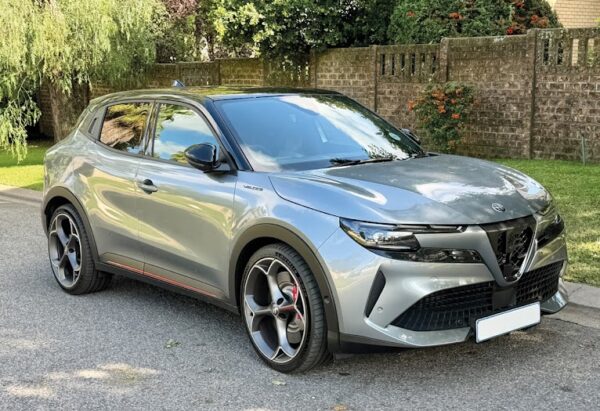
The Alfa Romeo Junior Veloce is a high-performance, all-electric compact hatchback, priced at R1mn. It has a 206kW output, with 345Nm of torque and a rather small 54kWh battery pack, with 334km of range. It will go from 0-100km/h in 5.9 seconds, with a top speed of 200km/h.
The Junior Veloce is not about accessibility; it prioritises performance, design and brand heritage.
The vehicle launched at the end of 2025 and sold 25 units through to Q1 2026, although figures for the rest of the year should be interesting for two reasons: the introduction of the Geely E2, starting at R339 900, and BYD officially reporting its sales figures to Naamsa from March 2026. BYD sold a total of 589 units that month, of which 239 were the Dolphin Surf, which starts at R341 900.
Alfa Romeo Junio Veloce
After spending a week behind the wheel of the Junior Veloce, there’s no denying it’s a striking and unusual vehicle, with sharp lines, aggressive detailing, and a front that feels confrontational.
It turned heads, sparked conversations with strangers, and the metro police even pulled me over, curious about a car they’d never seen before rather than for my speed. But the design isn’t without its quirks; the rear loses some of its distinct looks, and reminded me of a Kia or Opel. Although not a deal-breaker, it feels like a disconnect in the design language.
Inside, it has comfortable Sabelt bucket racing seats, which are distinctive and aligned with the car’s performance positioning. The cabin has ambient lighting on the air vents, but for a R1mn vehicle, the plastic dashboard felt cheap.
It has a 10.25-inch infotainment screen tilted to face the driver. While the intent was ergonomic, the execution felt like a brick sitting at an odd angle; another incohesive design element. The software was a weak point and usability let it down. I couldn’t get CarPlay to work, navigation wasn’t intuitive and basic interactions, like moving between menus, required more attention than it should. In an EV, where software is central to the experience, these frustrations become hard to ignore.
But the physical climate and volume controls avoid the all-touchscreen trap that is frustrating for all drivers. Adjusting fan speed or temperature without digging through menus was a relief.
In the cabin, the front is comfortable and driver-focused, but the rear felt like an afterthought. Legroom is limited, and omissions like seatback pockets and cupholders remind you that passengers are not a priority. Even the sunroof doesn’t extend to the back. The Veloce is a car for individuals, not families.
Driving the Veloce is engaging, noticeable when toggling between dynamic, natural and advanced efficiency; you can feel the car’s personality shift between these modes. The Dynamic mode is sharp, responsive and fun, especially with handling and taking corners; it feels well-tuned and not just EV-fast. Switch to Natural or CarPlay to work, navigation wasn’t intuitive and basic interactions, like moving between menus, required more attention than it should. In an EV, where software is central to the experience, these frustrations become hard to ignore.
But the physical climate and volume controls avoid the all-touchscreen trap that is frustrating for all drivers. Adjusting fan speed or temperature without digging through menus was a relief.
In the cabin, the front is comfortable and driver-focused, but the rear felt like an afterthought. Legroom is limited, and omissions like seatback pockets and cupholders remind you that passengers are not a priority. Even the sunroof doesn’t extend to the back. The Veloce is a car for individuals, not families.
Driving the Veloce is engaging, noticeable when toggling between dynamic, natural and advanced efficiency; you can feel the car’s personality shift between these modes. The Dynamic mode is sharp, responsive and fun, especially with handling and taking corners; it feels well-tuned and not just EV-fast. Switch to Natural or Advanced Efficiency mode and the power delivery softens while the range improves.
My consumption at 20.9kWh/100km was higher than the 18.6kWh/100km claim, or that of a compact EV. Combined with its small 54kWh battery, real-world range was below market expectations when you factor its price point.
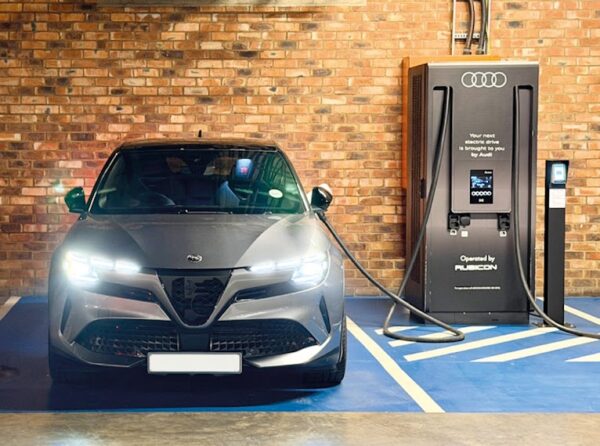
I charged the Veloce at the Rubicon 200kW solar-charger at the Mall of Africa, which cost R8.20/kWh, one of the most expensive in the country.
It took the car from 9% to 90%, which went from 28km to 310km in 45 minutes, charging 44.83kWh of the battery, for around R368. Comparatively, my home Eskom nett rate of R2.69/ kWh would have come to around R121, excluding other admin and network charges on my bill.
This was a stark reminder why having a home wallbox charger is crucial to EV ownership in South Africa, as public chargers are priced for convenience. You pay for speed, but per kWh at home.
The Mini Aceman SUV has a similar 54.2kWh battery, but 406km of range, at R892 000, and a more established network of free charging at BMW/Mini dealerships nationwide. Stellantis has none. Potential EV buyers want to know cost per kilometre, long-term savings and total cost of ownership.
In Q1 2026, there were 510 passenger EVs sold in South Africa, a 97% increase from Q1 2025, which saw sales of 259 cars.
1. BYD – 316
2. Volvo Cars – 99
3. BMW Group – 26
4. Stellantis – 23
5. Mercedes-Benz – 15
6. Lexus – 10
7. MG – 9
8. Changan – 6
9. GWM – 5
10. Porsche – 1
Originally published in Brainstorm. More EV content here.


Recharged is an independent site that focuses on technology, electric vehicles, and the digital life by Nafisa Akabor. Drawing from her 19-year tech journalism career, expect news, reviews, how-tos, comparisons, and practical uses of tech that are easy to digest. Nafisa is a traveller at heart, having been to 46 countries and counting. Find her edutainment videos covering tech, EVs and travel on TikTok.