

I’ll start with a small admission. I don’t usually review games I haven’t finished. It’s part of the discipline. Play it properly, see it through, then form an opinion. This is true for the over 30 reviews I’ve written for Recharged.
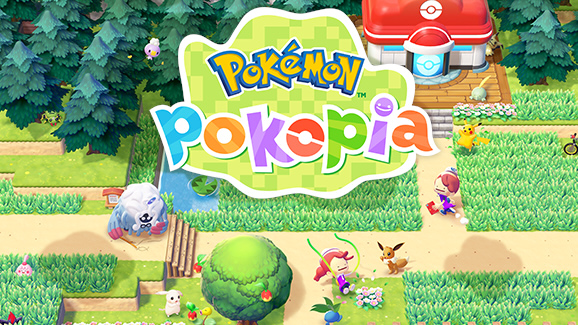
Pokémon Pokopia on the Nintendo Switch 2 is the exception.
This review comes off the back of more than 120 hours of combined playtime between myself, my wife Kareema, and my 7-year-old son Sami, and we’re still nowhere near done. Normally this would bother me.
Here, it feels intentional. This is a game I’m deliberately not rushing because it rewards patience in a way most games I’ve played don’t. I’ve played grindy games before and I’m not about that life, and this does not feel grindy.
Coming into this, expectations were measured. Another Pokémon spin-off, a bit experimental, probably something I’d play between bigger releases like Kingdom Come: Deliverance 2, which dropped on Gamepass around the same time. Instead, it’s become something else entirely.
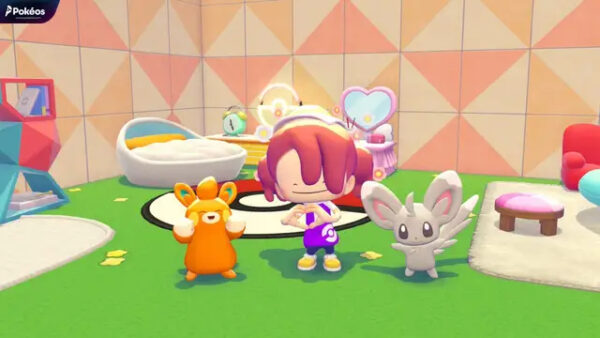
Pokémon has always been one of those Nintendo franchises I just didn’t ‘get’. I had enough social knowledge to chat about it, like men’s football, and played and reviewed a few games in the series but I’ve never taken to it religiously like I have with Donkey Kong or Legend of Zelda. Consider me converted.
It’s the first game on Nintendo Switch 2 that’s had people replying to my Instagram stories asking if it’s worth buying the console. And for the first time, I’ve been confidently saying yes. When the Switch 2 launched my response was ‘let’s wait and see, if you’re not rushing in for Mario Kart World, you can wait a bit.’ Same with Donkey Kong Bananza and Kirby Air Riders, both stellar exclusive entries in their respective franchises.
Pokémon Pokopia Gameplay
At its core, Pokémon Pokopia is a sandbox-style cozy simulation where you play as a Ditto (a purple Pokémon) disguised as a human, holding onto their form out of longing. Much of the story centres on trying to bring humans back, and it is genuinely endearing. You spend your hours rebuilding a neglected world by creating habitats and attracting Pokémon back into it.
It sounds unconventional, and it is. But it works.
The gameplay loop is simple on paper. Gather resources, build structures, shape environments, and slowly restore life to different regions. The depth comes from how these systems interact over time.
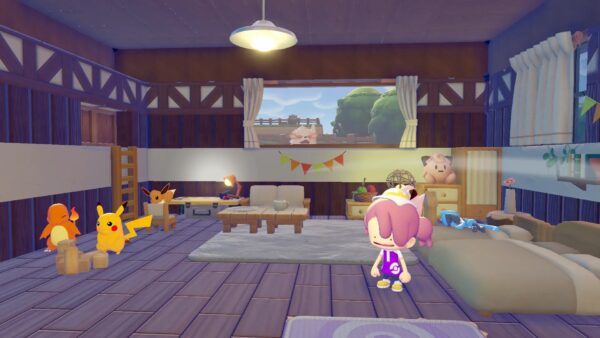
There are clear influences from games like Animal Crossing: New Horizons and Minecraft, but Pokopia doesn’t feel like it’s chasing either. It carves out its own space by tying everything back to Pokémon in a meaningful way.
You’re not just collecting Pokémon. You’re collaborating with them. Each one introduces abilities that directly impact how you build and progress. Some help you cultivate vegetation; others unlock traversal options or environmental changes. That integration keeps the loop fresh far longer than expected. I like that it’s not about combat, which I understand is a key component of the main game but I’ve never been one to enjoy little creatures bash each other.
I first took this game seriously at the Mario Tennis Fever launch earlier this year when veteran videogame journalist and editor Marco Cocomello from Glitched shared his experience with the demo and confirmed it reminded me of Viva Pinata, a classic Xbox 360 game that I sunk 100s of hours into in the mid-2000s. I was like ‘sold, say less you tall man.’
The pacing is where this game either clicks or doesn’t. This is not built for instant gratification. There’s a real-time day and night cycle, multiple biomes, and a roster of over 300 Pokémon to discover and integrate into your world. It unfolds slowly.
For me, that’s the appeal.
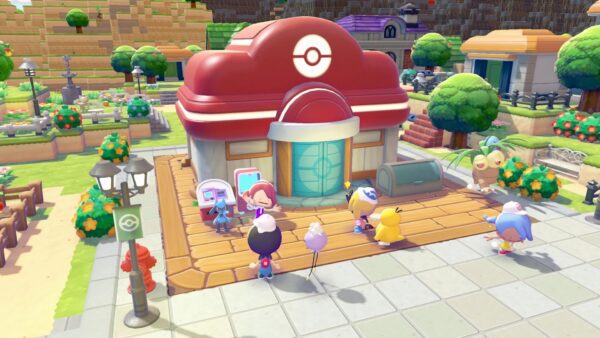
My son Sami gravitates towards the discovery. New Pokémon, new areas, constant curiosity. My wife Kareema leans into the creative side, building, decorating, shaping spaces. She also tends to focus on progression systems, optimising how everything fits together. I am very quest driven. The fact that one game can cater to all three of us without friction is probably its biggest achievement.
Unlike Animal Crossing where the real-time day and night cycle felt inhibiting or a way to introduce artificial padding, making your progress staccato and forcing you to drop off too soon, there is so much to do in Pokopia that I never felt I had to switch off or manually override the Nintendo Switch 2 clock because my progress was halted. There was always something else to do.
The only niggle I have with the controls is that its all too easy to unintentially suck up a piece of the landscape like some tiling or a fence and I wish there was an easy one button way to undo that. Hopefully it gets patched in. The game has mouse controls but I never felt the need to use them, maybe I will later as I shift more to personalising structures.
Graphics & Presentation
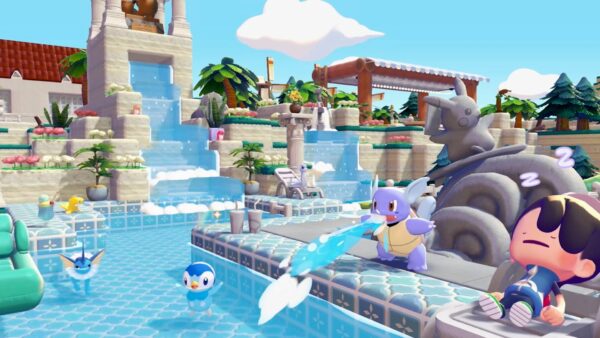
Visually, Pokémon Pokopia takes a different approach from the mainline series. It leans into a stylised, slightly blocky aesthetic that prioritises clarity and charm over realism. At first glance, it feels understated. Then you realise what it’s doing.
The world starts off sparse, almost lifeless. As you build and restore habitats, it gradually becomes more vibrant, more populated, more alive. That transformation is the visual payoff.
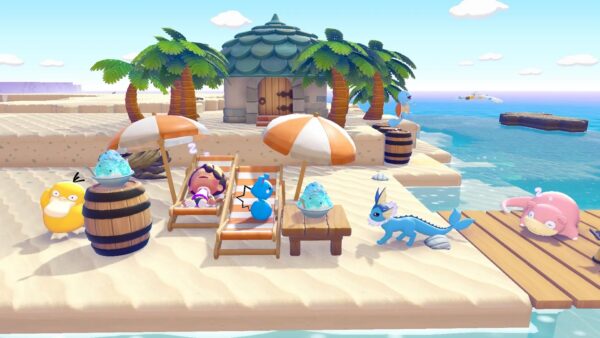
Pokémon themselves feel more integrated into the environment than usual. They roam, react, and interact with what you create. It gives the world a sense of ownership. This isn’t just a map you’re exploring. It’s a space you’re actively shaping.
From a technical standpoint, it’s not trying to be a graphical showcase. But it does something arguably more important. It gives the Nintendo Switch 2 an identity early on. This is the kind of game you associate with the platform.
Value for Money
The game is priced at R 1499. That’s not cheap. But this is one of those rare cases where the value becomes obvious the more you play.
You’re not getting a tightly scripted 15-hour experience. You’re getting something that can comfortably stretch into the hundreds of hours without feeling padded. The progression is organic. The replayability isn’t forced through modes or challenges. It’s baked into the core design.
There’s also a strong shared value component. In my case, this isn’t just my playthrough. It’s something Kareema and Sami are equally invested in. That changes how I measure worth.
If you look at it purely as a single-player experience, it’s already good value. As a shared family game, it becomes difficult to fault.
Final Verdict
Pokémon Pokopia is not the Pokémon game I expected. It’s a slower, more deliberate, more personal take on the formula.
It removes the usual structure of gyms, battles, and linear progression, and replaces it with something that focuses on creativity, patience, and long-term engagement. That shift won’t work for everyone. But if it clicks, it really clicks.
More importantly, this feels like the first true system seller for the Nintendo Switch 2. Not because it’s flashy, but because it offers something distinct. Something you can’t quite get elsewhere in the same way.
I’m still playing it. Still discovering things. Still building.
And for once, I’m in no rush to see the end.
9.2 Score
Pros
- Deep, rewarding gameplay loop that evolves over time
- Strong cross-generational appeal
- Excellent long-term value and replayability
- Meaningful integration of Pokémon into gameplay systems
Cons
- Slow pacing may not suit everyone
- Lacks the structure of traditional Pokémon titles
- Early hours can feel a bit overwhelming
Final Verdict
Pokémon Pokopia takes a different approach to the usual Pokémon formula, replacing gyms and linear battles with a slower, more creative experience focused on patience and long-term engagement. It won’t appeal to everyone, but for those it resonates with, it’s deeply rewarding. The game also feels like the first real system seller for the Nintendo Switch 2, offering something distinct that keeps players exploring and building without rushing to the finish.


Recharged is an independent site that focuses on technology, electric vehicles, and the digital life by Nafisa Akabor. Drawing from her 19-year tech journalism career, expect news, reviews, how-tos, comparisons, and practical uses of tech that are easy to digest. Nafisa is a traveller at heart, having been to 46 countries and counting. Find her edutainment videos covering tech, EVs and travel on TikTok.