
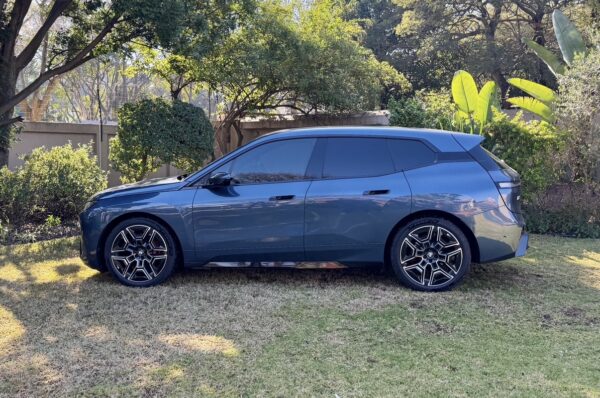
The BMX iX came to South Africa towards the end of 2021. At the time, it was a bold design choice for the brand, so naturally there were many opinions shared on Twitter, when it was still a thing.
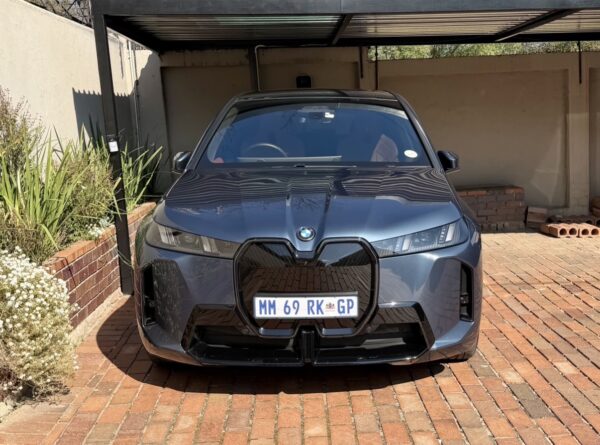
It may have a controversial design and a departure from what one expected of a BMW, but driving it and experiencing it could be enough to change your mind if you judged it unfairly. It proved that BMW wasn’t afraid to take risks, try new things and evolve with time.
I spent a month with it in December 2021. The tech and seamless integration was the first EV to set the benchmark for me, solidified after my long-term test of the Mini Cooper SE.
The experience, as a tech journalist first, always comes down to if other EVs can offer the same experience, whether it’s the modern infotainment system with slick interface, remote control features, smartphone integration or the level of detail and data from the app.
Naturally, I couldn’t wait to test the updated BMW iX xDrive60 M Sport.
In case you missed it, Living Electric is a new series I started covering the practical aspect of NEV ownership, following a uniform format with 8 categories. I test EVs and PHEVs across the broad from entry-level to mid-range to premium flagships. Today, I’m sharing more from my time with the BMW iX xDrive60.
BMW iX xDrive60 at a glance
- 400kW of power and 765Nm of torque
- Dual motor, all wheel drive
- 109.1kWh nett battery, over 600km of range
- 10-80% DC charge in 35 minutes
- Maximum 195kW DC charging speed
- 0-100km/h in 4.6 seconds; Max speed: 200km/h
- Starts at R2 689 000
1. Who should buy this car?
The BMW iX xDrive60 is a flagship EV from the German brand, aimed at early adopters and tech enthusiasts. It’s the type of EV that would appeal to CEOs or high net worth professionals who want to be seen with the latest and greatest EV.
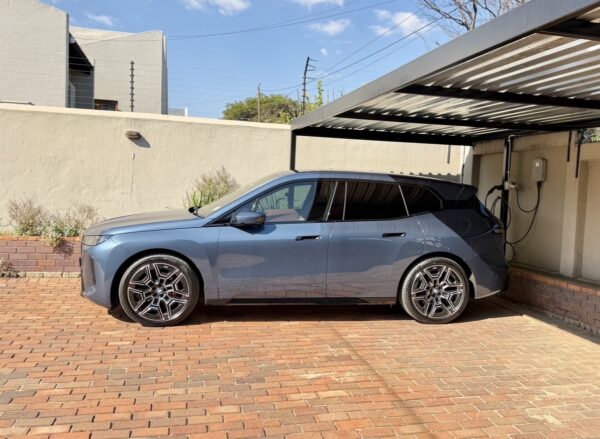
It offers BMW’s most advanced operating system, platform and powertrain. That is, until the Neue Klasse i3 arrives later this year; you may recall I attended the global unveiling in Germany in Sep 2025. Even when the i3 arrives, the iX would still appeal to a slightly different target market: a more affluent, status-driven one.
2. Range Reality
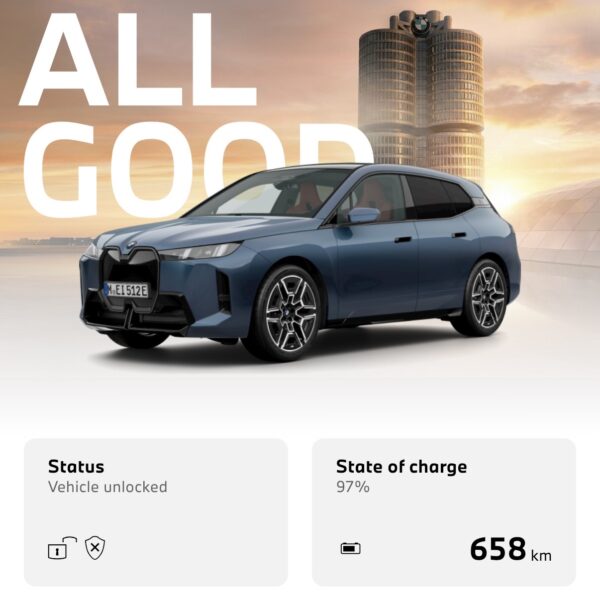
When purchasing a car with an over 100kWh battery, there is absolutely no concerns about range or getting range anxiety. Despite the vehicle saying it offers around 600km of range, when I put the vehicle in Eco mode, I got 658km of range when the car was on 97%, after taking delivery of the test unit.
I’ve never had an EV on test with such a large battery and available range. My immediate thought was how to run it down so I can charge it from nearly empty, but let me tell you, it is a very difficult thing to do when you actively want to do it.
I have to add, that I received it during a busy week being away for 2 nights for a car launch, so I couldn’t exactly plan another long distance drive during my test window. It integrated into my work from home lifestyle, much like most of the EVs I test.
I put the car into sport mode, used the heated seats and heated steering wheel everywhere, as we are in the middle of winter in Johannesburg; it was toasty and comfortable going just about anywhere. After I thought I did everything intentionally to run it down, the battery was at 50% still.
The bottom line about the range reality is that you will not be charging the iX very frequently if you’re using for basic daily commutes. You could theoretically take it on a roadtrip from Johannesburg to Durban along the N3 and not charge it once. This would depend on a varying factors as everyone drives differently, but thankfully, there are plenty of charging stations along the N3 now, should you need to make a stop.
BMW’s claimed consumption is 20.1kWh/100km. I achieved 21.9kWh/100km, while the app showed a community average is 20.3kWh/100km. As mentioned earlier, I maxed out the comfort settings and used Sport mode. I could have driven it continuously on Eco mode to get a better stat.
3. Home vs Public Charging
If a BMW 11kW wallbox charger is used to charge the iX xDrive60, it should take around 11 hours and 15 minutes to charge, but if you use a 7kW wallbox charger, it will take about 15.5 hours to charge.
Here’s what to expect to pay for a full charge on the 109.1kWh usable battery, but keep in mind, nobody runs down an EV battery to empty unless you end up towing the vehicle to charger after it runs out. These are over-estimates:
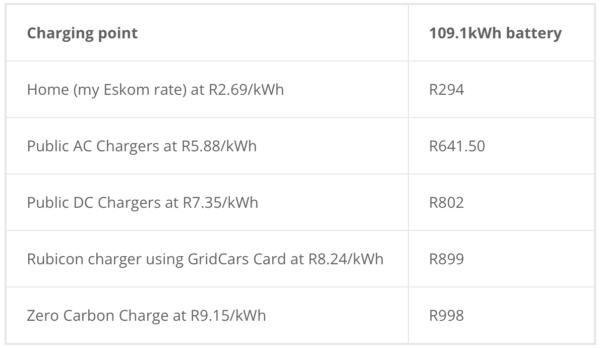
BMW provides a complimentary wallbox charger and installation at a location of your choice with the purchase of its flagship iX, plus includes public AC charging cables and a portable wall socket charger.
Considering this is a vehicle with a large battery, it may take longer to charge at home, which is why trickle charging may work best for this vehicle. A quick charge for about two hours or so once every three to four days should do the trick.
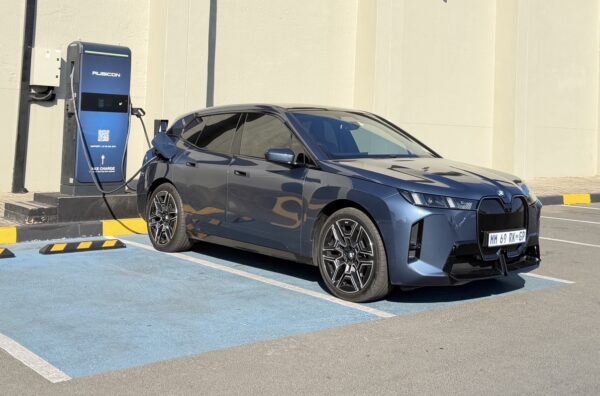
The public AC cables can be used at shopping centres that have small AC chargers like Hyde Park Shopping Centre, while the portable one can be kept in your vehicle if you’re doing long distance trips and need to charge if you’re not near a public charger.
4. Living with the tech
The iX is kitted with the latest and fastest technologies out there and features a large Curved Display across the two thirds of the dashboard. It houses two screens: a 12.3-inch digital instrument cluster behind the steering wheel and a 14.9-inch central touchscreen. It is powered by BMW’s Operating System 8.
You can seamlessly sign into the BMW app, link your app profile to the vehicle and through a quick VIN number scan before you’re set. When I logged it, it remembered all my previous personal settings from when I drove the iX five years prior.
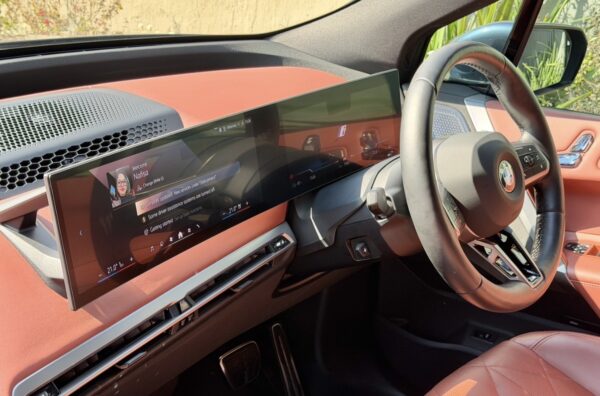
It’s great to use from a privacy point of view as when you log out, it’s like you didn’t use the vehicle. None of what you put in the maps will be displayed, etc as it’s linked to your phone.
You can easily get connected on your smartphone, plus the home screen on the infotainment system will show Google Maps, which is nifty, without going into the Android Auto or CarPlay interface itself.
The infotainment display supports widgets so you can drag and drop and customise it to your most used shortcuts. There’s wireless charging, plenty of USB-C ports and storage space in the front cabin.
While I didn’t get to test this feature now, it supports Digital Key Plus so you can use a device with UltraWide Band support as the car key, such as iPhones, Apple Watches and certain Samsung devices. It requires both physical keys to be present to set up but such a great feature when I tested it.
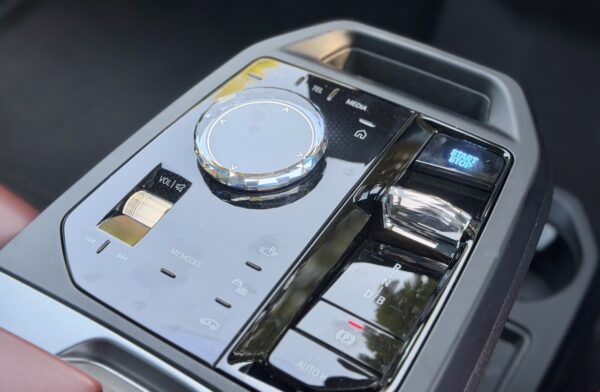
When it comes to physical buttons, it is very minimalist and most things are done via the massive Curved Display. You can physically open and close the vents but all climate controls and other settings are on the display itself. The centre console has the power button, gear selector, volume controls, driving modes, etc.
5. Accessing driving data
As mentioned on my recent Mini Countryman SE All4 Living Electric post, all your driving data, charging stats etc appear on the app without much extra effort of going into the interface to save it.
It is so seamlessly done, you can just drive off and check your data after the fact. It summarises all your trips, and lets you export it to Excel or similar. You can see time stamps of where you went, a little map view, the duration, average speeds, how much of battery was used, etc. Everything you can think of related to stats about an EV will be there.
I love the monthly stats view, it just summarises everything, which is great to measure in the long term. It will give you a clearer view of how many kms you do monthly, and how much of range you use, etc, plus of course, the all important consumption figures.
6. City driving vs. Open road
When an EV is a flagship model on a line-up, realistically it’s difficult to fault. There’s driving modes for whatever you may be in the mood for and the car adjusts itself for your comfort, no thinking involved.
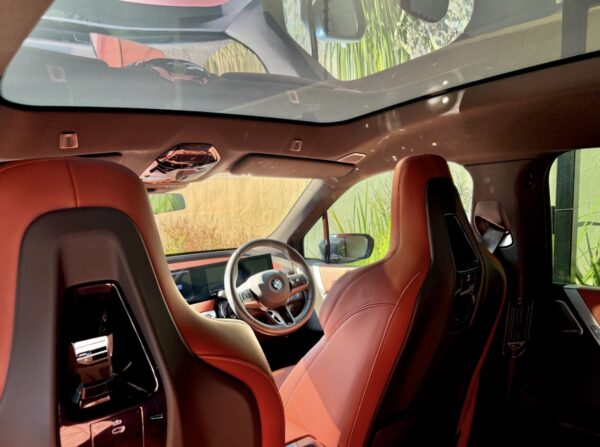
I’m usually toggling between Eco and Sport, depending on how much of a hurry I’m in. That said, the car is extremely powerful and may surprise you if you put your foot flat and take off. I mean, it does have an M badge on it, which may be interpreted differently depending on who is driving it. Some folks may say it doesn’t belong on an EV.
The iX delivers luxury performance, with a superior comfort, and all the tech bells and whistles.
7. Long-term view
Load-shedding readiness: BMW does not offer vehicle-to-load (V2L) features on its vehicles in South Africa.
Maintenance: There is a 5 year/100 000km maintenance plan, a 2 year/unlimited km vehicle warranty and an 8 year/100 000km battery warranty.
8. Recharged Verdict
| PROS | CONS |
| Massive battery, no range anxiety | Design might be polarising |
| Comfortable for long distances | Climate controls have no physical buttons |
| Tech integration is superior | Pricey at R2.69m |
| Fast charging speeds |
Buy it… If you want a tech forward EV, not worry about range, and value comfort.
Skip it… You prefer physical buttons in a car or don’t need such a large vehicle.


Recharged is an independent site that focuses on technology, electric vehicles, and the digital life by Nafisa Akabor. Drawing from her 19-year tech journalism career, expect news, reviews, how-tos, comparisons, and practical uses of tech that are easy to digest. Nafisa is a traveller at heart, having been to 46 countries and counting. Find her edutainment videos covering tech, EVs and travel on TikTok.