
The Geely E2 was launched in April 2026 as South Africa’s cheapest EV and currently holds that title. At R339 900, it marginally undercuts the BYD Dolphin Surf by R2 000, making both Chinese EVs the most affordable options in the local market.
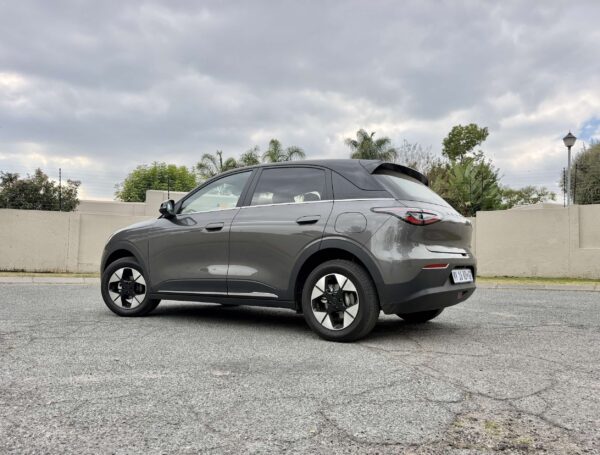
Recharged had an opportunity to spend time with the vehicle as part of our Living Electric series. It covers the practical, real-world usage of living with an EV/PHEV to help you understand the costs involved, charging situation, tech difficulties/ease, accessing the driving data, etc.
Incidentally, we covered the BYD Dolphin Surf on our Living Electric series last month, you can catch up on that post here.
Geely E2 at a glance
- 85kW of power; 150Nm of torque
- 39.4kWh battery with 325km of range
- 15.2kWh/100km claimed consumption
- 30-80% DC charge in 25 minutes
- 10-100% AC charge in 6.5 hours
- Android Auto and Apple CarPlay cable support
- Five seater capacity; has a 70L frunk
- Geely E2 test unit: R389 900
The Geely E2 model we received on test is the Apex, the one with the extra safety features, upgraded interiors and better tech specs. It is priced at R389 900, whereas the Aspire base model comes in at R339 900. Interesting to note, both have the same battery and output, so performance and consumption will be the same.
1. Who should buy this car?
The Geely E2 appeals to anyone who wants to see a difference immediately to reduce their petrol costs. Whether you have a larger SUV as a primary car, a small business with local runaround trips, a family that does multiple school runs or someone who works from home, the Geely E2 will appeal.
The price point starting at R339 900 means it now becomes comparable to a smaller ICE vehicle, but given that EVs are cheaper to run and maintain, you will see a difference in savings immediately.
2. Range Reality
The Geely E2 will display 325km of range whenever you charge it to 100%, unlike some of the other EVs I’ve tested, which changes dynamically based on your driving style. In a way, it feels like it removes some range anxiety you may experience because it will always be a “fixed” amount of range.
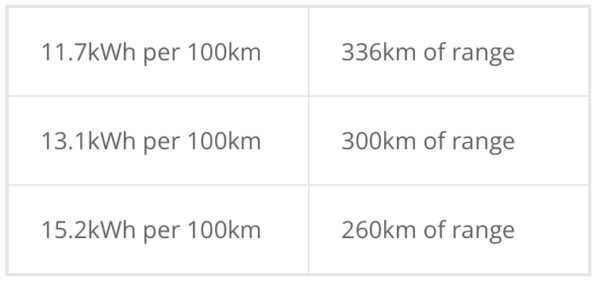
That said, you can see your consumption for the last 50km and 100km, so you can estimate how many km of range a charge will give you if you keep that up.
For example, I took the Geely E2 to Hartbeespoort in the North West, from Johannesburg North in Gauteng and it gave me a consumption figure of 11.7kWh per 100km. This means that I would have done an estimated 336km of range if I kept my consumption that low till the battery depleted. My roundtrip only used 130km of range, and I still had about 200km left.
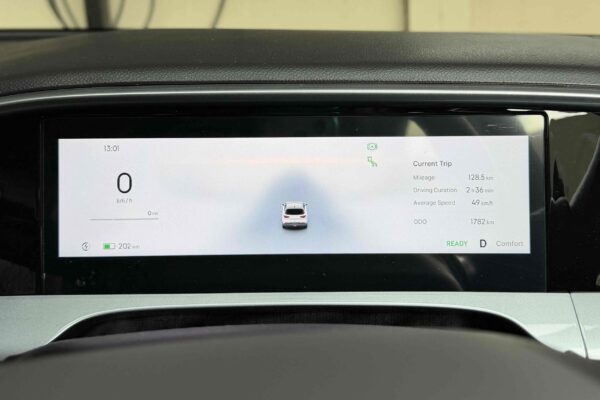
My city driving figures were 13.1kWh per 100km, which meant I would got an estimated 300km of range. I also got a high of 14kWh/100km at one point from my urban driving, which would have given a projected 281km of range.
You get the picture. The more efficiently you drive and keep your consumption figures down, the more range you can get out of the car. And of course, if you have the regenerative braking at its highest setting, you can also get additional range.
Despite the E2 having a 130km/h maximum speed, I got to 140km/h on the N3, which was effort for the vehicle, but I did that only once. It was accidental, while taking it to its maximum to see how it performed.
3. Home vs. Public Charging
I took the car for a full charge, using DC chargers, it was nearly empty at 9% when I got there. This is what I charged:
- 9-100% in 50 minutes
- 35.85kWh charged
- Peak speed: 71kW (officially is its max 70kW)
- R7.35 per kWh at a Rubicon DC charger
- Cost: R263.53
I love that the Geely E2 charged so quickly; and that comes down to its small battery. However, when it comes to AC charging, its on-board charger allows for maximum 6.6kW speeds, so it will go from 10-100% in 6.5 hours if you charge at home using a wallbox charger.
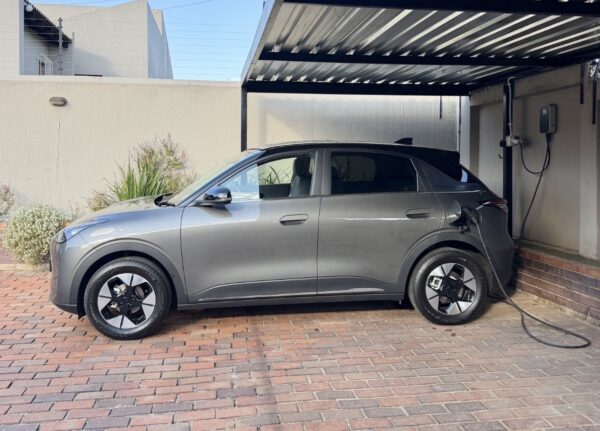
When the vehicle was launched, it was said that if you finance the car, you will get a free wallbox charger, I am not sure if that was a limited offer or still exists. Regardless, it is worth buying one if you live on a property that lets you install one.
| Eskom (my current rate) | R2.69/kWh x 39.4kWh | R106 |
| GridCars/Rubicon AC Charge | R5.88/kWh x 39.4kWh | R232 |
| GridCars/Rubicon DC Charge | R7.35/kWh x 39.4kWh | R290 |
| Rubicon using GridCars Card | R8.24/kWh x 39.4kWh | R325 |
| Zero Carbon Charge | R9.15/kWh x 39.4kWh | R360 |
The above rates are standard across the board when you visit these stations. I’ve not included dealership charging from various brands. Example, what BMW would charge you if you stopped at their dealership.
My test unit was not supplied with an AC charging cable to use at public chargers, which was a bit of an issue as it limited where I could charge publicly, example Hyde Park Shopping Centre requires you to connect your own cable and I couldn’t charge there.
Along with rates from charging, and it’s full price, I also checked on the Naked app, my current insurer, to see how much it would cost to insure and received a quote of R690pm, which isn’t bad. If you take the base model, it will be cheaper.
4. Living with the tech
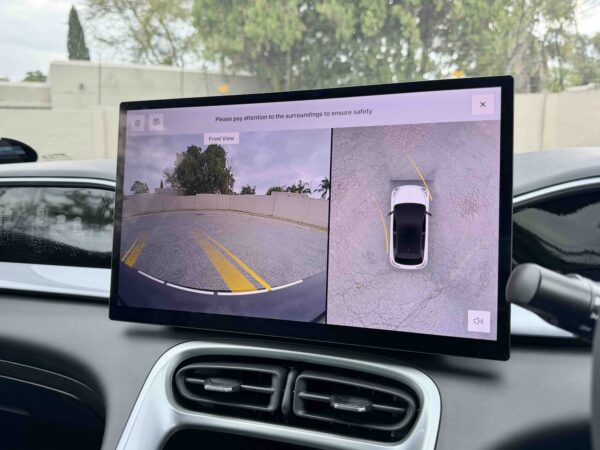
The E2 Apex has a 14.6-inch touchscreen and a 8.8-inch digital driver display; a 6-speaker sound system; a power adjustable driver’s seat; 265-colour ambient lighting (that I never played with); a 360-degree parking camera; wireless charging; and ADAS safety features. I found the radio signal to be intermittent and it just didn’t work at times.
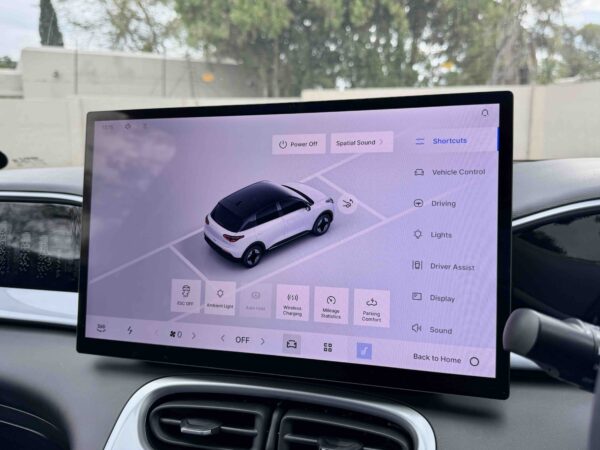
The vehicle is well-kitted for a R390k car, and arguably packed with more tech than some other vehicles where you have to pay extra for these upgrades. This may very well be the cheapest car/EV I’ve tested with 360-degree cameras.
The Smartphone Test: One of the most important things for me is to be able to pair my phone seamlessly to a test car to use either Android Auto or Apple CarPlay. While the vehicle does not support wireless CarPlay, I had to use a cable. The car has a USB-C and USB-A ports and unfortunately it only worked via the USB-A port, which meant I had to dig up an older cable as my iPhone’s default USB-C to C did not suffice. I generally keep a USB-C to C for testing in vehicles but this one needed an A to C.
Physical vs Digital: This is another feature one needs to get used to as everything is touch screen only. As much as I love my tech, I like physical buttons for certain things like climate controls. The touchscreen interface houses all settings, and at the bottom of the screen you will find access to climate, cameras, range, fan speed, car settings, radio, apps etc.
I’ve not been able to test the smartphone app, assuming there is one for South African buyers as it was a test car.
5. Accessing driving data
The vehicle provides access to mileage statistics in the large infotainment screen. It’s looks like a spreadsheet and displays the last 50km and 100km stats. It also shows you “current trip stats” like total driving duration, range covered and average speed. The Tripmeter beneath it shows a breakdown in energy distribution, which showed me that my air-con use contributed to 12% of the battery use.
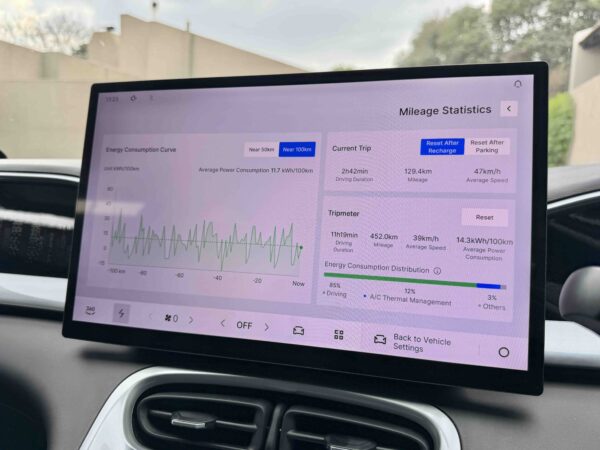
You can also choose to reset the stats after every charge or every trip; I made it every charge so I could track what I was doing. These stats appear on the colour screen driver display in-front of you, which is super useful. I just wish there was a third option to have it run for the duration of your drive until you re-set it, which would have been easier to track my whole test period.
Overall, showing the last 50km and 100km is a good indicator of your consumption and how you’re doing. If you want to see long term data, just manually record it once a week.
6. City driving vs. open road
The Geely E2 is an affordable base level EV meant to take you from A to B. And that should always be bottom line. The car does it well, and not unexpectedly, as mentioned earlier, top speed is capped at 130km/h but I took it to 140km/h. You don’t need to go at that speed. This isn’t a fancy SUV aimed at typical Joburg roads.
It’s a commuter car with the main aim of bringing monthly costs down. It’s best used for urban/city driving, and some highways runs. But in this instance, you may be tempted to want to go faster. You will think about wasting range real quick and it feels like effort going up to 130km/h. At lower speeds it’s quiet and comfortable.

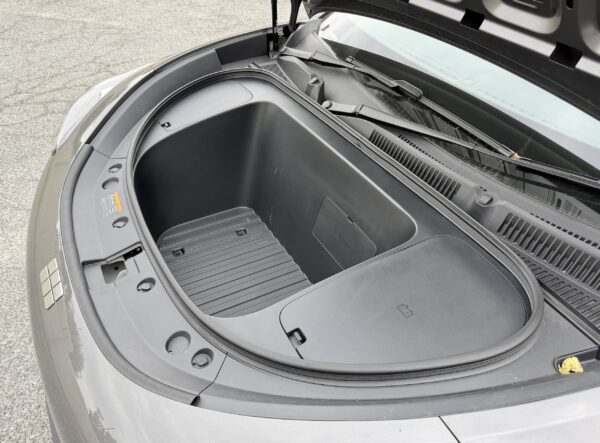
The E2 has a 375L trunk and 70L frunk, which is nifty. When the back seats are folded down, you get 1320L of boot space, which means that if you’re a traveller and carry big bags to the airport, it can comfortably fit for two adults when you park at the airport.
7. Long-term view
Load-shedding readiness: As small as this car is, it supports Vehicle-to-Load (V2L), which means you can use the car like a giant powerbank to power your home appliances. The speed you will get is 3.3kW and you would need an extension cable for this. I’m not sure if it is supplied with the vehicle.
Maintenance: The E2 comes with a 4-year/150 000km vehicle warranty; 8-year/200 000 km battery warranty and a 3-year/200 000 km service plan. In terms of roadside assistance, it is 5-year unlimited kilometre roadside assistance.
Geely previously shared at its media preview I attended that when the vehicle is financed, you can get it for R3 999PM, and it includes a R7 500 charging voucher to use at public chargers, plus a free wallbox and emergency charger.
8. Recharged verdict
| PROS | CONS |
| Value for money; immediate monthly savings | May feel like effort going to 120km/h |
| Packed with tech for an entry-level car | No spare wheel |
| Very efficient and comfortable drive | Can beep for small things |
| Has a trunk and frunk |
Buy it if… You want to see immediate cost savings, want upgraded tech for less, you have a short urban commute.
Skip it if… You need to do long distance/cross provincial driving, like taking spontaneous road trips.


Recharged is an independent site that focuses on technology, electric vehicles, and the digital life by Nafisa Akabor. Drawing from her 19-year tech journalism career, expect news, reviews, how-tos, comparisons, and practical uses of tech that are easy to digest. Nafisa is a traveller at heart, having been to 46 countries and counting. Find her edutainment videos covering tech, EVs and travel on TikTok.