
I visited China earlier this month on behalf of Geely South Africa. And while some of that info on the trip is under embargo at the time of writing this post, I wanted to share my travel check list, or rather, tech list.
China is not a straight-forward country to visit, most notably because of the Great Firewall of China, where everything is blocked. This was my third trip there, after visiting previously in 2024 and 2011.
My travel tech list for China:
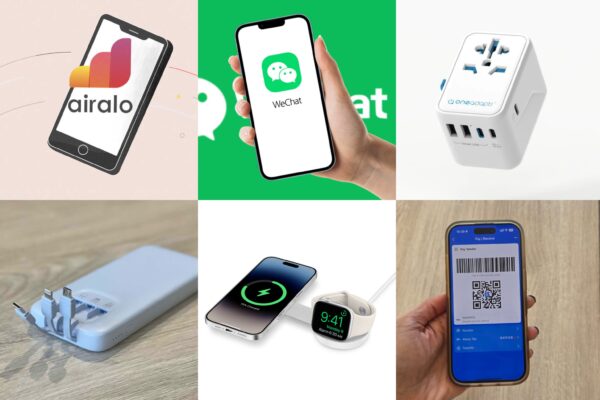
1. Airalo eSIM: I’ve successfully used my tried and trusted travel eSIM provider, Airalo, on my last two trips to China, for the main reason that it has a built-in VPN. This means that it will bypass the Great Firewall of China, and your Gmail, Instagram, and other favourite apps will work on there. If you buy a physical SIM when you land, you will need access to a VPN provider; Airalo eliminates that extra step, which is why I prefer using it. Sure, it can be seen as pricey than other providers, but there’s a $35 for 10 days unlimited option that I choose. You get 3GB a day, thereafter the speed is capped but you still have access. I don’t think I used anywhere near 3GB a day. New users, you can get $3 off your first eSIM or existing users, you can get 10% off all your future purchases with my code here via the Airalo app.
2. Vodacom Travel Data Bundle: I also happened to have tested the Vodacom Travel Data Bundle on this trip, a story I shared in my newsletter on my travel data hack. If you are a Vodacom customer, you can also purchase their travel bundle, which comes in two options, 1GB for R99 or 5GB for R349. It is valid for 7 days and it works in more than 200 destinations. Having tested it myself, it also comes with a built-in VPN for China, so your services should work as normal. You can find more info on the Vodacom website.
3. WeChat: If you are traveling for business, I highly recommend getting connected on WeChat. It’s China’s version of Whatsapp but as a super app, it has other services tied to it, including paying for travel and transportation while there. The one thing about this app, it needs someone to verify you who is on the app. So if your business contact in China has it, perhaps ask them, or if you have a friend there, they can verify you. It connects you to buy train tickets, their e-hailing service DiDi, hotels, etc. I personally did not want to add my bank card to the app (in favour of Alipay), so I skipped that and only used it as a chat app. I met a friend in Shanghai and this was our primary method of communication.
4. Alipay: I first downloaded Alipay on my trip to China last year. You need an internet connection for it to work, so likely through an eSIM, Vodacom or similar travel bundle, or local SIM. This is the main app for foreigners to transact in China as your local bank cards don’t work there. It lets you scan a QR code to pay the local vendor and thankfully, most places I’ve been to in China accepts it. You can load your South African cards onto Alipay, I loaded two cards from two banks, just to have backup. But don’t skip on the verification step. It will request to take a photo of you and your passport info. I used it without doing it in 2024 but I needed to do it in 2025. Alipay is then your gateway to things like DiDi taxis, train tickets, hotels, etc.
5. OneAdaptr OneWorld65: I’ve been to a couple of provinces in China and the plug points are different. Last year, I didn’t need my adaptor in Beijing, while I did pack it, it had two-pin plugs in our hotel rooms. This year, in Hangzhou, it has a straight plug points that we don’t use in SA. Don’t assume two provinces are the same. I carry my OneAdaptr OneWorld65 universal plug everywhere besides Europe as our plugs work there. It has 3x USB-C, 2x USB-A and a 2 pin point. At 65W, it fast charges my MacBook and supporting devices. It also has one of the highest safety ratings so I don’t have to worry about overheating. I reviewed it here.
6. Twelve South Butterfly SE 2-in-1 charger: I prefer relying on as few cables as possible. I have my Twelve South Butterfly SE charger permanently in my travel pouch, which charges my phone and watch but connects to a single USB-C cable. It’s just neater on the night stand with less clutter. I reviewed it here but it’s not available in South Africa, however iStore has a similar Moov 3-in-1 charger that uses one cable for your iPhone, Apple Watch and AirPods.
7. Romoss PHC10 Powerbank: I don’t go anywhere without this Romoss PHC10 Powerbank because it has built in cables attached to it. It’s slim, has a 10 000mAh capacity and cables for USB-C, Lightning and Micro USB. So it should be able to charge any gadget you have. Another nifty feature about it is that it supports pass through charging. So it can charge and recharge simultaneously. I connect my phone to it sometimes and charge it overnight so both my phone and the power bank charges overnight. I reviewed it here.
8. Apple Ecosystem: If you are on an iPhone, Apple services work in China. This means your official apps and services like Mail, Maps, Translate, iCloud, App Store, FaceTime and iMessage will be accessible, regardless if you have a VPN or not. Google Maps is not used in China and you will notice it may be inaccurate for directions to places and you cannot find public transport info on it. You may find it easier to get around and plan routes with Apple Maps if you are on iPhone. The main maps in China, Baidu Maps, is not in English. If you are on Android, download all apps that you may need ahead of flying to China.
9. VPN: You can use VPN services like Privado, which is free and gives you 10GB of access, but important to note, this is on the free tier. You do get other paid for VPN services. According to their website, they offer 10GB of data every 30 days with access to 13 global servers. I did sign up for this as a back up, as shared by an industry colleague, but due to Airalo’s built-in VPN, I didn’t need to use it.
If you are heading to China, I hope you find this post useful.


Recharged is an independent site that focuses on technology, electric vehicles, and the digital life by Nafisa Akabor. Drawing from her 19-year tech journalism career, expect news, reviews, how-tos, comparisons, and practical uses of tech that are easy to digest. Nafisa is a traveller at heart, having been to 46 countries and counting. Find her edutainment videos covering tech, EVs and travel on TikTok.