

There is nothing quite like the excitement of planning a holiday. One moment, you are comparing flights, and the next, you are hunting for the perfect hotel, arranging airport transport, and bookmarking restaurants you definitely plan to visit.
Unfortunately, travellers are not the only ones getting ready for travel season.
Cybercriminals are increasingly targeting people at every stage of their journey, from the first flight search to the final taxi ride home. According to Kaspersky, its security solutions recorded almost 270,000 attack attempts disguised as well-known travel-related brands over a 12-month period.
To help travellers explore with a little more confidence, Kaspersky has introduced its Safe Travel Insights handbook, which combines destination inspiration with practical advice for avoiding digital threats while travelling.
WHY TRAVELLERS ARE SUCH ATTRACTIVE TARGETS
Modern travel is heavily dependent on digital services. We use airline websites, ride-sharing platforms, accommodation apps, online travel agencies, QR codes, digital boarding passes, and mobile payment systems, often within the same day.
This convenience can also make us vulnerable.
When booking a trip, people are usually working quickly, comparing prices across multiple tabs, and trying to secure a deal before it disappears. A message claiming that a booking has failed, a flight has changed, or a special price is about to expire can therefore feel particularly convincing.
Cybercriminals know this.
They frequently copy the branding of trusted airlines, transport companies, and accommodation services to create fake websites, fraudulent apps, phishing messages, and bogus promotions. The aim may be to steal account credentials, capture payment information, install malware, or gain access to a traveller’s device.
As Evgeny Kuskov, Lead Security Researcher at Kaspersky, explains, travel brands combine three things criminals find especially useful: trust, urgency, and regular payment activity.
Travellers are also likely to act quickly when they believe their flight, hotel, or transport booking is at risk. That urgency gives scammers an opportunity to rush people into clicking before they have time to check whether a message is genuine.
TRANSPORT BRANDS FACE THE MOST IMPERSONATION
Kaspersky researchers examined cyberthreats distributed under the guise of several major airlines, ride-sharing services, transport platforms, and travel search brands.
Between the second quarter of 2025 and the first quarter of 2026, Kaspersky solutions detected 262,663 threats associated with these transport brands.
Attacks disguised as Emirates represented 61% of all transport-brand detections, while those impersonating Uber accounted for 37%.
Together, these two familiar brands made up the overwhelming majority of recorded activity in the category. This highlights how criminals often concentrate their efforts on widely recognised services with large customer bases and frequent payment transactions.
The brands examined also included BlaBlaCar, Expedia, Bolt, Qatar Airways, Air France, Lufthansa, Kayak, Singapore Airlines, Turkish Airlines, British Airways, Wizz Air, Trip.com, Skyscanner, and Ryanair.
The findings suggest that criminals are not limiting themselves to one particular corner of the tourism industry. Airlines, booking platforms, and ride-sharing services can all be used as bait.
SCAMMERS WANT MORE THAN YOUR BOOKING DETAILS
The most common threat type detected among files and objects associated with transport brands was Trojans, accounting for 30.5% of detections.
Trojan-Bankers represented a further 22.5%.
Trojan-Bankers are specifically designed to steal banking credentials and payment information. This means a fake flight notification or transport offer may not simply be an attempt to access a travel account. In many cases, the attackers may be trying to reach the victim’s bank account.
A traveller may believe they are confirming a reservation, claiming a refund, or paying for a discounted ticket, while actually handing sensitive financial information to criminals.
FLIGHT COMPENSATION SCAMS THAT CREATE PANIC
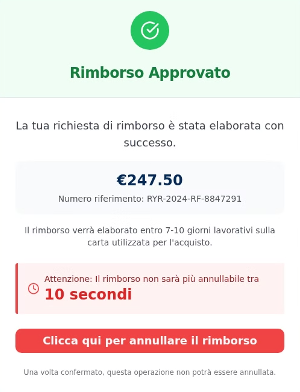
One scam identified by Kaspersky researchers impersonated Ryanair and used the promise of flight compensation to attract victims.
The recipient was told that they qualified for a compensation payment. To receive it, they were directed to enter account credentials or pay a small processing fee.
The scam also created intense time pressure, giving the victim only seconds to respond before the supposed compensation offer expired.
That countdown is a major warning sign.
A legitimate airline compensation process will not force a passenger to make a financial decision within seconds. Airlines also do not require customers to pay an upfront fee before receiving a genuine refund.
Whenever a message combines unexpected money with an urgent deadline, it is worth slowing down and checking the claim independently.
Rather than clicking the link in the message, visit the airline’s official website or app and contact its customer service team directly.
BOOKING AND ACCOMMODATION SCAMS REMAIN A REAL RISK
Transport brands attracted the greatest number of detections, but accommodation and travel-service platforms were targeted too.
Between the second quarter of 2025 and the first quarter of 2026, Kaspersky recorded 5,414 attack attempts associated with brands such as Booking.com, TripAdvisor, Agoda, Airbnb, and Viator.
Trojans accounted for 54.6% of the threats distributed under the guise of these travel-service brands.
Although this figure is smaller than the number recorded for transport companies, the potential consequences are still serious.
Travel accounts may contain:
- Personal contact information
- Stored payment details
- Passport or identification information
- Previous booking histories
- Travel dates and destinations
- Conversations with accommodation providers
- Details about activities and airport transfers
Access to this information could allow criminals to steal money, take over accounts, target travellers with more convincing scams, or install additional malware.
A FAKE HOLIDAY BOOKING CAN LOOK REAL
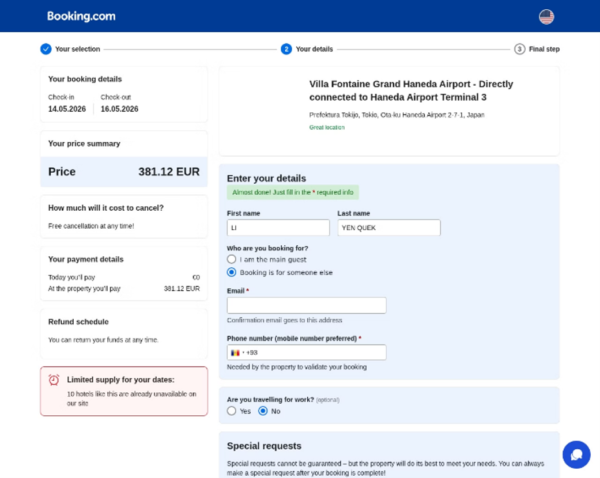
Kaspersky researchers also uncovered a scam impersonating Booking.com.
Victims were taken to a convincing fake booking page, where they were asked to enter their personal information and payment details to complete a reservation.
Everything appeared normal. The page closely copied the real platform’s checkout process, and the payment seemed to go through successfully.
However, no confirmation email arrived, no accommodation was actually reserved, and the money was sent directly to the scammers.
In some cases, victims may not realise anything is wrong until they reach their destination and discover that the property has no record of their booking.
This is one reason travellers should confirm reservations through the official app or website after making a payment. It may also be helpful to contact the accommodation provider directly, particularly when booking through an unfamiliar link.
PUBLIC WIFI ADDS ANOTHER LAYER OF RISK
Airports, hotels, cafés, shopping centres, and public transport hubs often provide free Wi-Fi, which can be useful when travelling internationally or trying to save mobile data.
However, public networks may not always be secure.
Travellers should avoid accessing sensitive accounts or making important payments over an unfamiliar public connection wherever possible. When public Wi-Fi is necessary, using a reputable virtual private network, or VPN, can help encrypt the connection.
Kaspersky Premium includes a VPN designed to provide additional protection when accessing travel services, email accounts, and other online platforms over public Wi-Fi.
QR CODES DESERVE A SECOND LOOK
QR codes are now a normal part of travelling. They may be used for restaurant menus, attraction tickets, hotel information, payments, transport schedules, and event check-ins.
However, a QR code can hide the destination of a link until it is scanned.
Criminals may place fraudulent QR codes over genuine ones or distribute codes that lead to phishing pages, fake payment portals, or malicious downloads.
Only scan QR codes from trusted, verified sources. Before entering information or making a payment, check the website address carefully.
Avoid downloading an app or file through a QR code unless you have confirmed that the source is legitimate. Kaspersky Premium’s Secure QR Scanner can check the links embedded in QR codes and warn users when a malicious or phishing site is detected.
SIMPLE WAYS TO TRAVEL MORE SAFELY ONLINE
A few careful habits can significantly reduce the risk of falling for a travel-related scam.
1. Use official websites and apps
Instead of clicking a link in an email, text message, or social media advert, open the airline, hotel, ride-sharing, or booking platform’s official app or type the website address into your browser.
This is especially important when a message claims there is a problem with a reservation.
2. Check the website address carefully
Phishing sites often use domain names that look almost identical to legitimate ones. A single changed letter, added word, or unusual ending may be the only clue.
Check the full address before entering a password, passport number, or payment details.
3. Be suspicious of urgent bargains
An unusually cheap flight or accommodation offer may be tempting, but extreme urgency is often used to prevent people from thinking clearly.
Be cautious when an offer requires immediate action, a wire transfer, cryptocurrency, gift cards, or another unusual payment method.
4. Protect your travel accounts
Use strong, unique passwords for each travel and transport service. Do not reuse the same password across multiple platforms.
Enable multi-factor authentication wherever it is available. This creates an additional barrier if a password is exposed.
5. Download apps from official stores
Only install travel and transport apps from trusted app stores. Check the developer’s name, user reviews, download history, and requested permissions before installing anything.
6. Monitor your accounts
Review bank and card statements after booking flights, accommodation, activities, or transport.
Report unfamiliar charges to your bank as soon as possible. Early action may help limit further losses.
7. Use security tools
Kaspersky Premium uses AI-powered scam protection to help identify phishing websites and fraudulent payment pages before sensitive information is shared. It combines machine learning, real-time monitoring, and identity-theft checks.
TRAVEL SMARTER WITHOUT LOSING THE FUN
Cybersecurity may not be the most glamorous part of holiday planning, but it is becoming just as important as checking your passport, packing the right charger, and remembering where you put the boarding passes.
Kaspersky’s Safe Travel Insights brings together contributions from employees in more than 20 countries, including South Africa, Türkiye, and Egypt. Alongside advice about phishing, payments, unsafe public Wi-Fi, and other digital threats, the project offers first-hand recommendations about local destinations, experiences, and food.
The aim is not to make travellers suspicious of every booking confirmation or QR code. It is to encourage people to pause, check, and make safer choices online.
A few extra seconds spent checking a website address or opening an official app could prevent a scam from turning an exciting trip into a very expensive headache.


Recharged is an independent site that focuses on technology, electric vehicles, and the digital life by Nafisa Akabor. Drawing from her 19-year tech journalism career, expect news, reviews, how-tos, comparisons, and practical uses of tech that are easy to digest. Nafisa is a traveller at heart, having been to 46 countries and counting. Find her edutainment videos covering tech, EVs and travel on TikTok.