
Nio South Africa approached Recharged to get a sneak peek of its upcoming fully electric Firefly, a B segment compact hatchback. It is expected to launch in the first quarter of 2027.
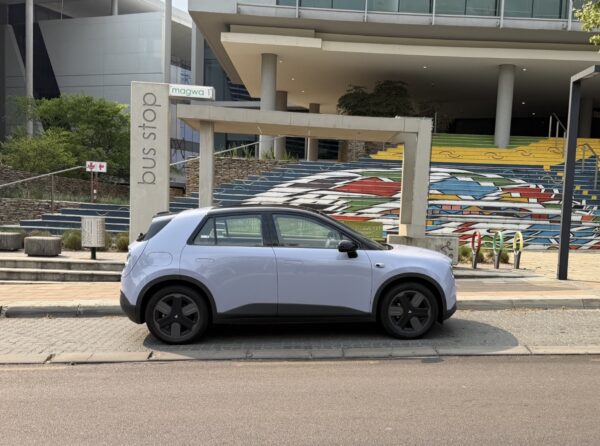
Nio South Africa tells us that the Firefly is expected to cost around R620 000 for the Firefly Comfort model we tested. There should be a base Firefly Select also available according to the brochure.
Given that the SA landscape has become a competitive space, there could be adjustments to the price but all details will be confirmed closer to launch.
There is an upcoming media event taking place in Johannesburg this week but alas Recharged will be out of town. Stay tuned to other media outlets for coverage.
NIO FIREFLY QUICK LOOK
- 105kW output and 200Nm of torque
- 0-100km/h in 8.1 seconds
- 41.2kWh battery with up to 330km range
- 11kW on-board AC charging
- Maximum 100kW DC charging
- Claimed efficiency: 15.2kWh/100km
WHERE DOES THE FIREFLY FIT IN?
As mentioned earlier, the Nio Firefly is being positioned as a premium EV. It’s a lifestyle mobility brand aimed at urban drivers. It will fall into the bracket of small cars that prioritise tech, design and clever packaging, instead of coming in as the cheapest EV in SA.
And South Africa already has a bunch of that, like the BYD Dolphin Surf, Geely E2 and Chery Q. The Nio Firefly sits above that, and will compete with the likes of the electric Mini Cooper SE and GWM Ora 5.
FIRST IMPRESSIONS AFTER A WEEK
I loved the design of the Firefly. It looks retro futuristic, with the trio of headlights on the front. In ways, it reminds me of the Honda E that I see abroad when I travel.
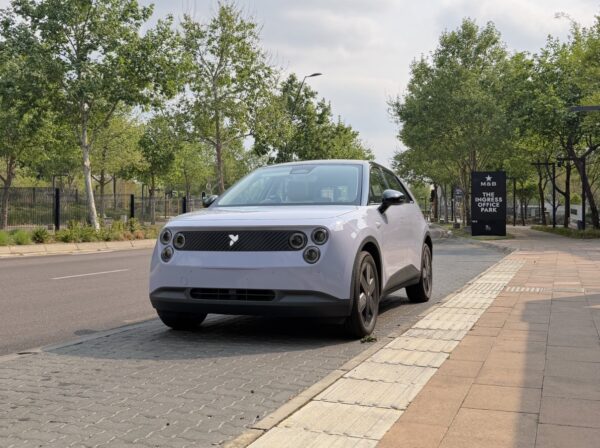
Everywhere I went, I had people stop to look, some ask questions and just all around lengthy gazes and head turns while they are driving. It certainly got attention, even at a road block, where I was asked questions about the car itself.
The car comes with an NFC key card that looks like a bank card. You tap the front mirror to lock and unlock, and when you get into the vehicle, the card needs to be placed in the centre in order to start the car.
I can’t say I enjoyed doing the card tapping on the side mirror. Sometimes when I was in a hurry, it felt like I wasn’t quite hitting the right spot and once tapped it 3 times before it registered. Of course this happened at my local shopping centre with an audience.
Important bit of info: the app for the car is not yet live in SA as it has not launched, but I’d imagine it would change this experience considerably and I would rather use an app.

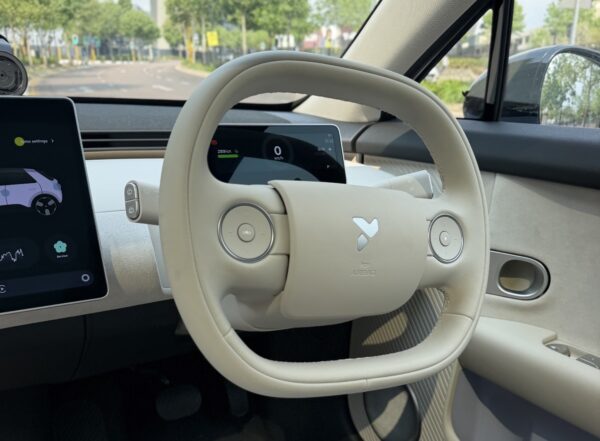
Inside, is very pared down. It’s minimalist, with just the steering wheel and screen. There are no buttons on the car, so everything is controlled via the touch interface. I’ve experienced this in a few other cars, and my thoughts remain the same: sometimes being too tech forward is not a good thing.
In this instance, it’s time consuming to go into settings that you may be accustomed to that have physical buttons on the dashboard. I prefer accessing climate control this way from temperature, to fan speed and physically controlling the vents.
I had an instance where I wanted to thank the car behind me and simply could not find the hazards in that moment so I waved my hand. Turns out it was on the roof of the car; not the first place I would look.
Speaking about the roof, the model I drove has a panoramic glass roof, and Nio says it allows UV-filtered light to come in. It does not have additional roof blinds to block out the sun, so in summer, you may be cranking up the air conditioner even more.
The car also has a lot of safety features built-in, as expected, but you have to remember to disable them every time you drive because it won’t remember the settings. One particular one is the moment you look away, it will beep. Even when you look at the driver display, it will beep. From my past reviews, you may know this isn’t my favourite feature. But, safety first.
I liked the minimalist drivers section where the seats look like a bench. It opens up room to keep stuff on the floor without feeling clunky. There are side storage compartments, the ones in the middle between driver and passenger.
TECH SPECS AND SAFETY FEATURES
The Firefly has a 13.2-inch infotainment display and a 6-inch digital instrument cluster behind the steering wheel. The vehicle runs on the Aster Intelligent System by Nio, the vehicle operating system that supports software and firmware updates over the air (OTA).
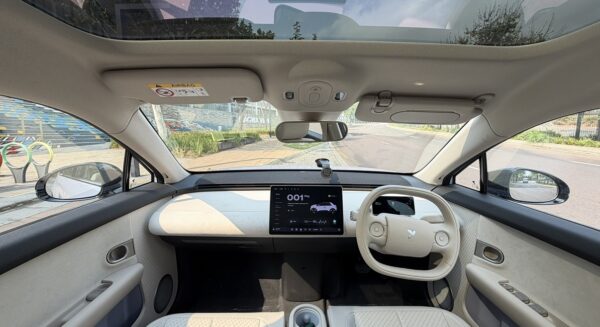
The main infotainment display is used for all controls in the vehicle as there are no physical buttons. The steering wheel is also simplistic with buttons on each side but they are not marked and it’s a guessing game as to what they actually do.
The Firefly has an in-car digital AI assistant called LUMO. It can be used for controlling certain functions, navigation and media. I do see how AI voice assistants can be useful in vehicles that don’t have physical buttons and controls, but more on that below.
While the vehicle supported Apple CarPlay during my time with it, Android Auto will be coming soon via an OTA update when the final model version hits South Africa.
The vehicle has a bunch of apps built-in, packaged in a visually appealing interface. Buttons are large, and easy to access, similar to that of a smartphone.
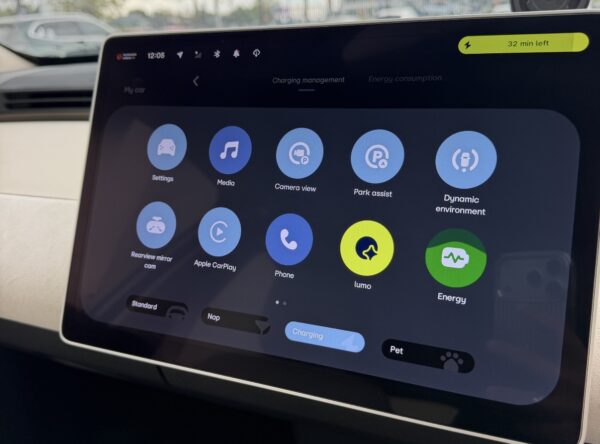
The car supports heated front seats and steering wheel, panoramic roof with UV protection and heat insulation, 256 colour ambient lighting, a 14-speaker 640W Dolby Atmost sound system.
Other safety inclusions are an 8MP camera, five 2MP surround-view cameras, an advanced driver monitoring system, a reverse camera, 12 ultrasonic sensors and 21 high-precision sensing units.
There are 24 safety and assisted driving functions, like adaptive cruise control, lane-keeping assist, blind-spot detection, forward and rear autonomous emergency braking, traffic-sign recognition, active lane change and advanced parking assist. The car has 7 airbags.
DRIVING THE FIREFLY AND DATA
The vehicle is sufficiently quick because it’s an EV, but bear in mind it has 105kW of power. You can toggle various driving modes: eco, comfort and sport. I just drove it in comfort mode most of the time.
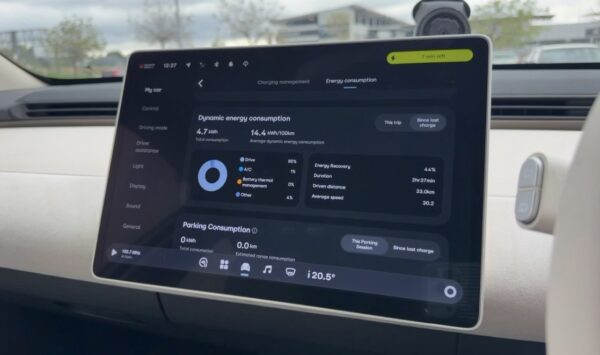
I see it as an EV that you would use primarily in urban areas, without the lengthy road trips, given the range.
My energy consumption as shown by the vehicle:
- Last 50km – 12.0kWh/100km
- Last 10km – 18.3kWh/100km
It’s a fairly efficient vehicle, as you can tell. However, my last 10km shown above was because I was in a rush to get it charged ahead of returning it and it actually reflects that. Most of the time, my stats were excellent.
The level of data shown is very detailed, which I love.
CHARGING THE NIO FIREFLY
The car has a 41.2kWh battery. I took it to charge multiple times during my time with it but when I did a final one to 100% it showed me 300km of range. This is more realistic as it was based on my existing driving behaviour, vs. the 330km of range Nio says you can get with it.
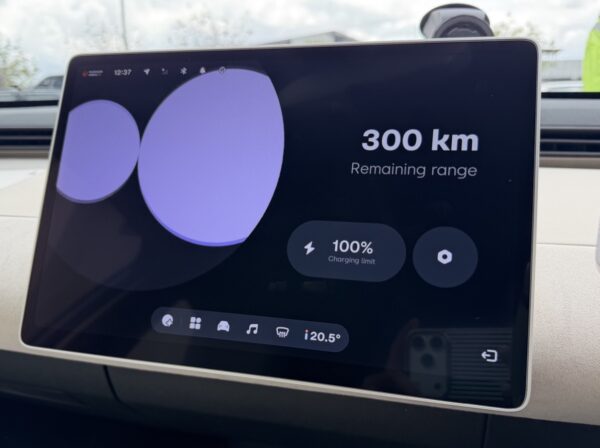
But at the same time, if I drove super efficiently, there is a good chance it would have shown more range.
Here’s a quick look at my charging during the 3 different slots. I found that because it was 300km of range, I was charging it more frequently. Also, the vehicle has a maximum charging speed of 100kW on DC charging:
| Charger | Battery Charged | Duration | Total |
| Rubicon (w/ GridCars Card) | 22.278kWh | 32 minutes | R183.46 |
| Rubicon (w/ GridCars Card) | 32.430kWh | 47 minutes | R267.07 |
| Rubicon (w/ GridCars Card) | 8.501kWh | 45 minutes | R70.01 |
As you can see, the time of the charger will give you an idea of how far I charged it. The first charge was to 80% because charging to 80% is the quickest. So a quick 32 minutes wasn’t bad. The second charge was close to 90% while the last one, with the last battery charged, was the longest because it takes the longest to charge from 80-100% on the an EV.
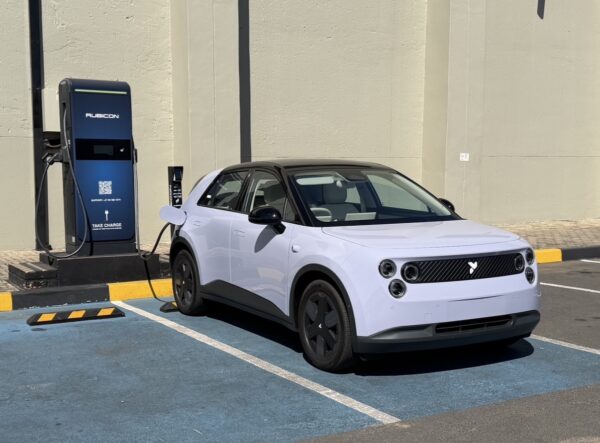
I usually charge an EV to 80% for this reason, it’s the quickest, plus most manufacturers recommend this to keep the battery in optimal health.
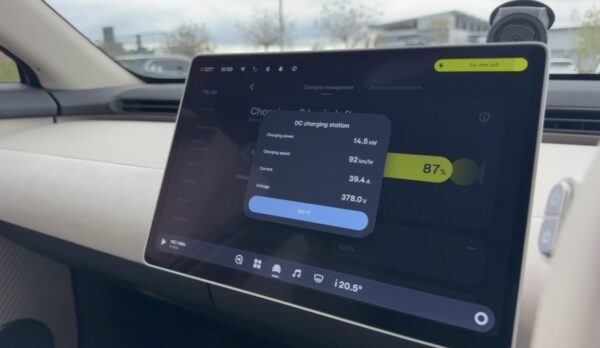
The one thing I appreciated on the Firefly was the level of detail per charge in real time, I’ve not seen data showed this way on an EV while I am charging it. It is a nice touch if you like stats:
Here’s what it will cost to charge the battery, but nobody actually runs the battery down to 0%:
| Charging point | 41.2kWh Battery |
| Home – Eskom rate at R2.69/kWh | R110.83 |
| Public AC Charging at R5.88/kWh | R242.25 |
| Public DC Charging at R7.35/kWh | R302.82 |
| Rubicon charger with GridCars Card at R8.24/kWh | R339.49 |
| Zero Carbon Charge at R9.15/kWh | R376.98 |
THE FRUNK IS THE PARTY TRICK
The Firefly is just over 4m long yet manages to pack in a 92L frunk, one of the largest on the market, and a 404L boot. When the seats are folded down, it takes the boot capacity of 1253L, and if you add the 92L frunk, it’s a total of 1345L of storage, which is mighty impressive.
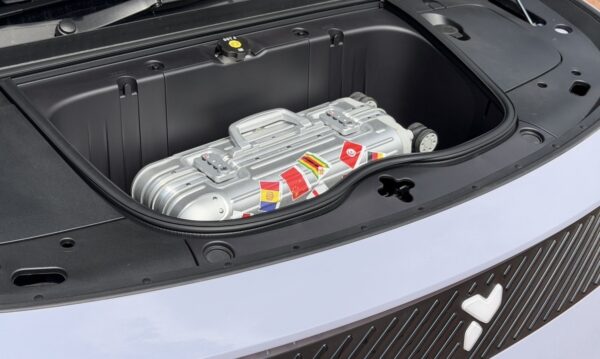
I also managed to fit in my cabin luggage in the frunk, and it fit perfectly. I was not expecting that, but it’s a perfect illustration of how large the frunk is, especially if you’re a frequent flier.
NIO COMPANY BACKGROUND
Nio is a smart EV company headquartered in Shanghai, China, and was founded in late 2014. It operates three brands: Nio (premium EV), ONVO (family-oriented EVs), and Firefly (high-end EVs).
The Firefly was unveiled globally in December 2024 and began sales in China in April 2025. The company is now expanding internationally, including right-hand drive markets like South Africa. It has sold 80,000 units to date.
The Lebano Group, a mining company, will handle the local operation and distribution of the Firefly as it expands, according to the Business Day.
FINAL THOUGHTS
I think the Nio Firefly is an interesting addition to the local EV landscape. It goes head to head with Mini and Ora, and offers something a little extra for those who don’t want an entry level EV to get from A to B.
It’s funky, offers some personality and charm, plus there is no shortage of tech inside the car. Some of my issues with the vehicle were software gripes, but I’m also aware that this is not the final production unit that will be sold in South Africa. I am looking forward to whatever tweaks that will come, plus importantly, when the app launches.
Regarding the price point, I am curious to see if it will remain according to the figures quoted by the brand however, everything about the Firefly is subject to confirmation.
First Look: Nio Firefly


Recharged is an independent site that focuses on technology, electric vehicles, and the digital life by Nafisa Akabor. Drawing from her 19-year tech journalism career, expect news, reviews, how-tos, comparisons, and practical uses of tech that are easy to digest. Nafisa is a traveller at heart, having been to 46 countries and counting. Find her edutainment videos covering tech, EVs and travel on TikTok.