
The BMW iX2 is for those who want an electric SUV that looks a little different from the usual family SUV. With its sloping coupé-style roofline, familiar BMW styling and fully electric drivetrain, it brings a more niche offering to the EV space.
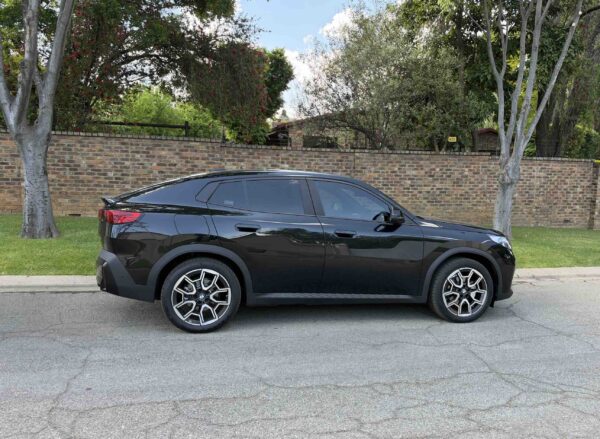
But at over R1.3-million, it’s a premium purchase. It has the iX2 badge, the modern tech and everyday practicality that makes BMW EVs so popular but the question is, does it make sense as an EV in SA?
I spent time with the BMW iX2 as part of my on-going Living Electric series to find out what it’s like to live with, from everyday driving and charging to the technology and related costs.
QUICK LOOK: BMW iX2 eDRIVE20
- 150kW of power, 250Nm of torque
- 0-100km/h in 8.6 seconds
- 64.8kWh nett battery
- Up to 470km of claimed range
- 22kW AC charging speeds
- 130kW DC charging speeds
- Price: R1.3-million
1. WHO SHOULD BUY THIS CAR?
The BMW iX2 is aimed at buyers who want a premium electric SUV but would rather have something with a sportier silhouette than the more conventional shape of the BMW iX1.
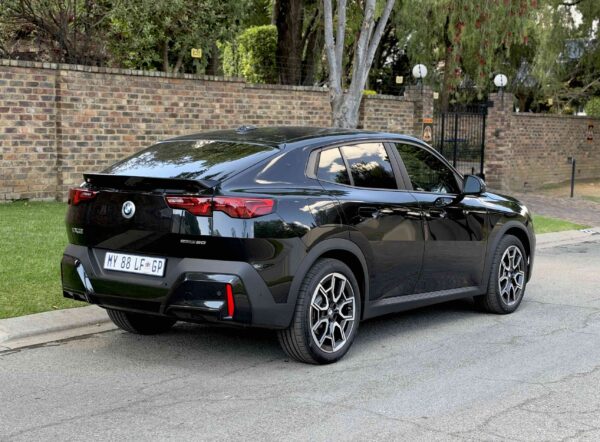
The sloping roofline gives a distinct appearance, while the raised driving position, five-door layout and decent boot make it more practical than a traditional coupé.
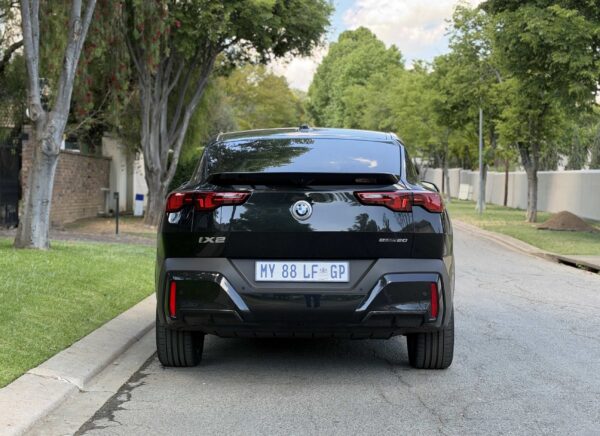
At R1.3-million, however, the iX2 isn’t an entry point into electric motoring. It’s a premium purchase competing with other electric SUVs from BMW and other brands.
The single-motor eDrive20 produces 150kW and 250Nm, with power sent to the front wheels. That should be sufficient for daily commutes, school runs, shopping and longer journeys, although buyers looking for the performance of a dual-motor electric SUV should be aware that this model isn’t the xDrive30 sold in some international markets.
Buyers of the iX2 are going for its distinctive design, electric drivetrain and BMW badge.
2. RANGE REALITY
BMW claims a driving range of up to 548km for the iX2 eDrive20. After driving it for just over a week. I can say that it is nowhere near that.
And not to reiterate the obvious, but everyone will get different figures based on driving style, speed, routes, weather and the use of air-conditioning.
From my time with the car, my consumption was quite high at 18kWh/100km. Given that it has a 64.8kWh battery, my total range from my driving style and factors relating to me, would mean it gets me 380km of range from a single charge. Not really great considering the claimed range is 548km.
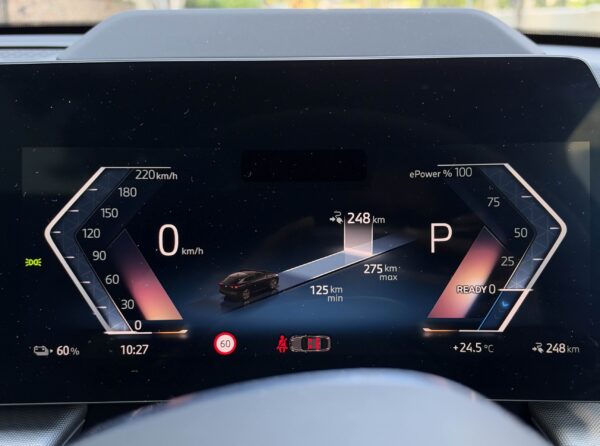
When compared to the figures BWM quotes, energy consumption is approximately 14.3kWh/100km. I living in a suburb, I don’t speed when I leave home (I work from home), so it’s attending events, doing errands etc. There’s not a lot of room for me to go at high speeds. I think the car uses a lot more energy than it claims.
Highway driving generally uses more energy than urban drives, so paying attention to consumption rather than relying on the estimated kilometres displayed on the dashboard is key.
And when your battery is running low, you can use the Maximum Range mode, which adjusts vehicle settings to conserve energy. This includes limiting the speed, and energy used for certain comfort features. It’s useful for you’re trying to stretch the battery ahead of charging.
3. HOME VS. PUBLIC CHARGING
Charging at home is the most convenient way for EV owners. The iX2 supports AC charging with an 11kW on-board charger, but goes up to 22kW. For public charging, it supports DC fast charging at up to 130kW.
BMW quotes around 29 minutes for a 10% to 80% charge under suitable DC fast-charging conditions. Actual charging times depend on factors such as the charger’s output, battery temperature and the vehicle’s state of charge.
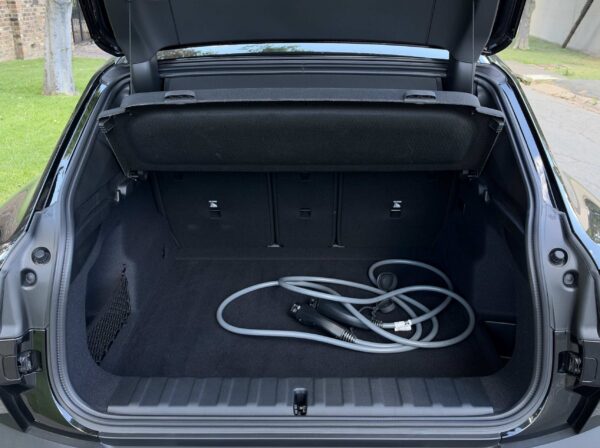
The 22kW AC capability is available on the Pioneer Package as an optional extra, and is useful if you have access to a compatible three-phase charger. If you’re charging at home using a lower-powered wallbox, the charging time will be longer. A 7.4kW wallbox will take longer to charge than a 22kW connection. A regular AC charging cable is supplied.
Important to note, BMW does not supply a wallbox charger with the purchase of the iX2.
Here are estimates on what it will cost to charge the full battery. I always use the total size but it must always be stated that nobody is running down an EV battery to 0%. I also refer to the Eskom rate I am currently paying, based on my usage.
| COST | LOCATION | TOTAL |
| 64.8kWh x R2.69 | At home, using my Eskom rates | R174.31 |
| 64.8kWh x R5.88 | Public AC charging | R381.02 |
| 64.8kWh x R7.35 | Public DC charging | R476.28 |
| 64.8kWh x R8.24 | Rubicon using GridCars Card | R533.95 |
| 64.8kWh x R9.15 | Zero Carbon Charge | R592.92 |
I actually ran into issues charging this vehicle, and by issues, I mean the charging stations were full. This was time-consuming to drive around for bays, and I once went to a fourth charger before I could charge. It is also why I couldn’t at the time charge to 100% as I would have, since all of this cut into my time.
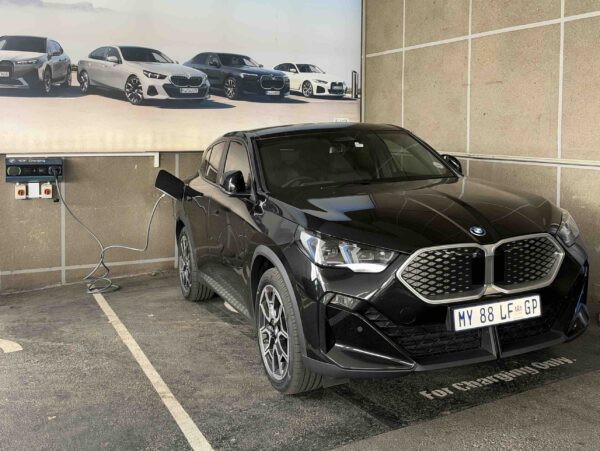
Most EV owners will tell you that having a home wallbox charger is key to owning an EV. Based on finding an open bay on the fourth try for the iX2, this while checking the Grid Cars Live Map feature, and at two locations, just as I got there, EVs pulled in before me – we have an infrastructure problem.
It was a frustrating experience but it ties into how NEV sales have exploded this year in SA, which is set to be a new record year and it’s not even over. PHEVs and BEVs in particular have grown so much that I can finally admit there are not enough public chargers for the amount of vehicles on the road. Even more frustrating is getting to a charger and it’s being taken up by a PHEV. Given the small battery size, these vehicles should just charge at home instead of a DC charger.
A gripe of mine that I am going to touch on: One cannot ignore the fact that Chinese EV makers have not contributed to the charging infrastructure in this country. Most legacy brands paid early on to rollout for the costly investment and now, as our market has a sufficient amount, are we seeing an influx of Chinese EVs.
It’s obvious that it was a strategic decision to wait this long to bring more options because they didn’t have to lay down the foundation. Though, BYD has made commitments to work with Eskom to roll out chargers in public places like schools, hospitals, etc. which is a great initiative since these places were not targeted before.
4. LIVING WITH THE TECH
BMW’s curved display and iDrive infotainment system are central to the iX2’s cabin. The system combines the digital instrument cluster with the central touchscreen, giving the dashboard a modern, technology-focused feel.
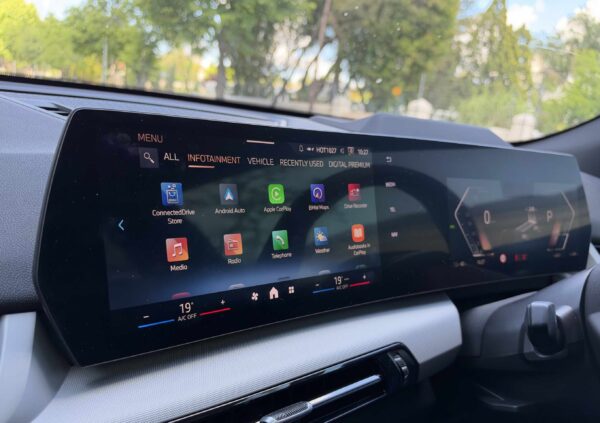
Apple CarPlay and Android Auto are standard, plus there’s a wireless smartphone charging pad, voice controls and a customisable head-up display.
Parking Assist Plus, including surround-view camera functionality, is a practical addition for navigating tight parking spaces and manoeuvring in busy shopping-centre car parks, if you are inclined to use it.
The iX2 also includes a panoramic glass roof, adaptive LED headlights and electrically adjustable front seats. These features give the cabin a more premium feel.
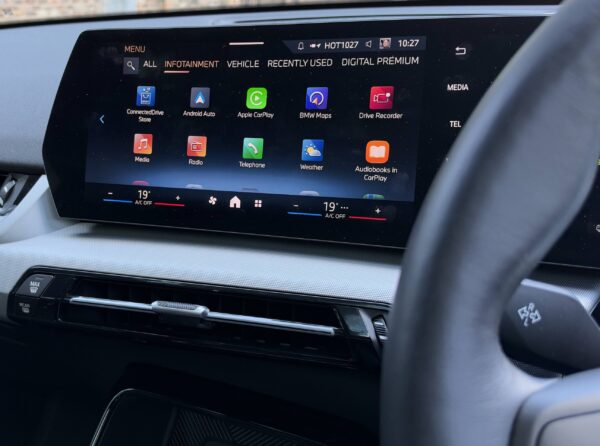
The cabin is also very modern, there are barely any physical buttons, which may be a deal breaker to some. It is also why voice commands inside vehicles start to make sense. It’s tricky finding items in the menu, especially car settings, and why it’s just easier to ask the car to do it. Examples are changing to the radio, switching stations, opening the roof blinds, adjusting climate etc.
That said, BMW has an excellent, if not the best vehicle smartphone app I’ve used so far. It remembers settings from the app or previous vehicles you’ve driven, and you can control certain features remotely. I love using it to monitor battery levels, charge statues etc.
5. ACCESSING DRIVING DATA
Straight from the point I mentioned earlier, BMW makes the best car app I’ve used, and accessing your driving stats from it is so simple. You don’t have to do anything apart from linking the car/VIN number to the app, which you need to be logged in to.
Thereafter, it will automatically keep a record of every trip you do, and every charge you make, alongside other relevant vehicle information. I don’t want to repeat myself too much, but since July, I’ve covered this in the following posts: Mini Countryman SE, the BMW iX xDrive60, and the BMW X3 30e PHEV that you can refer to.
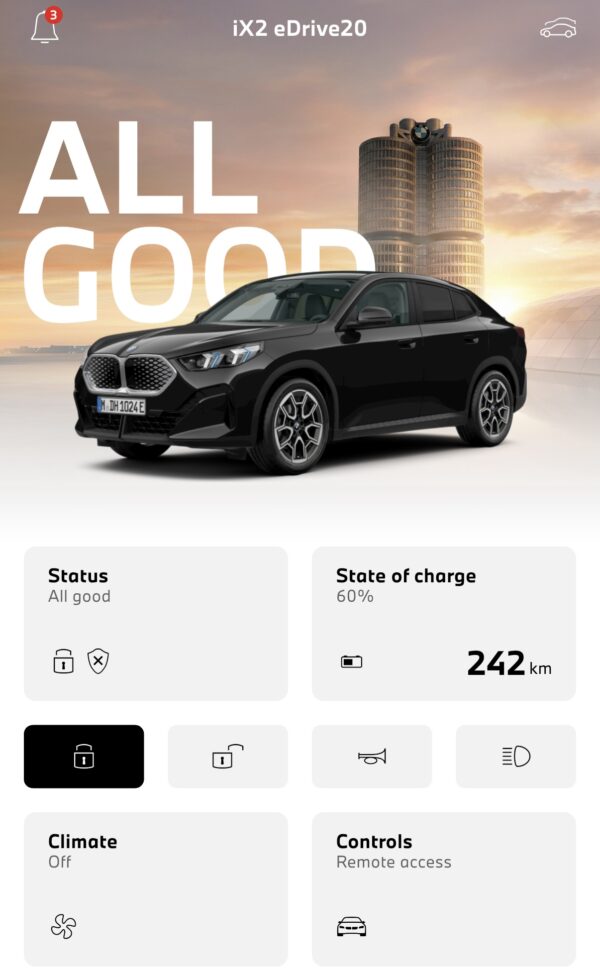
If you’re someone who logs miles or submits this professionally, you can export the data on Excel etc. It’s one of the best executions out there if this is something important to your job.
Also, opening the app at any time means you can monitor the car at all times. I especially love that when I’m using public EV chargers, I can also check the status, and more importantly, get notified if a charge on the vehicle has been stopped for whatever reason.
But overall, data is useful in the long term. After a while, you can start noticing how much you drive per month, how much you charge, and what your total cost is, from cost per km to how much you’re paying instead of paying for petrol.
6. CITY DRIVING VS OPEN ROAD
The iX2 should appeal to drivers who want a quiet, smooth drive with instant torque available when pulling away from traffic lights or overtaking.
Its 150kW output and 250Nm of torque are delivered through a single-speed transmission. it’s 0-100km/h in 8.6 seconds is not exactly performance levels but suited if consumption figures are important.
Regenerative braking helps recover energy when slowing down, and selecting the right driving mode can make the car feel natural in traffic. A stronger regeneration reduces how often you hit the brakes. I love the ability to switch between them at a touch of a button, so there’s less thinking involved if I need to be in Eco mode.
On the open road, the iX2’s performance, cabin refinement and driver-assistance technologies are apparent. Active cruise control and lane-assistance features can help reduce the workload on longer journeys, although you’re always responsible for driving safely.
The coupé-style roofline gives the iX2 its distinctive look, but buyers should also consider rear-seat headroom, visibility and the ease of loading bulky items compared with a more upright SUV. I struggled with the visibility on the iX2, with its sloping roof as it felt a bit too narrow. I felt claustrophobic in the cabin.
7. LONG TERM VIEW
Load-shedding readiness: BMW does not support vehicle-to-load, with the exception of the iX3 that was recently launched.
Maintenance: The iX2 has a 2 year unlimited km warranty; a 5 year/100 000km maintenance and service plan, plus an 8-year/160 000km battery warranty.
8. RECHARGED VERDICT
| PROS | CONS |
| Slick BMW interface and premium cabin | Max 130kW DC fast charging |
| BMW app is superior to any other app | No wallbox charger included |
| Comfort drive and ride quality as expected from a BMW | Visibility is reduced due to sloping back glass |
| Range is lower than promised | |
| Consumption is higher |
Buy it if… you want a distinctive coupe-style design, tech-forward cabin and if the boot space meets your family needs.
Skip it if… you travel long distances regularly, consumption figures matter, and you like physical buttons.


Recharged is an independent site that focuses on technology, electric vehicles, and the digital life by Nafisa Akabor. Drawing from her 19-year tech journalism career, expect news, reviews, how-tos, comparisons, and practical uses of tech that are easy to digest. Nafisa is a traveller at heart, having been to 46 countries and counting. Find her edutainment videos covering tech, EVs and travel on TikTok.