

Google hosted its first inaugural Cloud Summit, an African first at the Sandton Convention Centre in Johannesburg. The event brought together 3000 guests including business leaders, partners, media, developers and the public sector.
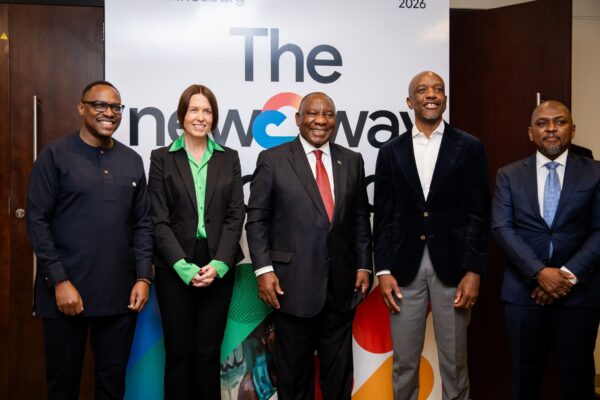
Opening the summit was President Cyril Ramaphosa, who positioned the continent at the centre of the next great technological revolution.
“For far too long, Africa has had to play digital catch-up with the world’s leading and most industrialised economies. We are now presented with a unique opportunity to be in the driving seat of our own industrialisation and growth,” said Ramaphosa.
“As we step boldly into the age of artificial intelligence, our aspiration is to anchor South Africa as a catalyst for the continent’s digital ascendancy. By building robust infrastructure to harness this technology, we are doing more than modernising our economy, we are taking a quantum leap into the future.”
The President also emphasised that digital infrastructure should now be regarded as essential national infrastructure. Just as previous generations built roads, ports, dams and power stations, he argued that today’s generation is responsible for building the digital infrastructure that will power Africa’s future.
This includes cloud infrastructure, AI capabilities and digital public infrastructure that can support both government services and private sector innovation.
“Our ambition is not simply to expand and host data centres. Our ambition is to build companies. To produce researchers. To commercialise African ideas. To create intellectual property that competes globally.”
Ramaphosa also outlined a vision of how AI and cloud technologies could improve everyday life in South Africa, such as modernising public administration, healthcare, education, transport and the delivery of basic services.
He described potential applications ranging from cloud-based educational content delivered directly to classrooms, to AI being used for disease management and prevention, managing the national electricity grid, helping farmers predict weather patterns and supporting scientists in responding to climate change.
Google announced five new initiatives at the summit:
1. Building foundational infrastructure: Today, Google announced a new connectivity hub called the Digital Exchange Port, located in the Eastern Cape. It is the first of four connectivity hubs Google has committed to on the continent, and will anchor the country as a strategic international switching point via the Umoja subsea cable to Australia, and a new cable to India.
2. Building Africa’s first applied AI lab: In Ghana, Google AI Futures Fund, Google Research, and leading VC partners are launching Africa’s first applied AI lab. The Google Africa Applied AI Lab pairs African founders with Google researchers and provides early access to Google’s latest AI models. Based at the Accra AI Community Centre (AICC), the Lab supports founders from across the continent in using the latest AI research to address real-world, uniquely African challenges across work, knowledge, creativity, entertainment, and software development, which helps support Africa’s first generation of AI-native unicorn startups. Applications are open now and will close on August 31, 2026.
3. Building capacity through creative AI education: Google has partnered with The Akuna Group to empower underrepresented creators in Africa. Backed by more than $1 million (R17 million) in Google.org funding, the program delivers AI creative education alongside advanced digital tools. The program’s goal is to equip African creators to tell locally rooted stories in new ways and forge professional advancement pathways.
4. Building the talent pipeline with a digital innovation centre: To ensure the next generation is equipped to lead in the AI era, Google’s Economic and Community Development programme and WeThinkCode has committed to build a R3 million digital innovation centre at the George Tabor Campus of South West Gauteng TVET College in Soweto. Once complete, the centre will serve as a scalable skills platform built to reach talent the industry usually overlooks.
5. Building the next generation of African founders: On July 21, 2026, Google will open applications for the 2026 South African cohort of its Google for Startups Accelerator. The program will select 15 local startups for an AI-focused curriculum, hands-on mentorship, and non-dilutive, equity-free funding. This fulfils part of Google’s pledge to back 50 African ventures between 2024 and 2028.
Also speaking at the event, Google’s Senior Vice President for Research, Labs, Technology & Society, James Manyika, who said that the AI opportunity for Africa is significant, and Google is committed to doing our part working with Africans to help Africa realise it.
“Building on our past commitments, we’re making new investments in critical areas: infrastructure, African-led innovation, and education and skill building. From a new Digital Exchange Port in the Eastern Cape to Africa’s first Applied AI lab, we’re harnessing technical progress and building partnerships to amplify and scale Africa’s incredible vibrancy, hustle, and innovation for the world,” says Manyika.


Recharged is an independent site that focuses on technology, electric vehicles, and the digital life by Nafisa Akabor. Drawing from her 19-year tech journalism career, expect news, reviews, how-tos, comparisons, and practical uses of tech that are easy to digest. Nafisa is a traveller at heart, having been to 46 countries and counting. Find her edutainment videos covering tech, EVs and travel on TikTok.



