
The Dayun S5 Mini SUV is currently South Africa’s “cheapest” electric vehicle, or least expensive, however you look at it. The Chinese import’s base model starts at R399 900 and the VIP model is R449 900.
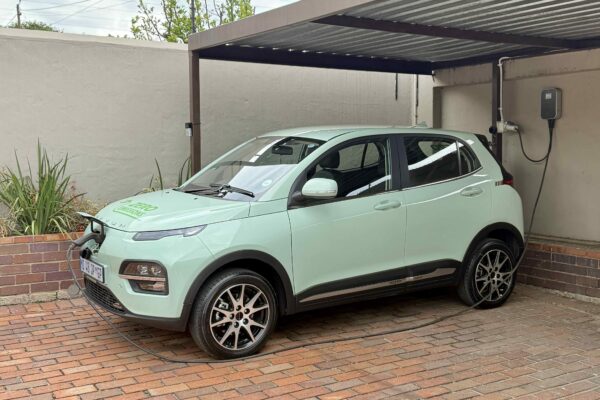
It was announced in July 2024, by Pretoria-based importer Enviro Automotive as the Dayun Yuehu S5 but has since been rebranded when it became available in 2025.
I recently spent a weekend in the S5 Mini SUV and in case you’re wondering, I also don’t know why the word “SUV” is in the name when it feels more compact hatch. I was supplied with the VIP model with the ultrasonic radars for the parking cameras, bigger wheels, and additional remote features on the app.
Dayun S5 Mini SUV Quick Look
- 35kW of power and 105NM of torque
- 31.7kWh battery with around 330km of range
- Top speed of 110km/h
- AC charging at 6kW; DC charging at 30kW
- Parking cameras, tyre pressure monitoring
As published in my original article:
Dayun Yuehu S5 Standard: It features automatic headlights, a rearview camera with Reverse Assistance (RA), a Tyre Pressure Monitoring System (TPMS), a Keyless Start System, central locking, an ISOFIX child seat anchor point in the rear and a Low-speed Driving Warning System for pedestrian safety.
Dayun Yuehu S5 VIP: It features four ultrasonic radars in the front and rear. It also features LED Daytime Running Lights, Turn Assist Lights, and Front Fog Lamps.
Design and first impressions
The car I was supplied with is a pale shade of green, which is not the typical car colour but it suits this tiny vehicle. It has a front closed off grille like any other EV, and LED lights.
It is a five door vehicle and a five-seater, but I would say it fits four adults comfortably. For someone like me who is 1.7m tall, I found the front seat comfortable to sit in.

Inside the vehicle, there is an infotainment display, USB-A port, small storage compartment in the centre console, slot for keys and another spots for storage, like the centre armrest.
There’s plenty of physical buttons inside for climate, while the rest of the settings can be accessed on the infotainment display through its touch screen.
The car has a front charging flap, which is different to the usually side placed charging connection points that are either by the front or back wheels. It is ergonomic if you consider how you close you can get to the charger. A 3-pin plug charger is supplied.
App and smartphone connectivity
The car has an app that you can download called “CarbitLink” for Android and iPhone. It is just a mirroring app so if you have Google Maps opened, and someone messages you and you open the app to read it, your maps will disappear from the screen.
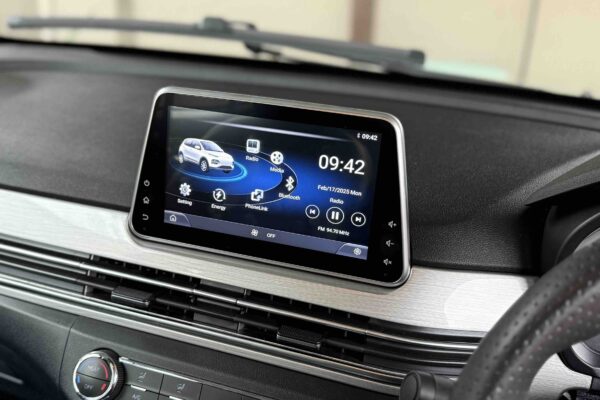
I found it a bit finicky to use so I just accessed Google Maps directly on my phone. The infotainment system is basic and not graphic intensive. I mostly viewed the consumption screen while driving.
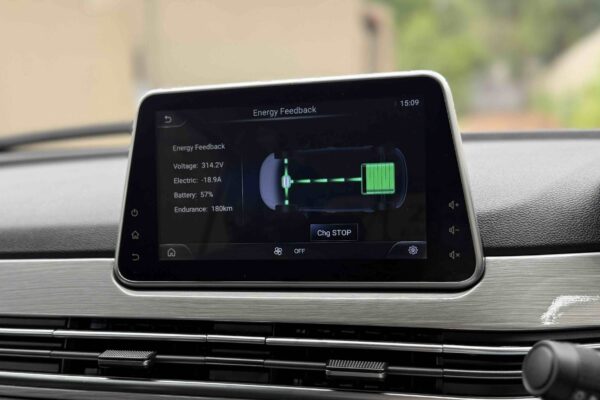
This was all the access I found, despite the Enviro Auto saying it has remote control features, but it was not obvious how to access it. That said, the parking cameras are a nice addition however the car is tiny so you won’t be struggling to park it.
Driving impressions
As mentioned earlier, it has 35kW of power and 105Nm of torque. And for context, my own car has 170kW of power, so the adjustment was a bit of a struggle.
During my limited time with the car, I drove it on the highway and on urban/city roads to see how it compares and what works best for this vehicle.
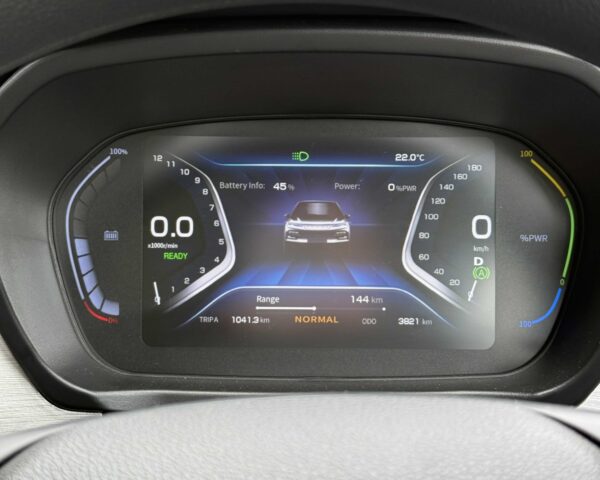
For the highway driving, I felt like the car took a lot of strain when I put my foot down, which just eats into the range unnecessarily. I very quickly realised this car was not suited for that because it feels like you are being inefficient.
I drove to Menlyn and was being flashed by cars behind me, and had a Kwid over take me, to give you an idea of the speed. At this point, I was driving at around 80km/h. However I did reach around 107km/h but that was not possible for most of the drive.
I used 36km of range for the 40km one way trip, which I felt could have been better for an EV, considering the week before I covered the exact same route and netted 8km of range on the Mini Cooper SE I have on a long term test.
I averaged around 75-80km/h on the highways and to give you some context, that was like driving my Mini when I hit a pothole on my run flat tyres where I have to keep my speed below 80km/h.
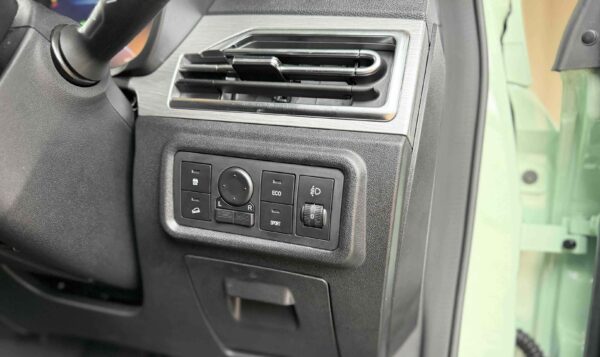
On the way back, there were heavy downpours and the windscreen fogged up really quickly, so I had to blast the air-con with demister for visibility because it was bad, and again, this felt like the car was taking strain.
Comparatively, I drove on urban roads the next day and found it better suited because you dont need to go at speed between traffic lights, however I was a bit slower than others.
The car also has an eco, sport and normal modes and I didn’t find a big difference between it because of its 35kW of power.
Charging the Dayun S5 Mini
The S5 Mini has a range of 330km, according to WLTP figures. I reached a maximum 300km on my charge but depending on your driving style, you could regenerate more.
It has slower charging speeds than normal, it recharges at a maximum 6kW speed on an AC charger and 30kW on a DC charger. It did struggle and cut off eventually in Sandton City’s 60kW DC charger. Enviro Auto is looking into why it disconnected.
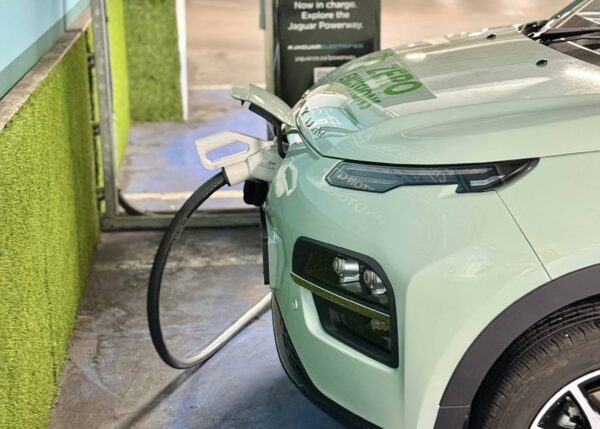
However, I had better luck on my home AC charger. Mine is a maximum of 7.4kW and there were no issues of it cutting off.
I didn’t get to run the battery down in such a short space of time, but I charged 16.78kWh of the battery at home and it took around 2.5 hours. Using my current Eskom billing rates, it cost me less than R45, at around R2.45 per kWh.
A full charge on the 31.7kWh battery would then cost R76 on Eskom rates, but one never takes an EV battery to 0% so that would not happen. I typically recharge any EV I am testing when it hits 20% of the battery.
But if you don’t charge at home, a public AC charger costs R5.88 per kWh, making it around R182 or R7.35 per kWh on a DC charger, which would cost R228. Interesting to note is that at home, Eskom charges you per kWh while public charging prices are based on speed.
Final thoughts
The Dayun S5 Mini SUV has big ambitions for a tiny little EV. It is better suited for urban driving purely because of its power and speed, and to think that its 110km/h speed is not even reaching the highway maximum speed.
It is a great option for short commutes, like a school rounds or if your office is close to your home, for the elderly, and for small businesses who need a basic runaround vehicle. I can also see it doing well for businesses that deliver in their vicinity, think small printing shops, takeaways or florists.
The Dayun S5 Mini SUV comes with a 3 year/60 000km service plan and warranty, and the battery is covered for 5 years/120 000km. Maintenance is minimal, and can be done every 12 months/20 000km.
You can find more info on the Enviro Automotive website.
I posted a video on TikTok and the comments section went wild:
@nafisaakabor The Dayun S5 Mini SUV, South Africa’s ‘cheapest’ #EV, starting at R399 900. #electriccar ♬ Technology – ZydSounds


Recharged is an independent site that focuses on technology, electric vehicles, and the digital life by Nafisa Akabor. Drawing from her 19-year tech journalism career, expect news, reviews, how-tos, comparisons, and practical uses of tech that are easy to digest. Nafisa is a traveller at heart, having been to 46 countries and counting. Find her edutainment videos covering tech, EVs and travel on TikTok.