
Samsung has officially expanded its foldable family, and things are no longer quite as simple as choosing between a Fold and a Flip.
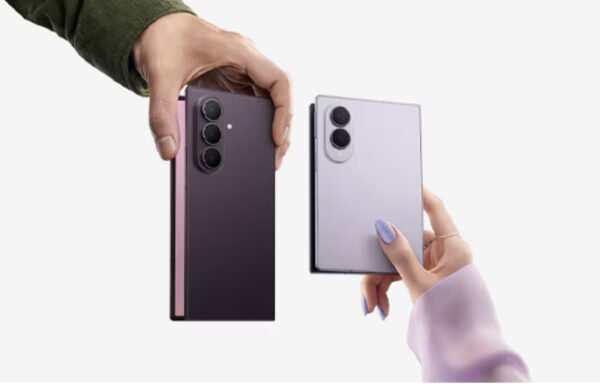
The Samsung Galaxy Z Fold 8 and Galaxy Z Fold 8 Ultra may share a name, processor, and folding mechanism, but they have been designed for surprisingly different users.
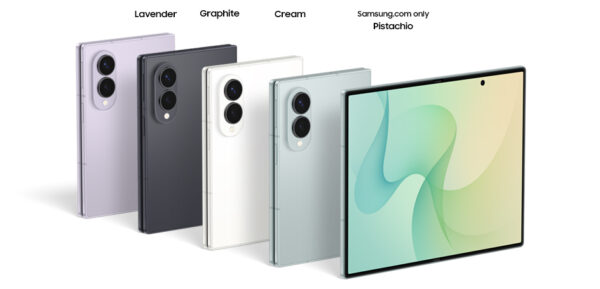
The Galaxy Z Fold 8 is the fun, content-focused option. It introduces a shorter, wider shape that looks a little like a digital passport, making it better suited to social media, videos, games, magazines, and e-books.
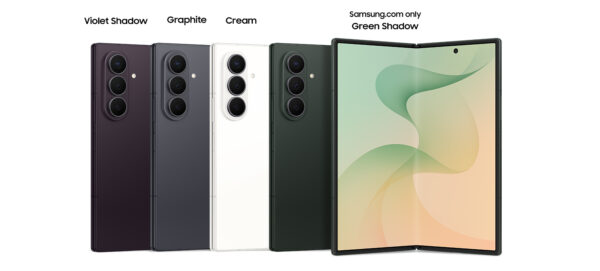
The Galaxy Z Fold 8 Ultra is the productivity monster. It follows the more traditional Galaxy Fold format, combining a larger display with a flagship camera system, a bigger battery, and additional cooling for demanding work.
In fact, Samsung says the Fold 8 Ultra is the continuation of what was previously known simply as the Galaxy Z Fold, while the standard Fold 8 introduces an entirely new form factor. These are not merely two sizes of the same phone. They are two different interpretations of what a folding smartphone should be.
So, which one deserves a space in your pocket, handbag, or extremely well-protected laptop compartment?
SAMSUNG GALAXY Z FOLD 8 VS FOLD 8 ULTRA SPECS
| Samsung Galaxy Z Fold 8 | Samsung Galaxy Z Fold 8 Ultra | |
| Main display | 7.6-inch Dynamic AMOLED 2X | 8-inch Dynamic AMOLED 2X |
| Main display resolution | 1848×2448 pixels | 2504×2256 pixels |
| Cover display | 5.5-inches | 6.5-inches |
| Cover display resolution | 1248×1972 pixels | 1080×2520 pixels |
| Refresh rate | 1–120Hz adaptive | 1–120Hz adaptive |
| Folded dimensions | 81.9×123.9×9.7mm | 72.8×158.4×8.9mm |
| Unfolded thickness | 4.5mm | 4.1mm |
| Weight | 201g | 215g |
| Processor | Snapdragon 8 Elite Gen 5 | Snapdragon 8 Elite Gen 5 |
| Rear cameras | 50MP wide, 50MP ultra-wide | 200MP wide, 50MP ultra-wide, 10MP telephoto |
| Optical-quality zoom | 2x | 2x, plus 3x optical zoom |
| Battery | 4800mAh | 5000mAh |
| Wired charging | 45W | 45W |
| Wireless charging | 20W | 20W |
| Water and dust resistance | IP48 | IP48 |
| Operating system | Android 17 with One UI 9 | Android 17 with One UI 9 |
| Pricing | From R40 999 | From R50 999 |
The specifications reveal the basic difference: the Fold 8 prioritises portability and entertainment, while the Fold 8 Ultra adds more screen, more camera hardware, and a little more battery capacity.
DESIGN: PASSPORT OR POCKET OFFICE?
Place these phones next to one another, and you would never mistake them for identical twins.
The Galaxy Z Fold 8 is short and wide when closed. Its 81.9mm width is considerably broader than a conventional smartphone, but its 123.9mm height makes it much shorter. Samsung has chosen a 10:16 cover-screen ratio that feels purpose-built for scrolling through social media, watching vertical videos, browsing, and replying to messages.
Open it, and the Fold 8 transforms into a wide 4:3 display. It feels closer to a small tablet or digital magazine than an unusually tall smartphone. Rotate it, and the screen becomes particularly well suited to reading articles and e-books.

The Fold 8 Ultra takes a more familiar approach. At 158.4mm tall and 72.8mm wide when closed, it resembles a normal flagship phone far more closely. Its 6.5-inch cover display should therefore feel more natural for typing, navigation, one-handed browsing, and everyday phone tasks.
When unfolded, the Ultra’s 8-inch screen creates a larger workspace for editing photos, reading documents, joining video calls, and running several apps at once.
There is an amusing twist in the dimensions. The standard Fold 8 is lighter, but the Ultra is actually thinner. The Fold 8 weighs 201g and measures 9.7mm when closed, while the Fold 8 Ultra weighs 215g but measures only 8.9mm when closed.
In other words, the Fold 8 wins the weight competition, while the Ultra wins the “how did Samsung squeeze all of that into something so thin?” competition.
Design winner: It depends. Choose the Fold 8 for something lighter, shorter, and more playful. Choose the Ultra for a conventional smartphone experience when closed and a serious workspace when open.
DISPLAYS: ENTERTAINMENT VS. PRODUCTIVITY
Both phones use Dynamic AMOLED 2X displays with adaptive refresh rates between 1Hz and 120Hz. Samsung also equips them with Vision Booster, low-reflection finishes, and brightness of up to 3 000 nits, helping the screens remain visible in bright outdoor conditions.
 The Fold 8 has a 7.6-inch main display with a resolution of 1848 x 2448. Its 4:3 shape makes it especially appealing for films, games, digital magazines, photo galleries, and reading.
Its 5.5-inch cover screen is unusual, though. Because the phone is so short and wide, the experience may feel more like using a compact content viewer than a regular smartphone. That could be refreshing for some users and mildly bewildering for others.
The Fold 8 Ultra has the larger and sharper main display. Its 8-inch panel offers a resolution of 2504 x 2256, while the 6.5-inch cover display uses a 1080 x 2520 resolution.
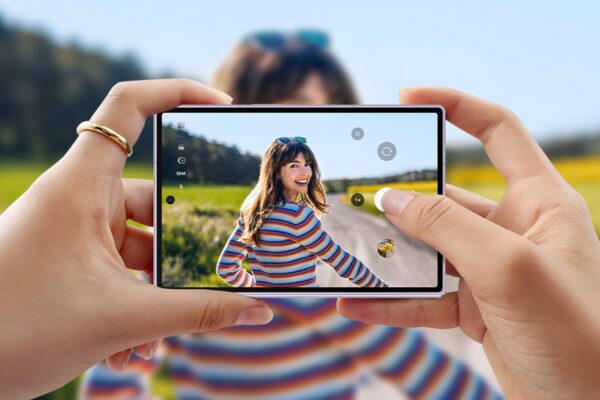
That extra screen space may not sound enormous on paper, but every millimetre helps when you are placing a document next to an email, dragging images between apps, or trying to keep a video call open while checking your calendar.
The Ultra is therefore the stronger multitasking device. The Fold 8, however, arguably has the more interesting shape for consuming content.
Display winner: Fold 8 Ultra for productivity; Fold 8 for immersive, content-first fun.
PERFORMANCE: ALMOST TOO CLOSE TO CALL
Under the bonnet, both foldables use the Snapdragon 8 Elite Gen 5 for Galaxy. They also run Android 17 with Samsung’s One UI 9 software and support 5G, Wi-Fi 7, and Bluetooth 6.0.
That means the standard Fold 8 is not receiving a watered-down processor. It should deliver the same fundamental flagship performance for gaming, multitasking, editing, streaming, and Galaxy AI features.
The difference is likely to become more noticeable during prolonged, demanding workloads.
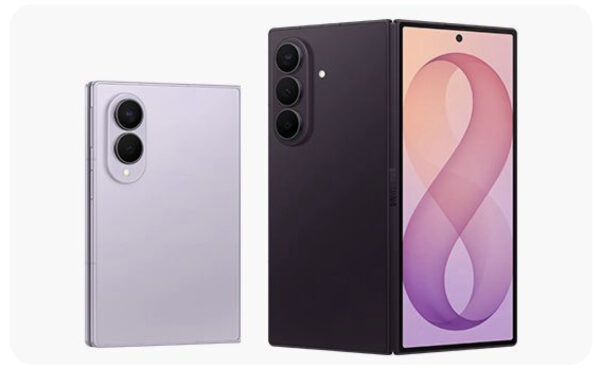
Samsung has given the Fold 8 Ultra an expanded graphite cooling structure designed to dissipate heat more effectively. It also introduces a dual-path charging architecture intended to distribute power more efficiently across its dual-battery system.
South African buyers can get the Fold 8 with 12GB of memory and either 256GB or 512GB of storage. The Fold 8 Ultra is available locally with 12GB and 512GB, or 16GB and 1TB.
For most people, 12GB is plenty. The Ultra’s 16GB configuration is aimed at the person who thinks closing an unused app is a sign of weakness.
Neither phone includes microSD storage, so choosing the correct capacity at checkout is important.
Performance winner: Fold 8 Ultra, but only by a small margin. Everyday performance should be very similar.
GALAXY AI AND MULTITASKING
Both devices benefit from Galaxy AI features designed specifically for foldable displays. These include Photo Assist, Now Brief, Now Nudge, Gemini integration, and side-by-side workflows that make better use of the larger screens.
Now Nudge can recognise useful information on the screen and suggest a relevant next step. For example, it may offer to add an event to the calendar or help save a location. On the unfolded display, the suggested action can open beside the original content rather than replacing it.
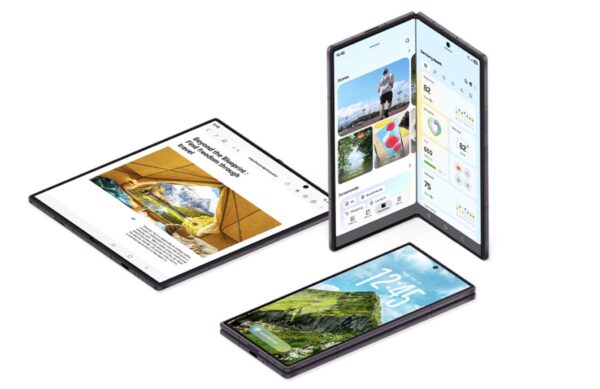
Photo Assist allows users to remove, move, or resize objects, fill backgrounds, and create edits using written prompts. The large inner screens also make it easier to compare original and edited photos side by side.
The software experience is largely shared. The Ultra simply gives those tools more physical room to breathe.
CAMERAS: WHERE THE ULTRA EARNS ITS NAME
The camera comparison is far less subtle.
The Galaxy Z Fold 8 uses two rear cameras:
- A 50MP wide camera with optical image stabilisation
- A 50MP ultra-wide camera
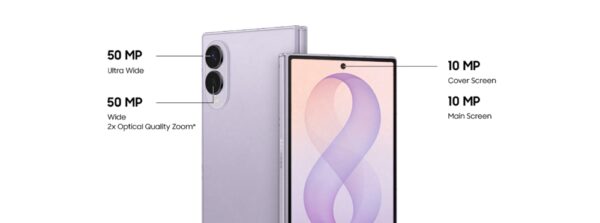
That is an interesting combination because Samsung has not treated the ultra-wide camera as an afterthought. Both rear sensors offer 50MP resolution, giving users high-resolution options for ordinary photos, landscapes, interiors, and group shots.
The Fold 8 also supports features such as Dual Recording, which uses the front and rear cameras simultaneously, and My FanCam, which can track a selected subject and reframe footage for different social-media formats.
The Fold 8 Ultra goes much further:
- A 200MP wide camera with optical image stabilisation
- A 50MP ultra-wide camera with macro capabilities
- A 10MP telephoto camera with 3x optical zoom
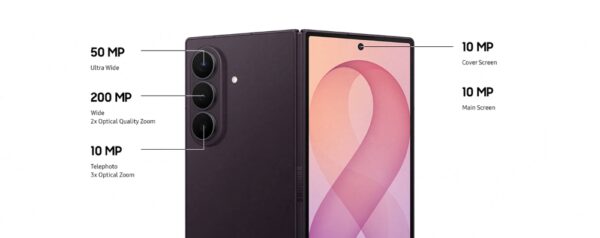
Its 200MP mode supports HDR capture, while the dedicated telephoto camera gives it a major advantage for portraits, events, travel, wildlife, and subjects that are not conveniently standing directly in front of you.
The Ultra also supports improved Nightography, 8K video recording using Samsung’s APV codec, and Cine LUT controls for more advanced colour grading.
Both phones have 10MP cameras on the cover and inner displays, but the Ultra’s rear system is clearly more versatile.
The Fold 8 should be perfectly capable for everyday photos and social content. The Ultra is the one to choose when the camera is part of your work, hobby, or justification for spending more than R50,000 on a phone.
Camera winner: Fold 8 Ultra, comfortably.
BATTERY AND CHARGING
The Galaxy Z Fold 8 has a 4,800mAh battery, while the Fold 8 Ultra increases capacity to 5,000mAh.
That is only a 200mAh difference, and the Ultra also has a larger display to power. Buyers should therefore not assume that the Ultra will dramatically outlast the standard model in every situation.
Samsung rates the Fold 8 for up to 26 hours of video playback and the Ultra for up to 27 hours, although actual battery life will depend on brightness, network conditions, apps, camera use, gaming, and how frequently the inner display is used.
Both phones support:
- 45W wired charging
- 20W wireless charging
- Wireless PowerShare
Samsung says the Fold 8 can reach approximately 63% in 30 minutes with a compatible 45W charger, while the Ultra can reach around 67%. The charger is sold separately.
Battery winner: Fold 8 Ultra, but not by enough to make battery capacity the main reason to upgrade.
DURABILITY AND S-PEN SUPPORT
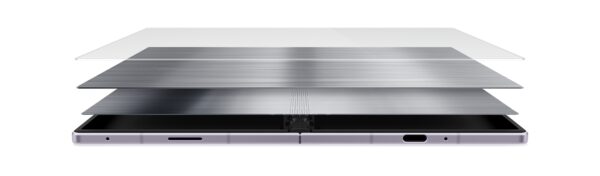
Both foldables use Samsung’s new Flex Titanium display structure. It combines a titanium-alloy film with an enhanced titanium plate to strengthen display support, absorb pressure, and help reduce crease visibility over time.
The devices also use an Armor Aluminium frame, an Armor FlexHinge, Gorilla Glass Ceramic 3 on the front, and Gorilla Glass Victus 2 on the rear. Both carry an IP48 rating.

IP48 means the phones provide meaningful water resistance and limited protection against solid objects larger than 1mm. It does not mean they are fully dustproof, and neither phone should be treated as your new underwater camera.
There is also disappointing news for digital note-takers: neither phones supports the S Pen. That omission feels particularly strange on the productivity-focused Ultra, where the enormous screen seems to be politely begging for a stylus.
Durability winner: A tie.
COLOURS AND PRICING
The Galaxy Z Fold 8 is available in graphite, cream, and lavender, with pistachio offered as an online-exclusive colour in selected markets.
The Fold 8 Ultra comes in graphite, cream, and violet shadow, with green shadow available exclusively online in selected markets.
South African recommended retail pricing is as follows:
Samsung Galaxy Z Fold 8
- 256GB: R40 999
- 512GB: R45 999
Samsung Galaxy Z Fold 8 Ultra
- 512GB: R50 999
- 1TB: R60 999
Pre-orders in South Africa run from 22 July to 12 August 2026, with general availability beginning on 13 August 2026.
WHO SHOULD BUY THE Z FOLD 8?
Choose the Galaxy Z Fold 8 when you:
- Want the lighter of the two phones
- Spend a lot of time watching videos, reading, or browsing social media
- Prefer the unusual short-and-wide design
- Do not require a telephoto camera
- Want flagship performance without paying Ultra pricing
- Like the idea of a folding mini-tablet more than a folding office
The Fold 8 is the more adventurous device. Its new shape will not appeal to everyone, but it gives Samsung’s foldable range some much-needed personality.
WHO SHOULD BUY THE Z FOLD 8 ULTRA?
Choose the Galaxy Z Fold 8 Ultra when you:
- Regularly work across multiple apps
- Want the largest possible Samsung foldable display
- Need a more traditional cover-screen experience
- Take photography and video creation seriously
- Want 3x optical zoom
- Need up to 1TB of storage and 16GB of memory
- Plan to replace both a phone and small tablet with one device
The Ultra is less experimental but far more capable. It is the better all-round flagship, particularly for business users, creators, frequent travellers, and anyone who treats multitasking as a competitive sport.
SAMSUNG Z FOLD 8 VS FOLD 8 ULTRA: THE VERDICT
The Samsung Galaxy Z Fold 8 Ultra is the overall winner. It has the better camera system, larger displays, thinner folded body, bigger battery, and more convincing productivity credentials.
However, the standard Fold 8 may be the more entertaining phone.

It is lighter, cheaper, and built around a genuinely different form factor. Its 4:3 inner screen makes sense for reading, videos, and games, while the compact height gives it an identity beyond simply being the “less expensive Ultra”.
For most buyers, the 512GB Fold 8 Ultra offers the best balance within Samsung’s new foldable range. The R5,000 price difference over the 512GB Fold 8 is relatively easy to justify when the larger displays, telephoto camera, 200MP main sensor, and slimmer body are considered.
The standard Fold 8 is the better choice when portability, content consumption, and price matter more than camera zoom and maximum productivity.
Ultimately, the decision comes down to one question: do you want a folding entertainment device or a folding workstation?
The Galaxy Z Fold 8 is the mini cinema. The Galaxy Z Fold 8 Ultra is the corner office.


Recharged is an independent site that focuses on technology, electric vehicles, and the digital life by Nafisa Akabor. Drawing from her 19-year tech journalism career, expect news, reviews, how-tos, comparisons, and practical uses of tech that are easy to digest. Nafisa is a traveller at heart, having been to 46 countries and counting. Find her edutainment videos covering tech, EVs and travel on TikTok.