
Just over 1 000 battery electric vehicles were sold in South Africa in 2025, according to Naamsa data, but the plug-in hybrid (PHEV) sector exploded.
Driven by a wave of new Chinese entrants, PHEV sales surged 280.1%, from 738 units in 2024 to 2 808 units in 2025. This shows that South Africans put some store in the flexibility of a dual-fuel system rather than committing to a fully electric lifestyle.
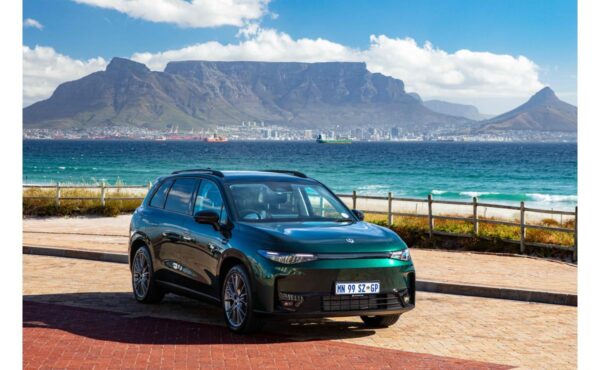
The top 10 list of EV models sold in 2025 also had a newcomer – the Leapmotor C10 REEV – a range-extended electric vehicle that was ranked at number nine, with 46 units sold since its October 2025 debut.
The C10 is the first model from Leapmotor to reach South Africa through Stellantis, which owns a 20% stake in the company.
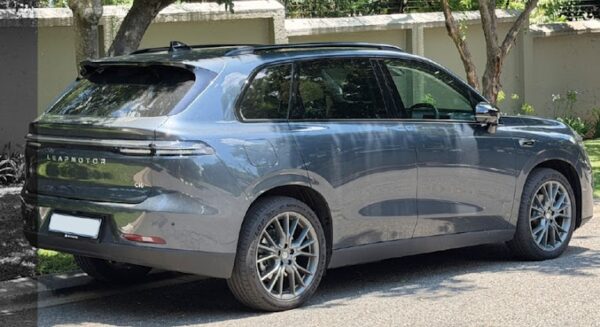
I spent December with the C10 REEV, but does it actually count as an EV?
The REEV is a bit of a shapeshifter. Most industry bodies and sales charts put it in the EV category because its wheels are 100% driven by electric motors, but it does carry an internal combustion engine. But unlike a hybrid, its engine never touches the drivetrain; it acts purely as a dedicated on-board generator. So you get the instant torque and silence of an EV, but with a “power bank” in the form of a petrol tank to eliminate range anxiety entirely. The Leapmotor C10 is available in two derivatives: the Style, starting at R759 900; and the Design, from R799 900.
Both share a rear-mounted electric motor delivering 158kW and 320Nm of torque, capable of a 0-100km/h sprint in 8.5 seconds. Its 28.4kWh battery provides an electric range of around 145km, while the petrol generator extends the total combined range to a massive 970km.
The C10 REEV supports DC charging up to 80% in half an hour, while overnight AC charging takes around five hours.
In the month I drove the C10, it didn’t charge at the Mall of Africa, Fourways Mall, or the Marc in Sandton. The car registered that it was connected, but never initiated the charge, even when I used my own bank card. It only worked at my home wallbox charger. Leapmotor South Africa said the charging stations may have been malfunctioning. The cabin is dominated by a 14.6- inch infotainment screen and a 10.25- inch driver display, powered by a Qualcomm Snapdragon 8295 chip and over-the-air updates.
There is no Apple CarPlay or Android Auto support, and I had to download a third-party app to mirror my phone. Mirroring tech is not the best due to lag, so you’re better off using the car’s built-in navigation.
At times, the maps directed me in the opposite direction to where I was heading, but I did appreciate the level of detail, from points of interest to discovering small businesses, and public EV charging info such as charging speeds, and if you require a cable or not. My biggest gripe with the C10 is with its ergonomics. The vehicle relies on an NFC keycard that you tap against the driver’s side mirror to unlock, but sometimes it took three tries. This was challenging, particularly in a tight garage.
The door handles are flush with the body, which means you have to press one end for it to pop out, which is more frustrating than stylish.
Another niggle is that when you start the car, you have to place the key card in an allocated slot. It looks like a wireless phone charger, but only once you start the car with the key in the cradle can you then remove it.
On the road, the C10 is a comfortable drive, despite being a large vehicle, with options for Comfort, Sport and Custom. You can choose from four modes as to how power is distributed, such as EV+, EV, Fuel and Power+, to finetune how the car balances battery depletion and engine use for optimal performance.
Other lifestyle modes include “nap”, “camp” and “guard” modes for reclining the seats for a quick rest, to maintain climate control for overnight stays or to keep the cabin temperature optimal for pets.
The C10 reminded me of the Volvo EX30 as it relies on the touchscreen for most things, with climate control being the main gripe. There are so many options for climate and you need to use the touchscreen to change the direction of airflow, which is cumbersome while driving. And if you don’t pay attention and look at the road ahead, it beeps.
The C10 is a bold step. It offers a unique mechanical solution to South Africa’s limited charging stations, and provides a premium interior that punches above its price tag.
It took me a really long time to deplete the powerbank while not requiring a visit to a public charging station, which is a bonus.
But the car feels like a mixed bag. It complicates features that are supposed to be seamless into ones that require additional steps.
While its card-to-mirror entry and touchscreen-heavy UI are quirks you’ll have to weigh up, the fact that it’s now in the top 10 for 2025 means that South Africans are already voting for the REEV with their wallets.
The local Leapmotor website is already teasing another REEV model, alongside an electric hatch and compact SUV coming in 2026, which sounds promising.
Originally published in Brainstorm.


Recharged is an independent site that focuses on technology, electric vehicles, and the digital life by Nafisa Akabor. Drawing from her 19-year tech journalism career, expect news, reviews, how-tos, comparisons, and practical uses of tech that are easy to digest. Nafisa is a traveller at heart, having been to 46 countries and counting. Find her edutainment videos covering tech, EVs and travel on TikTok.