
Toyota launched its first electric vehicle in July this year, after months of delays. I was at the national media launch in Mpumalanga, and some of you may have seen my article about it.
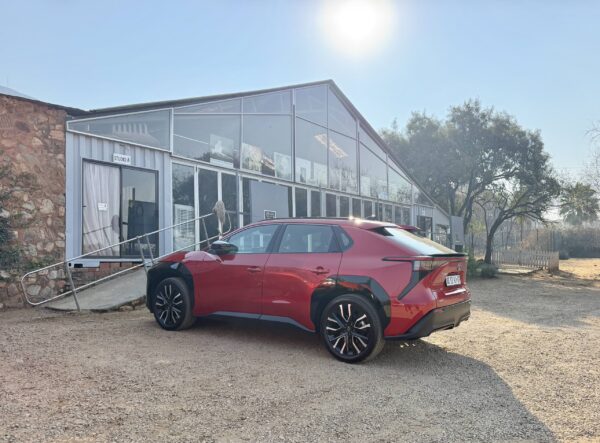
Fortunately, I had a chance to spend more time with it for my Living Electric series on Recharged where I cover the practical aspect of all things NEVs.
So if you’re someone who is seriously considering switching to an EV and not sure which one is for you, then keep reading. But to keep it real, I’m sharing this upfront: the Toyota bZ4X costs R1 182 800.
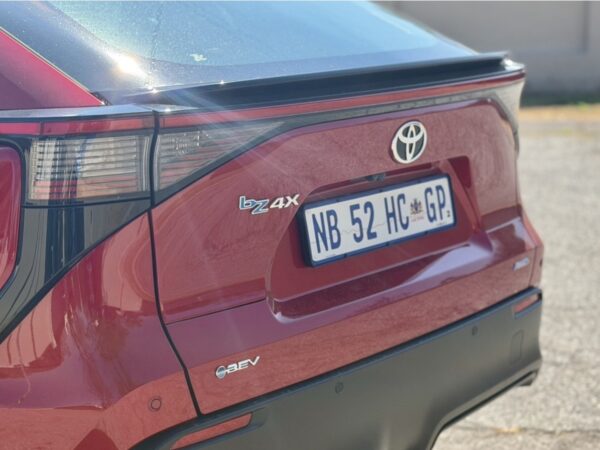
As mentioned in my original launch post: “If you’re wondering about the naming convention, the bZ stands for its ‘Beyond Zero’ sub-brand; the 4 is for the mid-size, like the RAV4; while the X represents its body style, which is a crossover/SUV.”
TOYOTA bZ4X AWD QUICK LOOK
- 255kW of power, 438Nm of torque
- 0-100km/h in 5.1 seconds; top speed 160km/h
- 73.11kWh battery with 481km of range (WLTP)
- 22kW on-board charging
- Max 150kW DC charging
- 10-80% in 30 minutes
1. WHO SHOULD BUY THIS CAR?
The Toyota bZ4X is an all-wheel drive, so if you want something to drive in all types of weather conditions, and some light outdoor capabilities, it is beyond an EV for commuting. It would suit families, DINKs (dual income, no kids) or buyers who want to switch to an EV from a trusted traditional brand, vs. a newer Chinese counterpart that has no long standing/proven track record.
2. RANGE REALITY
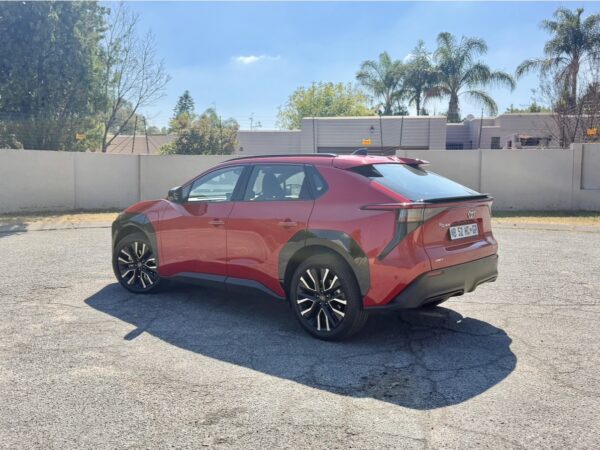
Officially, the car claims 481km of range, using the WLTP calculation. But I’m going to share my real-word usage from that, based on my driving style, and bear in mind it was one of the coldest weeks we’ve had this winter, so I used the heat warming seats and steering wheel feature throughout my driving.
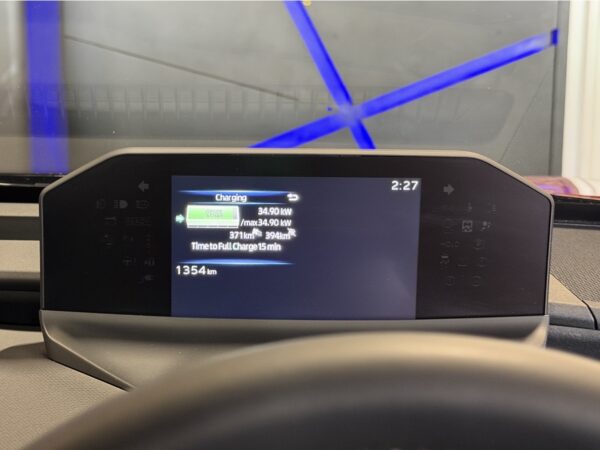
Based on the car getting delivered with 95% of battery and at the time of me charging it when it was at 24%, I had done 241km of driving. This translates to 21.54kWh/100km energy consumption, and my real world range equates to 339km of usage. But to emphasise, I used the heated functionality in the cold weather, plus the air-con was running at higher temperatures.
It’s common knowledge that EVs are not efficient during winter, so hence my figures right now.
For my drive from Johannesburg North to Hartbeespoort, I drove efficiently at 15.5kWh/100km for that return journey, however, my overall time with the vehicle was 21kWh/100km, which is quite high.
3. HOME vs PUBLIC CHARGING
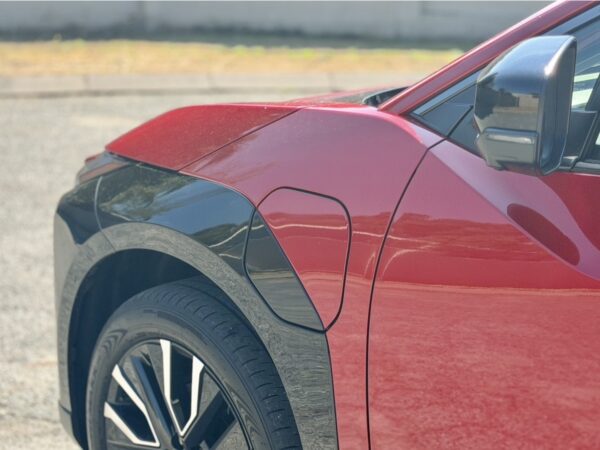
The charging flap is on the front left hand side of the car. The more I test EVs, the more apparent it is how important it is to indicate where they are because I’ve had to re-park a car in an EV charging bay multiple times to get it right.
If you are charging the battery from empty, you can expect these figures:
- 73kW @ R2.69 via my Eskom rate = R196.37
- 73kW @ R5.88 public AC charger = R429.24
- 73kW @ R7.35 public DC charger = R536.55
- 73kW @ R8.24 Rubicon w/ GridCars Card = R601.52
- 73kW @ R9.15 Zero Carbon Charge = R667.95
The above illustrates the importance of having a home wallbox charger, which makes things convenient. You can trickle charge once or twice a week so you’re never below 20% or if you have home solar that is connected to your EV charger, you could charge it on a weekend while the sun is out, considering how large the battery is, that may allow for weekly charging.
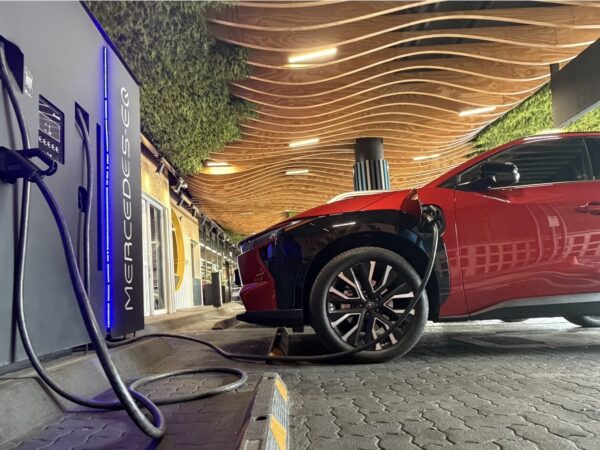
Factoring my 339km of real world usage in winter during my test week, from the 73.11kWh battery, it equates to:
- R2.69 per kWh on Eskom at home x 73.11kWh = R196.66, which means, from the 339km of real world usage, it cost me R0.58 per km.
Toyota provides you with home charging cables to plug into a wall socket, which can also be used if you’re on a road trip and want to plug at your accommodation, plus you get the standard public AC charging cables. A home wallbox charger is not included with the vehicle, it is available separately. I also covered some of that info in my launch write-up for the bZ4X.
4. LIVING WITH THE TECH
The bZ4X has a large 14-inch infotainment display and 7-inch digital instrument cluster. There’s wireless charging for your smartphone, a digital rear-view mirror (switches from the traditional mirror to HD cameras) and voice commands but realistically, a typical Toyota driver isn’t going to worry about the latter.
As most of you know by now, Toyota supports wireless Apple CarPlay only but you need a cable for Android Auto. It paired immediately to my iPhone, which is a good thing as sometimes it can be hit and miss.
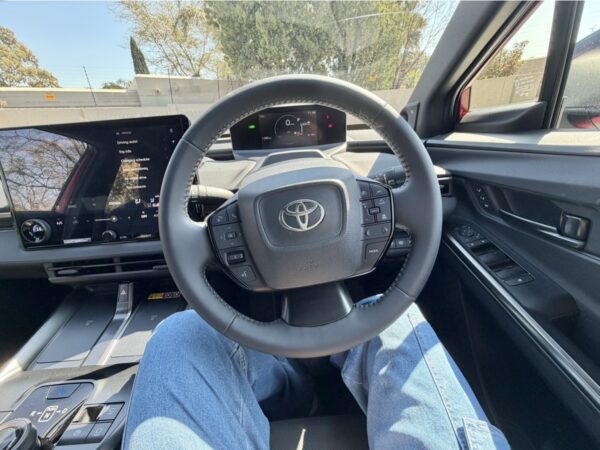
There are few physical buttons in the cabin for certain controls, like climate and volume, the vents, and de-mister for the front and back. The rest is a digital interface. It does its job but it’s not as advanced as some other systems I’ve tested. But again, I think it’s important to note that Toyota knows their target audience/drivers best to offer what they do.
5. ACCESSING THE DRIVING DATA
Toyota owners get access to the Toyota Connect app, which brings a host of digital features. Unfortunately this isn’t available for test units so I feel like I’m missing a part of this experience.
That said, Toyota’s interface does not offer a lot of detail when it comes to driving data. You can check your consumption figures on the infotainment display, but not much else. There is not digital log of where you’ve been but again, I’m not sure if the app offers this experience at all.
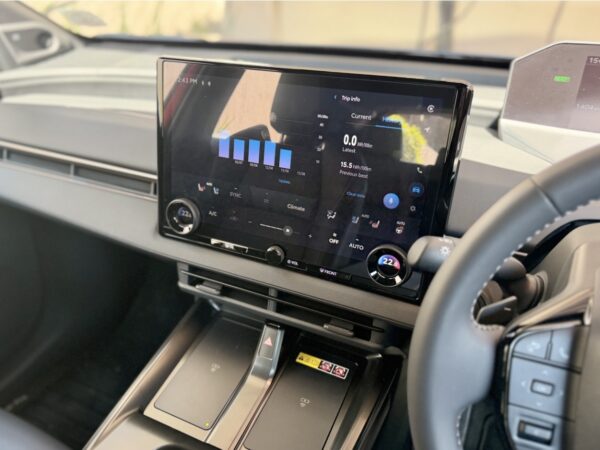
You would need to go into the settings to hit the refresh button for it to update your driving data daily, should you be interested in this info. If you don’t do it for 7 days, the latest update will be a cumulative one from your last week.
6. CITY DRIVING vs OPEN ROAD
In everyday urban traffic, the bZ4X is an easy car to live with. Its low centre of gravity gives it a planted feel without making the ride overly firm, and it deals with potholes and speed bumps without fuss. The throttle is smooth and predictable in the regular driving modes, which makes the constant stop-start of city driving feel natural, especially if you’re coming from a petrol or hybrid SUV.
Steering is light, so tight parking bays are easy to manage. Toyota’s regenerative braking takes a little getting used to. There’s a regen boost function that slows the car down noticeably when you lift off the accelerator, but it won’t bring you to a complete stop. So don’t expect one-pedal driving.
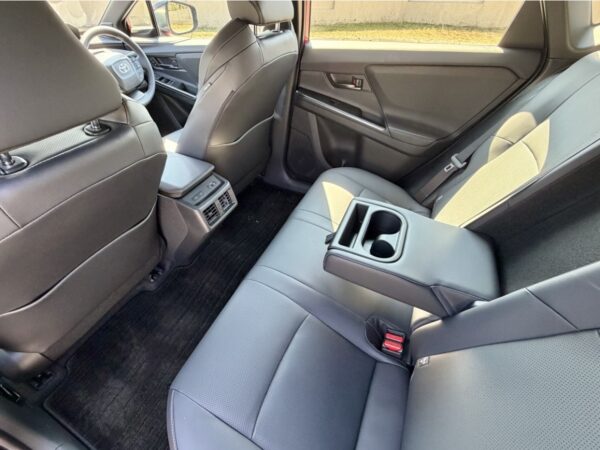
Visibility is good, although getting the steering wheel and high-set digital driver display into the right position will depend on your height and how you like to sit. The front and back are spacious and I love that the rear seats have heated functionality. It makes road trips in winter so fun.
On the highway, the bZ4X’s cabin at 120km/h is quiet, with wind and road noise kept under control. Even though it has that planted feel, you’re going to feel its weight when changing lanes quickly or braking hard. The adaptive cruise control and lane-tracing assist also work smoothly without the ‘pulling’ you get in some cars. The bZ4X isn’t a sporty EV, but for long-distance trips or everyday commutes, it’s comfortable and quiet.
7. LONG TERM VIEW
The bZ4X does not support vehicle-to-load features like some competitors, but it has a 6 year/90 000km service place at 12 month/15 000km intervals; a 3 year/100 000km warranty and the EV battery has an 8 year/160 000km warranty.
@nafisaakabor The Toyota #bZ4X electric car has finally launched in South Africa at R1 182 800. Powered by @Naked Insurance #ToyotabZ4X #SouthAfrica #EV ♬ original sound – Nafisa | Tech & Travel
8. RECHARGED VERDICT
| PROS | CONS |
| Spacious cabin, front and back | 150kW DC charging slower than rivals |
| Off-road capabilities | Steering wheel blocks instrument cluster |
| Rear-heated seats | Boot is slightly smaller, no frunk. |
| Comfortable ride + insulated cabin |
Buy it if… you want the reliability of a trusted brand with off-road capabilities from an EV with the added advantage of immediate fuel saving costs.
Skip it if… you want a full tech package with more detailed driving data and an included wallbox charger.


Recharged is an independent site that focuses on technology, electric vehicles, and the digital life by Nafisa Akabor. Drawing from her 19-year tech journalism career, expect news, reviews, how-tos, comparisons, and practical uses of tech that are easy to digest. Nafisa is a traveller at heart, having been to 46 countries and counting. Find her edutainment videos covering tech, EVs and travel on TikTok.