

I don’t believe in silence. Ignoring Depeche Mode’s suggestion to enjoy the silence, I prefer to drown out my thoughts – podcasts, audiobooks, music. The only time it’s quiet is when my sleep timer stops my music at night.
But not everyone needs to be subjected to people analysing true crime, the latest thriller, or the F1 movie soundtrack on repeat. So, earbuds with a decent battery life is a must for my daily walks. And active noise cancelling is a gamechanger I discovered earlier this year, making office days easier to survive.
I have a pair of one of the wireless earphones on this list, but I like to see what else is out there, because I don’t believe that one pair is enough. Much like reading glasses, I need a pair in my laptop bag, a pair next to my bed, a pair at my desk – you get the picture. Let’s look at some dependable and new options on the market today.
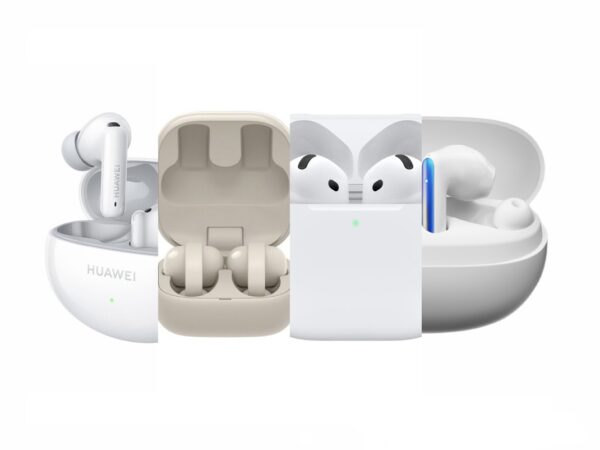
The Apple AirPods 4 with Active Noise Cancellation, Huawei FreeBuds 6i, Sony LinkBuds Clip, and Tecno Sonic 1 Active take four noticeably different approaches.
Apple brings active noise cancellation to its familiar open-fit design, Huawei offers a more traditional sealed fit with strong noise control, Sony keeps the ear canal completely open, and Tecno prioritises long battery life at a much lower price.
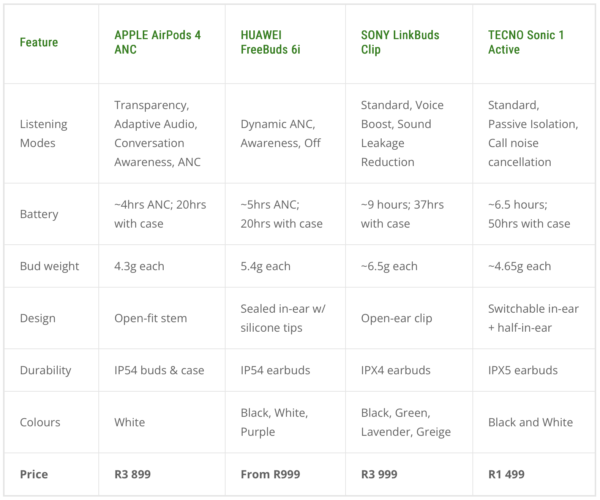
Here is how they compare.
LISTENING MODES
Apple AirPods 4 ANC
The AirPods 4 are unusual because they offer active noise cancellation without using silicone ear tips. They rest at the entrance to the ear rather than forming the airtight seal normally associated with noise-cancelling earphones.
Apple gives users four main noise-control experiences:
- Active Noise Cancellation reduces environmental sounds such as traffic, aircraft engines, and office noise.
- Transparency mode feeds outside sound through the earphones.
- Adaptive Audio automatically blends noise cancellation and transparency according to the surroundings.
- Conversation Awareness lowers media volume when the wearer begins speaking.
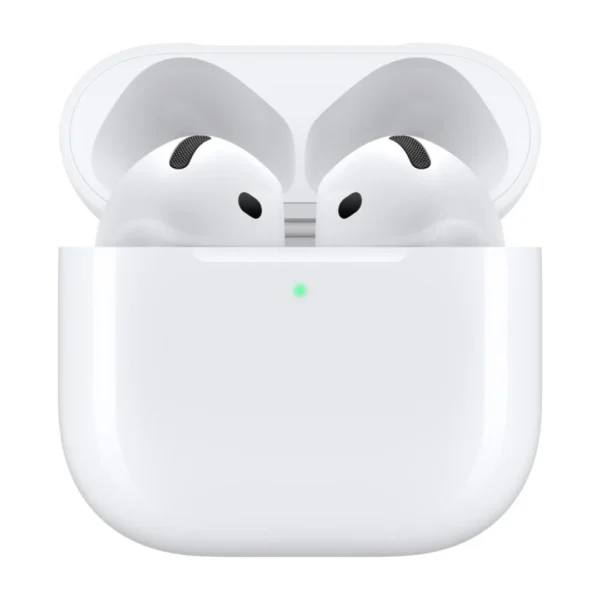
This is the most automated system in the comparison. The earphones are designed to adjust throughout the day rather than requiring constant manual switching.
The open fit does, however, place a natural limit on isolation. The ANC is impressive for an earphone without silicone tips, but listeners wanting the strongest possible barrier against outside noise will probably prefer Huawei’s sealed design. Also, the conversational awareness means you can’t belt out “Bad As I Used To Be”, because the music volume drops and you’re left on a limb with your questionable voice.
Huawei FreeBuds 6i
The FreeBuds 6i combine a sealed in-ear fit with Intelligent Dynamic ANC 3.0. Huawei says the system has been trained for 34 different scenarios and continuously adjusts its noise-cancelling parameters according to the surroundings and how the earbuds are being worn.
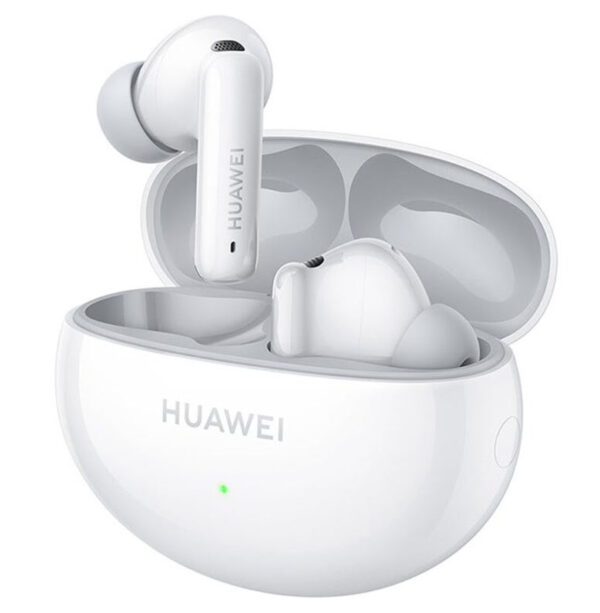
Users can switch between:
- Noise cancellation
- Awareness or Transparency mode
- Noise control off
The sealed silicone tips also provide passive noise isolation before the electronic ANC begins working. This gives the FreeBuds 6i an advantage on flights, in busy offices, and on public transport.
Huawei includes three sizes of liquid-silicone ear tips, which is important because the quality of the seal will influence both bass response and noise cancellation.
Sony LinkBuds Clip
Sony takes the opposite approach. The LinkBuds Clip sit outside the ear canal, allowing conversations, announcements, traffic, and other environmental sounds to remain audible.
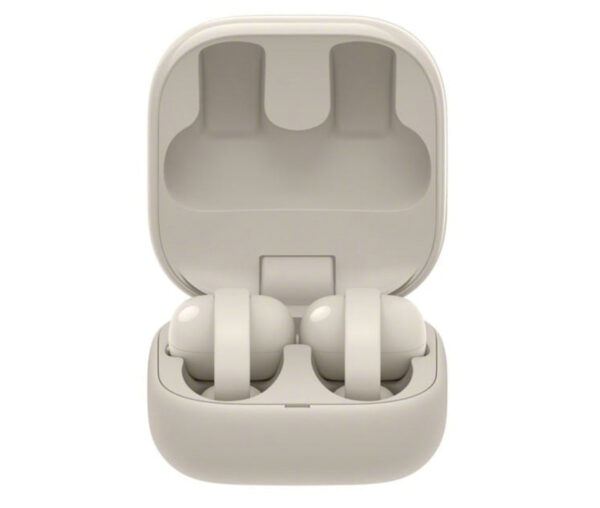
They do not offer active noise cancellation. Instead, their three modes adapt the audio to different open-ear situations:
- Standard mode provides the normal sound profile for everyday music.
- Voice Boost raises the prominence of speech in podcasts, videos, and audiobooks when the surroundings become noisy.
- Sound Leakage Reduction limits the amount of audio other people can hear in quiet environments.
Voice Boost is a clever alternative to simply raising the volume in a noisy place. Sound Leakage Reduction is equally useful in lifts, offices, waiting rooms, and other places where open-ear headphones can become a little too public.
The LinkBuds Clip are the strongest option for people who need to stay aware of what is happening around them, although they are not designed for blocking engine noise or workplace chatter.
Tecno Sonic 1 Active
The Tecno Sonic 1 Active do not offer listening ANC or a transparency mode. Their noise-cancellation technology is intended primarily to reduce background noise during calls.
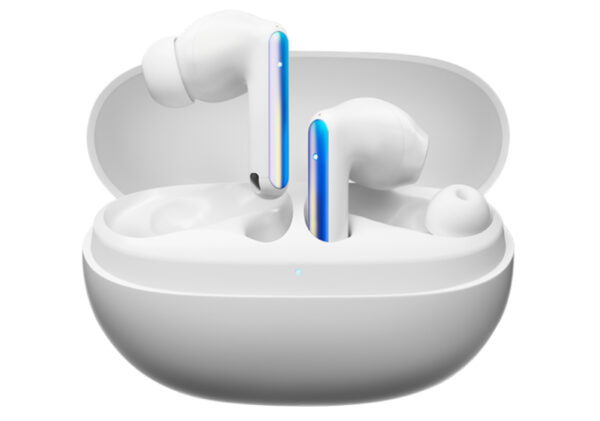
Their unusual design provides some flexibility, though. The earphones can switch between a more sealed in-ear configuration and a looser half-in-ear fit. The in-ear option provides greater passive isolation, while the half-in-ear option feels more open.
This cannot reproduce Apple’s adaptive noise control or Huawei’s ANC, but it gives budget buyers a basic way to choose between greater isolation and a less enclosed fit.
BATTERY LIFE AND PERFORMANCE
Battery life produces one of the clearest differences between these earphones.
The AirPods 4 ANC provide up to four hours with ANC enabled or five hours with noise control switched off. Including the case, that increases to 20 hours with ANC or 30 hours without it. A five-minute charge supplies approximately one hour of listening.
Four hours is enough for commuting, exercise, or a morning of meetings, but frequent travellers may need to return the AirPods to their case more often than the other models. Their strength lies in Apple’s H2 chip, Spatial Audio, Adaptive EQ, Voice Isolation, and smooth integration with the iPhone, iPad, Mac, and Apple Watch. It can also easily be synced with Android devices.
The Huawei FreeBuds 6i last up to five hours with ANC enabled and eight hours with it switched off. The case raises those figures to 20 hours with ANC and 35 hours without it. A ten-minute charge can provide up to four hours of listening under Huawei’s test conditions.
Huawei pairs this endurance with 11mm quad-magnet drivers and a sealed fit that delivers a punchier, more concentrated bass response. The earphones also support simultaneous connection to two devices, including combinations of Android and iOS products. This last feature is unusual and something I’d actually consider as a reason to buy.
The Sony LinkBuds Clip lead the premium models for uninterrupted earbud playback. Sony claims up to nine hours from the earbuds and another 28 hours from the case, producing a combined total of 37 hours. A three-minute quick charge provides approximately one hour of playback. That’s impressive!
Sony also includes multipoint connectivity, DSEE audio upscaling, custom equaliser controls through the Sound Connect app, and AI-supported voice processing for calls. The Voice Boost feature is something that definitely appeals to me.
The Tecno Sonic 1 Active are the battery champions. Tecno advertises up to 6.5 hours from the earbuds and a further 43.5 hours from the 800mAh charging case, giving a total of 50 hours.
They lack the advanced adaptive audio processing of Apple, Huawei, and Sony, but the battery-to-price ratio is difficult to ignore. They also offer Bluetooth 5.3, dual-device connectivity, four microphones, auto-pairing, and personalised audio through the supported Audpub app.
WEIGHT AND COMFORT
At 4.3g per earbud, the AirPods 4 ANC are the lightest in the group. Their open-fit shape avoids pressure inside the ear canal, although comfort and security depend heavily on whether the fixed shape suits the wearer’s ears. There are no interchangeable tips to correct a loose fit.
The Tecno Sonic 1 Active are close behind at approximately 4.65g each. Their interchangeable tips and dual wearing configurations give them more physical adjustability than the AirPods.
Huawei’s FreeBuds 6i weigh 5.4g each. They are slightly heavier, but the choice of three tip sizes provides a more secure fit. Huawei says the in-ear components are six per cent smaller than those used in the previous FreeBuds 5i.
Sony’s LinkBuds Clip are the heaviest at approximately 6.5g each. However, the weight is distributed around the outer ear rather than concentrated inside the canal. Sony also includes optional fitting cushions to improve stability for walking, running, and other movement.
DESIGN FEATURES
AirPods 4 ANC
Apple retains the recognisable short-stem appearance but has refined the contour to fit a wider range of ears. Force sensors on the stems control playback, calls, and Siri, while head gestures allow users to respond to certain Siri prompts by nodding or shaking their head. It has no direct volume adjustment setting; you have to ask Siri for a change in volume.
The ANC model’s charging case supports USB-C, Qi-certified wireless charging, and Apple Watch chargers. It also includes a speaker that works with Find My, making the case easier to locate.
Huawei FreeBuds 6i
Huawei uses a conventional stemmed in-ear design with silicone tips. Each earbud contains three microphones, while touch-sensitive stems support taps, presses, and vertical swipes.
Being able to adjust volume by swiping directly on the earbud is particularly convenient. Users can also press and hold to change noise-control modes, double-tap to control playback or calls, and triple-tap to skip tracks.
The FreeBuds 6i are the most traditional earphones here, but that design brings predictable isolation, secure fitting options, and strong everyday usability.
Sony LinkBuds Clip
The LinkBuds Clip have the most distinctive appearance. Their C-shaped body clips around the outer ear, positioning the speaker close to the ear canal without blocking it.
Rounded surfaces and optional Air Fitting Cushions are intended to spread pressure more evenly. Tap controls can switch listening modes, manage playback, and adjust volume, while additional settings are available through Sony’s app.
The result sits somewhere between an earphone and a piece of ear jewellery. It is visually bolder than the other models and should appeal to users who dislike the feeling of silicone tips inside their ears.
Tecno Sonic 1 Active
Tecno’s design is more experimental than its price suggests. Its removable magnetic ear tips allow the earphones to move between in-ear and half-in-ear configurations.
The charging case combines a frosted upper section with a contrasting lower body, and the shape allows it to stand upright. The Sonic 1 Active also support automatic pairing when the lid is opened and simultaneous connection to two devices.
They do not feel as refined or tightly integrated as the Apple and Sony options, but their flexible fit is a meaningful feature in the budget category.
DURABILITY
The AirPods 4 ANC carry an IP54 rating, covering both the earbuds and charging case. This provides protection against limited dust ingress, sweat, and water splashes.
Huawei’s FreeBuds 6i also carry an IP54 rating, but it applies only to the earbuds. The charging case should be kept dry.
Sony’s LinkBuds Clip are rated IPX4, making them resistant to sweat and light splashes but providing no certified dust protection.
Tecno gives the Sonic 1 Active an IPX5 rating, which offers greater water protection than IPX4. It is a useful advantage for exercise and humid conditions, although the lack of a dust rating should still be noted.
None of these earphones are designed for swimming or submersion.
COLOUR OPTIONS
Apple keeps things simple: the AirPods 4 ANC are available only in white. Huawei offers the FreeBuds 6i in black, white, and purple, although the colours available from individual South African retailers may differ.
Sony offers the broadest and most fashion-focused selection, with black, green, lavender, and greige versions of the LinkBuds Clip. Tecno’s Sonic 1 Active are available in black and white.
WHICH EARPHONES SHOULD YOU CHOOSE?
The Huawei FreeBuds 6i are the strongest all-round value. They combine effective noise cancellation, a secure in-ear fit, useful touch controls, good battery life, and dual-device connectivity at a fraction of the Sony price.
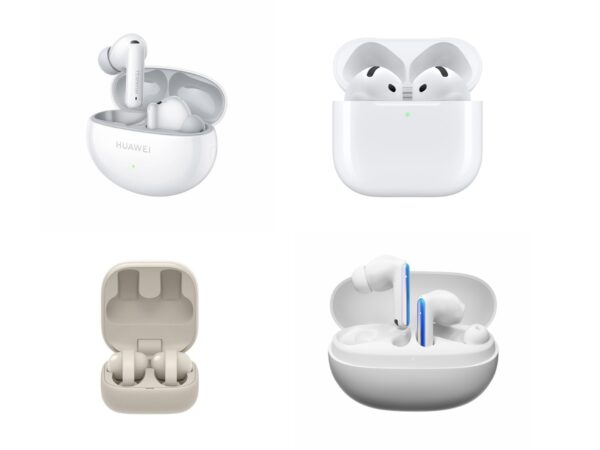
The Apple AirPods 4 ANC are the natural choice for iPhone users who dislike silicone ear tips. Their ANC battery life is relatively short, but Adaptive Audio, Spatial Audio, Conversation Awareness, Find My, and automatic Apple-device integration create the smoothest overall experience.
The Sony LinkBuds Clip are best for listeners who prioritise environmental awareness. They are well suited to offices, outdoor exercise, commuting, and all-day wear, but their open form means they cannot provide the isolation of the Apple or Huawei models. The R5,999 price is also difficult to overlook.
The Tecno Sonic 1 Active offer the best battery life and the lowest potential price. They are not a direct feature-for-feature rival to the premium models, but they make sense for buyers who want long-lasting wireless audio without spending several thousand rand.
THE FINAL BREAKDOWN
- Best for iPhone users: Apple AirPods 4 ANC
- Best value and noise cancellation: Huawei FreeBuds 6i
- Best for situational awareness: Sony LinkBuds Clip
- Best battery life on a budget: Tecno Sonic 1 Active
I splurged for a pair of AirPods earlier this year when I had a hospital stay planned. But I would buy any of the other pairs. The Huawei FreeBuds 6i provide a complete package. I’d get them in purple. I would definitely grab a green pair of the Sony LinkBudsd Clip for their Voice Boost feature. And for its price and battery life, Tecno is absolutely unbeatable. I’d have to get them in black so I could distinguish them from the AirPods at a glance.
The only question that remains, is where I’d keep each pair.


Recharged is an independent site that focuses on technology, electric vehicles, and the digital life by Nafisa Akabor. Drawing from her 19-year tech journalism career, expect news, reviews, how-tos, comparisons, and practical uses of tech that are easy to digest. Nafisa is a traveller at heart, having been to 46 countries and counting. Find her edutainment videos covering tech, EVs and travel on TikTok.