
The transition to New Energy Vehicles (NEVs) in South Africa has now moved from a boardroom “what if” situation, to an industrial imperative.
At the 9th annual State of the Motor Industry event in Sandton in February, Toyota South Africa CEO Andrew Kirby said the country can’t get left behind or offer an excuse that it can’t afford to transition. “If we say we can’t afford to transition, we are effectively saying we give up on exports, and we become like this turbulent rear-guard manufacturer of old, conventional technology.”
Volkswagen, BMW, and Toyota – the Big Three – all say the country’s automative sector is facing a great unravelling. The local automotive sector contributes 5.2% to GDP and employs over half a million people in the value chain. It is caught between a domestic market that can’t afford EVs and a European export market that will soon ban the sale of non-EVs.
South Africa’s automotive success has long been built on a “shaky foundation” with an overarching reliance on Europe, says Martina Biene, managing director of Volkswagen South Africa.
She points out that 81% of locally-built exports are destined for the UK and EU. The EU’s ban on internal combustion engines is due to come into force in 2035. Biene says VWSA already expects to ship 20 000 fewer cars to Europe this year due to carbon taxation.
The crisis is compounded by what OEMs describe as “policy inertia”. While the government has discussed NEV incentives, Biene says current proposals focus almost exclusively on Battery Electric Vehicles (BEVs), which are currently too expensive for local consumers.
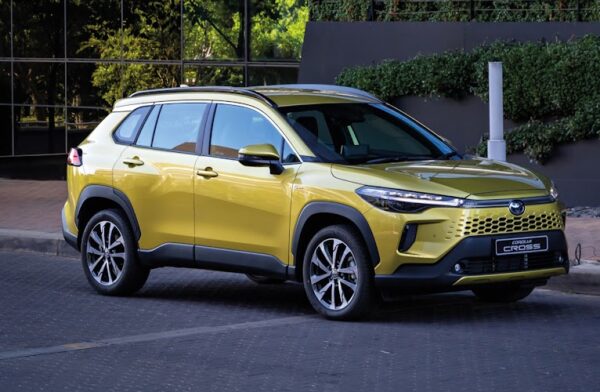
Kirby argues for a technology-agnostic approach, saying that the value proposition for BEVs isn’t yet there for most South Africans, but advocates for Toyota’s multi-pathway transition, including hybrids and plug-in hybrids (PHEVs) as essential bridging technologies.
Adding fuel to the fire is a surge in cheaper imports, primarily from China. Recent data shows Chinese vehicle imports jumped 45% to R36bn in 2025. This has prompted BMW to warn of an “existential” crisis, as local manufacturers struggle to compete with brands that don’t face the same local manufacturing costs.
The EU and China now appear to have worked out a deal, and the bloc may replace high Chinese EV tariffs with voluntary export limits and minimum prices. Chinese automakers that cooperate with the European Commission on price controls could also be exempt from tariffs that are as high as 35%.
Trade, Industry and Competition minister Parks Tau recently confirmed that South Africa is in talks with BYD, Proton, and Suzuki to establish local manufacturing plants. This follows Chery’s takeover of the Nissan plant in Pretoria and BAIC’s commitment to move from Semi Knocked Down (SKD) assembly to full manufacturing.
While Tau aims to “protect current jobs and maintain strategic capacity”, local OEMs are wary. Biene is particularly cynical about “ribbon-cutting ceremonies” for SKD facilities, saying that for every one job created by an SKD plant, a full Completely Knocked Down (CKD) operation, such as VW or BMW, sustains eight.
In the case of CKD, every component is assembled in a local factory. This model has the lowest import duties. With SKD, there are higher shipping costs and import duties, and fewer workers are needed.
The industry is now watching closely as the International Trade Administration Commission of South Africa (ITAC) considers hiking import tariffs to 50% to combat the flood of cheaper, foreign made vehicles.
BMW South Africa CEO Peter van Binsbergen remains bullish on the transition. In 2025, BMW said South Africa was the fastest-growing market for the M performance brand in the world, and Mini’s EV sales surged by 50%.
Van Binsbergen’s solution to the NEV challenge is the Neue Klasse platform, launching in the second half of 2026, which focuses on digitisation and electrification. “The upcoming iX3 and a new X5 will be the vanguards of this era,” he says.
Van Binsbergen adds that manufacturing competitiveness goes beyond the drivetrain. He points to BMW’s ecosystem, where 95% parts availability and predictive AI maintenance should be the norm for South Africa to remain globally relevant.
Toyota, the market leader with a 58% share of all NEVs sold in South Africa, which are mostly hybrids, provides the most pragmatic outlook. Kirby says that South Africa is “prematurely de-industrialising”.
All vehicles manufactured and sold locally, across the board, dropped from 56% in 2006 to 33% now. Kirby proposes a “fiscally neutral” shift in industrial policy. This includes tweaking tax structures, specifically the ad valorem (luxury) tax, which both he and Biene say is outdated and makes locally produced cars artificially expensive.
Toyota’s goal is to see production exceed 720 000 units by 2030, but Kirby warns this is only possible if the government acts within the next year.
“We deal with three- to four-year investment cycles. Decisions made in 2026 will determine if we have a manufacturing base in 2030,” he says.
As for solutions, the consensus from VW, BMW, and Toyota boils down to three pillars:
- Urgent NEV policy finalisation: The industry needs a gazetted policy that incentivises not just BEVs, but the hybrids and PHEVs that South Africans can actually afford to buy today.
- Infrastructure and structural reform: Kirby says Toyota had to build its own dam for water security. For South Africa to compete with countries such as Morocco, which offers energy at €0.02 per kilowatt-hour, the government must stabilise electricity, fix the rail corridors, and lower logistics costs.
- Localising the value chain: Rather than just assembling cars, South Africa must begin localising EV components. Biene is sceptical about the continent’s ability to manufacture battery cells at scale, but there is broad agreement that assembling battery packs and localising motor components is the only way to remain competitive against the Chinese import wave.
South Africa’s automotive industry stands at its most pivotal crossroads in a century. The transition to NEVs is no longer a choice, but a requirement for survival.
Without clear policies and investment in infrastructure, South Africa’s export heavy model will collapse, warn the Big Three. The 2030 finish line is looming; the industry must now pivot from mechanical heritage to electric innovation or risk being left behind.
Originally published in Brainstorm.


Recharged is an independent site that focuses on technology, electric vehicles, and the digital life by Nafisa Akabor. Drawing from her 19-year tech journalism career, expect news, reviews, how-tos, comparisons, and practical uses of tech that are easy to digest. Nafisa is a traveller at heart, having been to 46 countries and counting. Find her edutainment videos covering tech, EVs and travel on TikTok.