
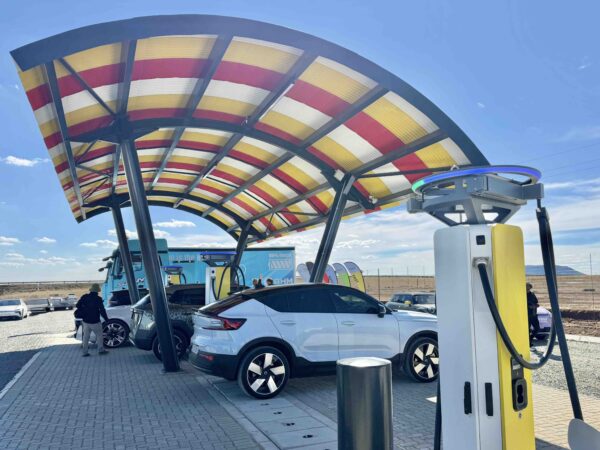
Zero Carbon Charge opened two new solar off-grid EV chargers, strategically positioned along the N3 corridor between Johannesburg and Durban this week.
The expansion was made possible by a R100 million investment by the Development Bank of Southern Africa.
Each site costs R16m to get going, and according to Joubert Roux, co-founder of Charge, the sites are modular and upgradable down the line. The cost of to upgrade to phase 2 would be an additional R9m.
Roux says: “By building off-grid EV charging infrastructure along key transport corridors like the N3, we are reducing dependence on volatile fuel prices while creating greater energy and transport cost stability over the long term. This is about giving consumers and fleet operators the confidence to transition to electric mobility knowing the infrastructure exists to support them.”
He believes the future of transport won’t be powered by electric vehicles alone, but will be powered by renewable energy infrastructure.
Zero Carbon Charge N3 sites
The Charge N3 Roadside site is located at the Reitz Interchange, Exit 107 in the Free State and 181km from Johannesburg, was opened on Tuesday, 19 May while the second Charge N3 Tugela site at the Colenso Winterton Interchange, Exit 207 in KZN, opened on Wednesday, 20 May. This location is 204km from Durban, while both sites are 183km apart from each other.
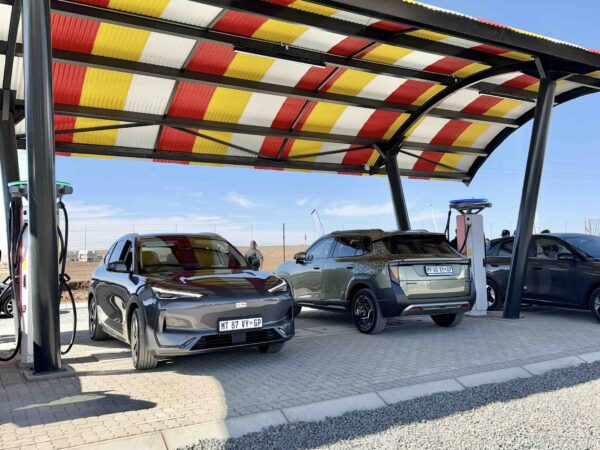
The Charge N3 Roadside location at the Leeukop Padstal on Tuesday was attended by officials from the DBSA, SANY, Zimi, JAC, Wesbank, Geely, Dongfeng, Leapmotors and Volvo.
Both Charge N3 stations are equipped with its next-generation technology that can deliver 50% more charging capacity than the Wolmaransstad pilot site, and at significantly faster charging speeds.
The N3 stations both have 6 DC chargers with a maximum of 360kW outputs and 2 AC chargers with 22kW outputs each, that is suitable for EV and plugin-hybrid vehicles.
The sites can take a typical EV from 20-80% within thirty minutes, depending on the battery size and configuration. Customers can facilitate payment through the Charge app, while the locations offers free WiFi, restrooms and on-site farm stalls.
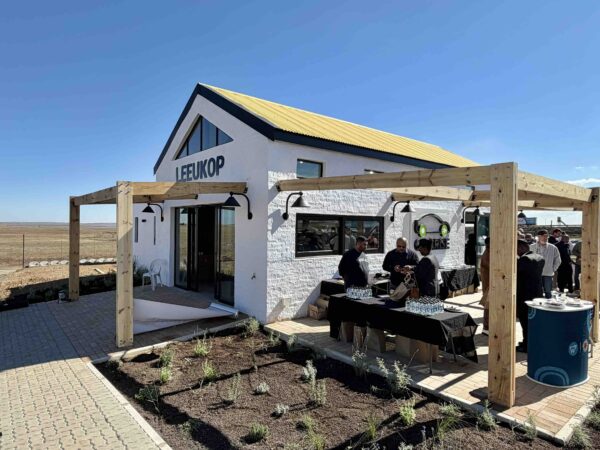
Zero Carbon Charge also shared that charging on its AC chargers for PHEV owners will be free until June 2027.
Business case and rollout plans
Charge says it demonstrated the viability of its model through its pilot site in Wolmaransstad (Charge N12 Wolmaransstad) in the North West province, which has achieved 99% uptime since launching in November 2024.
“The N3 rollout builds on this success, scaling EV charging infrastructure to meet both passenger and commercial fleet demand.”
With the rollout of its nationwide 120 solar off-grid chargers, the company plans to cover urban, rural and freight corridors and depots.
Each site’s hardware requirements include solar panels, backup generators, battery energy storage systems, power cabinets, 6x DC chargers and 2x AC chargers.
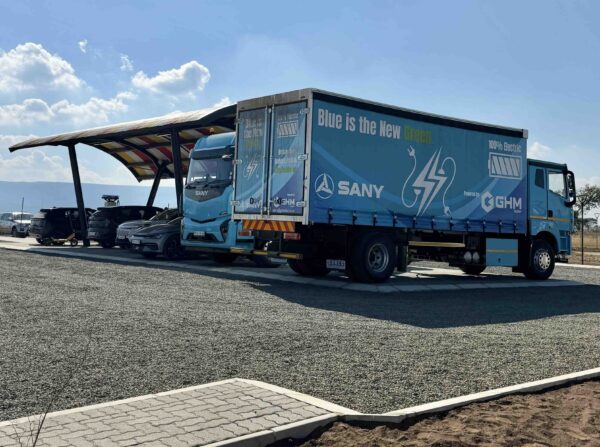
On the software side, it includes a mobile app, an energy dashboard system, and its own site monitoring applications.
Charge aims to have a total of 9 sites up and running before the end of 2026. Additional ones are planned along the N2 in the Western Cape and on N1 from Johannesburg to Bloemfontein.
“South Africa cannot participate in the future of transport without building the renewable energy infrastructure that will power it,” said Roux. “What we are building is bigger than charging stations, it is the foundation for a new independent transport economy that is more resilient and ultimately more affordable for South Africans.”


Recharged is an independent site that focuses on technology, electric vehicles, and the digital life by Nafisa Akabor. Drawing from her 19-year tech journalism career, expect news, reviews, how-tos, comparisons, and practical uses of tech that are easy to digest. Nafisa is a traveller at heart, having been to 46 countries and counting. Find her edutainment videos covering tech, EVs and travel on TikTok.