
The BYD Dolphin Surf appeals because of its small size as a runaround city electric car. It was the cheapest EV in South Africa when it launched in September 2025.
That crown now sits with the Geely E2 Aspire model, when it arrived in April 2026 at R339 900, and undercut the Dolphin Surf by a mere R2 000, which starts at R341 900 for the Comfort model.
However, Recharged received the Dolphin Surf Dynamic model on test, which is priced at R395 900. Comparatively, the equivalent Geely E2 Apex is priced at R389 900.
BYD Dolphin Surf at a glance
- 55kW of power; 135Nm of torque
- Dynamic: 38.8kWh battery; 295km range (WLTP)
- 30-80% charge in 30 minutes
- Apple CarPlay and Android Auto support
- 16-inch wheel; 5 seat capacity
In April 2026, Recharged published a guest post from a family member who has been living with his Dolphin Surf for 6 months, purchased immediately at launch. You can read that contribution here.
1. Who should buy this car?
It is aimed at those who want to get from A to B without worrying about the rising fuel costs, which makes it a great choice for couples, small or young families. a one person household, or small business owners who do a lot of driving within the area they operate. It is also a great option as a secondary car if you have a larger paid-off vehicle, given its price point.
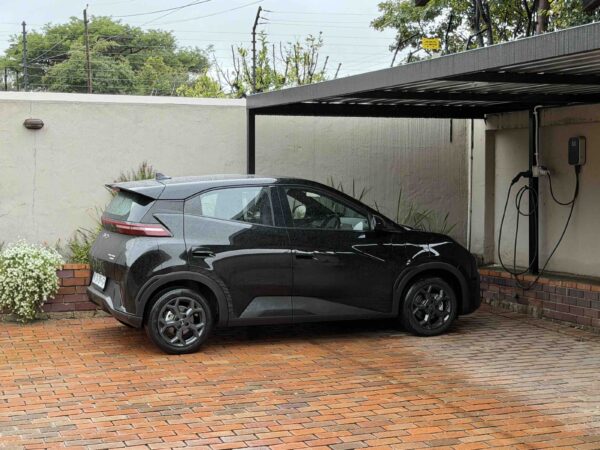
It sometimes makes sense for households where there are lots of extra murals and activities for kids, which should help parents with the additional trips every week, apart from basic school drop offs.
2. Range Reality
As mentioned, the BYD Dolphin Surf is a small runaround car and the Dynamic model I received on test has a 38.8kWh battery. When it arrived on test, it came with a 90% battery and showed a remaining 267km of range. When I took it for a recharge to 100% the next day, it reached 312km of range, but only after I put it on Eco mode.
So it’s safe to say you will get ±300km from a single charge, based on your driving style and driving mode or using the air-conditioner. The main reason for buying the Dolphin Surf is not for its massive range or battery, and this context needs to be kept in mind for a car of this size, positioning and price point.
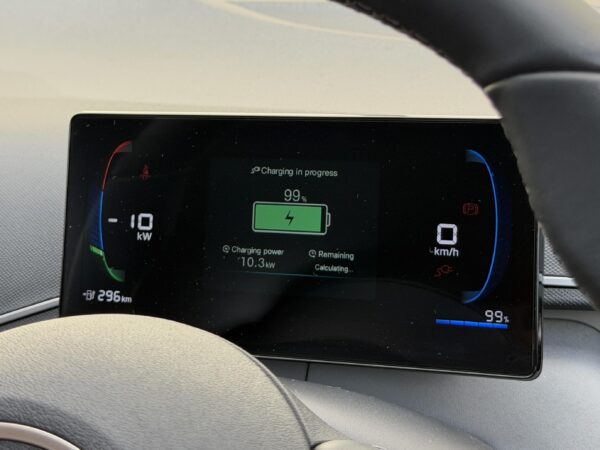
It has a a regenerative braking option that is standard and high, which you can set to make the most of a recharge while you’re driving. Along with this setting, it makes sense to drive the car primarily in Eco Mode because the point of it is to be economical.
I took the car from Johannesburg North to Van Gaalen Trails in the North West over a weekend. It was a 59km journey from my house, according to the odometer. I started with 312km of range at 98% as per the vehicle, and ended up on 255km of range at 83% when I reached my destination. It used 57km, which was quite close to what the battery showed, unlike my experience on the Lexus RZ where the kms was extremely high for a shorter distance. This is understandable as that vehicle is large.
3. Home vs. Public Charging
The Dolphin Surf Dynamic model supports a maximum of 40kW charging speeds, whereas the Comfort supports 30kW. BYD says it will charge from 30-80% in 30 minutes.
The vehicle comes with a 3-pin plug for home charging, and while they had a launch offer when it was financed, there was an inclusion of a home wallbox charger. I can’t be sure if this is still available in South Africa but if you get a 3-pin cable charger, it should suffice for trickle charging at home as needed.
It may also work if you live in a complex and have access to an outdoor wall socket, then you won’t need to worry about a wallbox charger, and as mentioned before, you would need permission in a town house or if you are renting. It makes no sense to get into that kind of expense if you don’t own your home, in my opinion.
I work from home and thus don’t have a daily commute, so I wasn’t necessarily driving it on the daily. This means I didn’t need to trickle charge at home to have it topped up. However, I did end up charging it publicly and the good thing is that it didn’t take long.
The car has settings like smart charging and scheduled charging where you can set a start and end time if you leave it plugged in, i.e., to charge while you’re asleep etc.
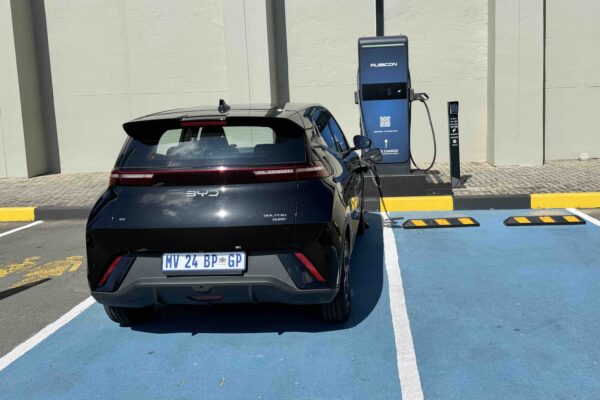
When using a 200kW charger at Mall of Africa, I found that it charged after I locked the vehicle but it didn’t charge when the car was unlocked, which was a weird quirk. I only discovered this accidentally as I was in a hurry and decided to try charging it again and locked the car and walk away regardless if it charged or not.
Public Charging (rate varies per charger
- Rubicon Charger – R111.03 for 13.48kWh = R8.24/kWh (71-99% in 48 minutes)
- Rubicon Charger – R39.56 for 4.80kWh = R8.24/kWh (69-76% in 44 minutes)
- BMW Charger – R119.19 for 14.68kWh = R8.12/kWh (61-93% in 39 minutes)
Home Charging at R2.69/kWh (my nett Eskom rate)
- R36.26 for 13.48kWh
- R12.91 for 4.80kWh
- R39.39 for 14.68kWh
The above home charging rate is related to my current April 2026 Eskom nett rate per kWh, excluding other admin and network fees tied to being an Eskom customer, that I would have to pay regardless of charging an EV at home. Home charging rates are per kWh, while public ones are based on speed.
You pay different rates on GridCars, Rubicon and dealerships like BMW; and then it depends which charge card you are issued. Mine is from GridCars and why I pay more using a Rubicon charger.
Another payment to be aware of, and as a paying customer of Naked, I like checking how much it would to insure a car I’m testing. The BYD Dolphin Surf 2026 Dynamic model comes to R793 per month, which I got from the app.
4. Living with the tech
The Dolphin Surf has keyless entry. I love that my phone paired easily to CarPlay on the first go; it supports Android Auto as well – both wireless. What I found a bit buggy was that when I got into my car, it would intermittently connect automatically. Sometimes I had to manually go in to connect, which was a bit frustrating when I needed to leave asap to an event and had to fiddle with it.
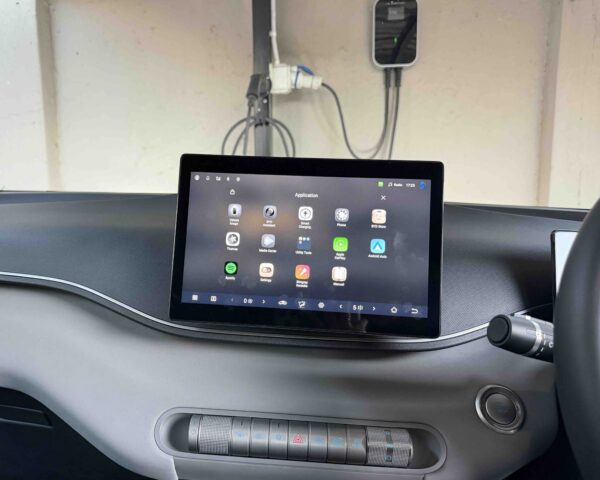
It also supports wireless charging if your phone supports it, but I am not a fan of that tech as I find it can overheat the device when in the sun, so I placed my phone screen down to avoid it from charging.
The car very conveniently has both USB-A and USB-C fast chargers, which is preferred over wireless charging. Interestingly, it supports an SD card reader. That’s great if you want to load songs via MP3 and keep it permanently in your car instead of streaming or playing from a smartphone. It’s a great battery-saving option and if you don’t pay for streaming services.
On this topic, I love the granular volume controls; you can control media, phone, voice and broadcast volumes separately. It’s great if you’re listing to music, then Google Maps doesn’t overtake the volume just to tell you to turn right.
It has 12V sockets that support 120W charging if you want to plug other things to charge.
When it comes to the infotainment screen, naturally it will attract fingerprints. But at 10.1-inch in size, it’s decent for the car and it rotates horizontally or vertically; something I never used. The driver instrument panel is 7-inch and in colour, which is a nice touch.
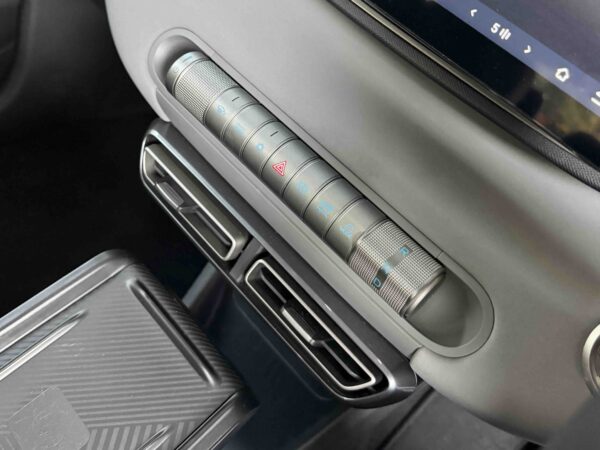
There are physical buttons for things like fan speed, air conditioner, a de-mister for the front windscreen, and to access driving modes, while the gear selector is at the end. It’s a bit of an adjustment using it, coming from a traditional car with a gear lever.
Interestingly, a feature that was raved about at launch, the karaoke, for some reason I couldn’t get it to work. I think it could be related to the internet connection in the vehicle. Not that anyone is buying a car for its karaoke features.
5. Accessing Driving data
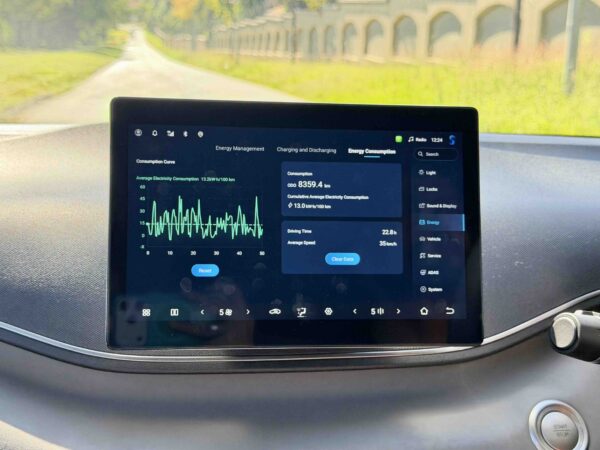
The vehicle shows averages when it comes to your consumption, and also shows the last 50km. In my case, it was a cumulative figure of 13kWh/100km based on everyone who drove the vehicle as part of the test fleet. And a more accurate description would have been the last 50km that I did, which was 13.4kWh/100km.
The graph shows an average but I would have preferred more detailed stats, like being able to go into trip history. I have not had access to the app, but not without trying; there is one for South African owners to use. I couldn’t pair the car to an app I found in the App Store, I think the dealership would need to help once you buy it.
I didn’t find the driving data on the car super useful for the period I drove it, as I don’t want averages. I want solid data for each trip. Nevertheless, if this is important to you, check with BYD if the app shows this info. I know most people don’t care about driving data but if this is important to you, check with BYD.
Regarding the app, I am aware that it can be used for things like unlocking and locking it remotely; checking your battery status and range; and to choose the temperature ahead of getting into the car. It offers diagnostics and the standard alerts for when it’s due for a service. These nifty features are expected from a tech-forward brand like BYD.
6. City driving vs. open road
City Driving: The Dolphin Surf is an urban car, meant for quick commutes and running around; your stop start traffic scenario. Thus it performs best in this instance. And with 55kW of power, you don’t need anything more powerful for zipping around in the city, making it a no brainer if this ticks the boxes for you.
Open Road: It then brings me to my next point that it’s not exactly meant for longer highway commutes. It can be used for that, sure, but it won’t be the optimal for comfort. Top speed is capped at 130km/h and in the Dynamic model, BYD says it goes from 0-100km/h in 15.5 seconds. So overtaking may be a bit frustrating on the highway as well.
7. Long-term view
Load-shedding readiness: Despite this being an entry-level EV with a modest 38.8kWh battery, it supports vehicle-to-load (V2L), which means it can power your home appliances when you don’t have power. BYD supplies cables for this, it is an extension cable that connects to the charging port with 3 pin plugs on it, similar to what I tested on the BYD Seal. I am not sure if it is free with the vehicle or needs to be purchased.
Maintenance: The Dolphin Surf has a standard 3 year/100 000km service and vehicle warranty; the battery has an 8 year/200 000km warranty; and the drive unit has a 5 year/100 000km warranty, according to their website.
8. Recharged verdict
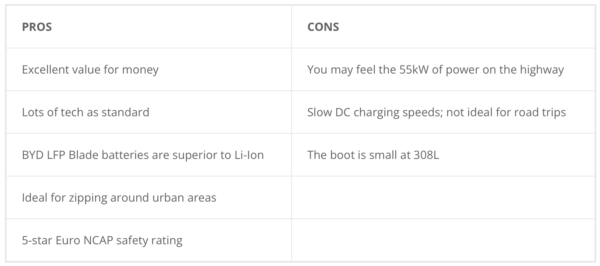
Buy it if: You want a cheaper runaround EV, have access to great tech, and for the safety rating.
Skip it if: You commute on the highway frequently, need quick stops to recharge or boot space is important.


Recharged is an independent site that focuses on technology, electric vehicles, and the digital life by Nafisa Akabor. Drawing from her 19-year tech journalism career, expect news, reviews, how-tos, comparisons, and practical uses of tech that are easy to digest. Nafisa is a traveller at heart, having been to 46 countries and counting. Find her edutainment videos covering tech, EVs and travel on TikTok.