
At LG Smart Park in Changwon, the robots are only part of the story: digital twins, predictive analytics, and autonomous logistics work together to keep a complex factory flexible.
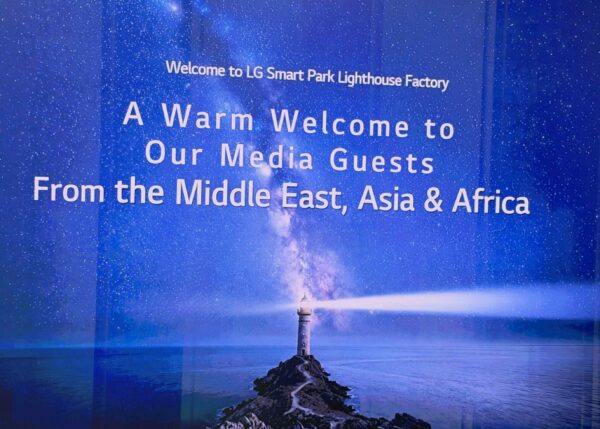
Recharged visited this World Economic Forum Lighthouse Factory as part of the LG Home Appliance Solution press tour, where no photography was allowed, so the lasting impression came from watching the system rather than collecting pictures.
A FACTORY DESIGNED TO THINK AHEAD
LG Smart Park is a home appliance manufacturing complex in Changwon, South Korea. The World Economic Forum named it a Lighthouse Factory in 2022, recognising its use of Fourth Industrial Revolution technologies such as artificial intelligence, big data, connected sensors, and robotics in production.
It can manufacture up to 58 different appliance models on a single production line.
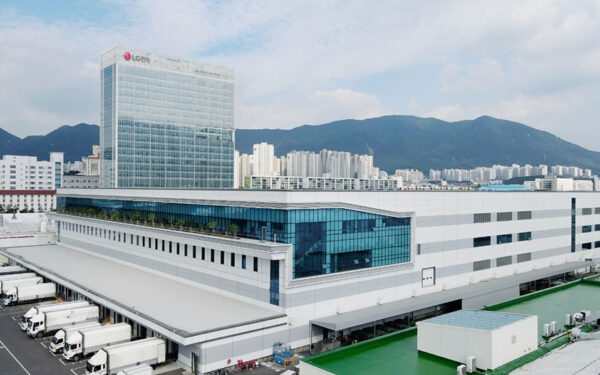
The visit offered a view of manufacturing on how a network of systems works together. The factory collects data from equipment and production lines, uses it to anticipate potential issues, and coordinates the movement of components to the places they’re needed.
The technologies in place helps LG respond before a small disruption stops production.
THE DIGITAL TWIN: A VIRTUAL FACTORY WITH A SHORT HEAD START
One of the technologies used is the digital twin: a virtual representation of production that can simulate what’s happening on the factory floor.
LG says it analyses production data every 30 seconds and can flag issues that may arise within roughly the next 10 minutes. That gives teams a chance to respond to possible bottlenecks, including a shortage of materials at a line, before production is affected.
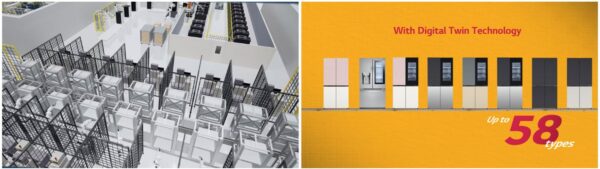
It’s like a live rehearsal. If the virtual model suggests that a particular part may not reach a station in time, staff can investigate and act while the real line is still moving. The digital twin doesn’t replace the people running the factory; it gives a view of what may come next.
SMART LOGISTICS ABOVE AND AROUND THE LINE
A factory producing various models needs a steady flow of different parts. At LG Smart Park, logistics move in three dimensions. Overhead conveyors transport refrigerator components between floors and production lines, while intelligent warehouses monitor inventory and help manage supplies in real time.
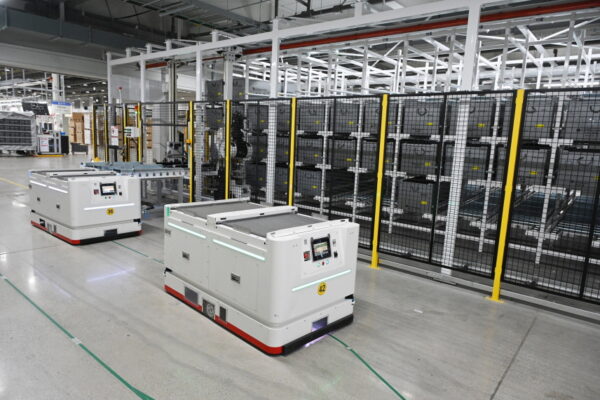
On the floor, Autonomous Mobile Robots (AMRs) move materials through the facility. Cameras, radar, and LiDAR help them recognise their surroundings and navigate around people and obstacles. Mobile Manipulators pair a robotic arm with an AMR, allowing them to transport parts and perform tasks such as assembly or inspection.
It’s an arrangement built around coordination, not simply replacing every human task with a machine. Robots can take on repetitive or physically demanding work, while staff can focus on overseeing production, checking quality, and responding when the process needs attention.
LG says its three-dimensional logistics system uses 30% less warehouse space than a conventional arrangement and has shortened the time needed for hourly materials transport by 25%. These are operational gains, but also speak to the challenge of a modern factory: getting the right part to the right place without wasting floor space or interrupting the line.
PREDICTIVE MAINTENANCE AND MACHINE VISION
Sensors throughout the factory gather information about equipment and production. LG’s Plug-in for Intelligent Equipment (PIE) system uses real-time monitoring and machine-learning analysis to support predictive maintenance: spotting patterns that may indicate a machine needs attention before it fails.
An unexpected stop can ripple through a connected line. Instead of waiting for equipment to break down, maintenance teams can use data to identify abnormal signals and plan an intervention. LG has also described using this approach to reduce material loss in vacuum-forming processes.
Machine vision adds another layer of quality control. LG’s MAVIN system uses machine-learning-based visual inspection to examine products and identify possible defects. The aim is to make checks faster and more consistent, while helping factory teams trace problems back to their source.
ROBOTS DO THE HEAVY AND REPETITIVE WORK
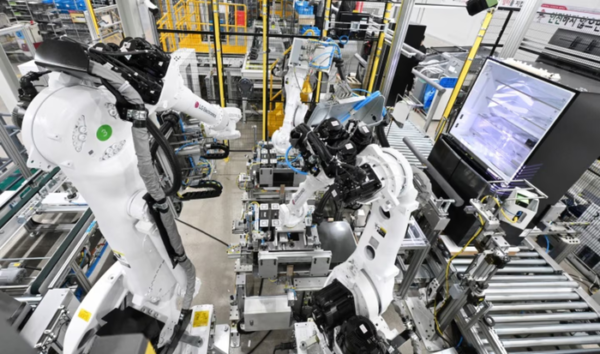
Robotic arms handle demanding jobs such as lifting and attaching refrigerator doors, welding, and fastening screws. With 3D vision recognition, robots can complete precise tasks that require careful alignment.
The human role shifts towards monitoring, control, and product completion, where judgement and attention to detail remain essential.
That balance goes beyond the “people versus robots” story. Automation can reduce repetitive physical work and improve consistency, but the system still relies on people who can interpret results, manage exceptions, and make sure the product meets quality expectations.
WHAT “LIGHTHOUSE FACTORY” REALLY MEANS
A Lighthouse Factory is meant to show how technologies associated with the Fourth Industrial Revolution can be used together in real manufacturing.
At LG Smart Park, that means connecting data, production planning, digital simulation, logistics, robotics, and quality checks rather than treating each as a separate upgrade.
For local businesses that can learn anything, it’s not that every factory needs a fleet of robots or a digital twin tomorrow. It’s that better visibility can make production more responsive: knowing where materials are, identifying equipment issues earlier, and using data to improve quality before defects multiply.
NO PHOTOS ALLOWED
As is the case with every factory visit, we weren’t allowed to take pictures at LG Smart Park. It made it difficult to document the visit in the usual way, but it also put the focus on how the factory operates.
The striking idea wasn’t a single robot or display; it was the way information moves alongside components, guiding decisions across the production process.
LG Smart Park demonstrates that smart manufacturing means greater perception: detecting issues early, adapting to varied products, and equipping staff to maintain quality and output. Its seamless coordination makes “smart” tangible.
A visit to LG Smart Park in Changwon, South Korea


Recharged is an independent site that focuses on technology, electric vehicles, and the digital life by Nafisa Akabor. Drawing from her 19-year tech journalism career, expect news, reviews, how-tos, comparisons, and practical uses of tech that are easy to digest. Nafisa is a traveller at heart, having been to 46 countries and counting. Find her edutainment videos covering tech, EVs and travel on TikTok.