

In today’s column, I welcome the year 2025; the starting point of a new generation, Generation Beta. A generation that is poised to redefine life, longevity and retirement in ways we can only begin to imagine, according to a recent research study.

It’s okay if you haven’t heard of Generation Beta before today and were probably still trying to figure out what a Millennial was.
But we’re a long way past that now, Generation Beta is categorised by those born between 2025 and 2039, following on from their predecessors Gen Alpha. It;s hard to keep up with generational tags these days but they seem essential for pinpointing a defining moment in history.
Socially, I don’t agree with generational labels which are often misleading and largely age-bashing. But as a marker of advancements in technology, I’ll accept it.
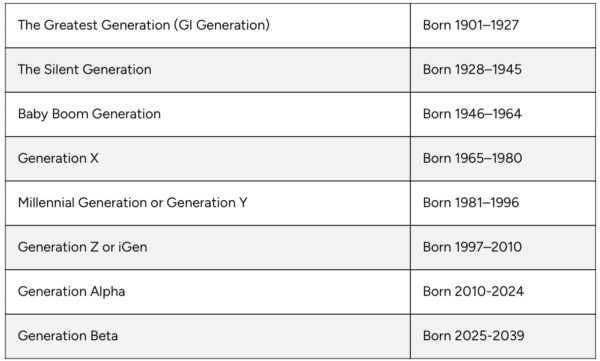
Generation Alpha (2010-2024) was largely considered the iPad generation constantly bashed for excessive ‘screen time’. But I want to walk through the future of Beta babies, referred to as the AI generation.
These kids will be growing up during the anticipated rapid advancement of AI, virtual reality, augmented reality & intelligence, and even the outsized artificial superintelligence (ASI). Wish we were talking about Hopscotch, Lego and Play-doh instead?
Beta babies will experience all things futuristic and beyond. They will be immersed in smart devices and artificial intelligence like no generation before them, with technology not just as a tool, but as a problem-solver in their daily lives.
But is that what we really want? Should we be concerned about the decline of human interaction and potential feelings of isolation? What will Millennial and Gen Z parents do?
If, like me, you have tried to seamlessly integrate technology in your kids’ life up until now, you may want to start considering a different approach when it comes to raising children today, striking a balance between tech immersion and conscious disconnect.
It’s no wonder some brands are already rolling out phones with no internet connection.
In recent months we have seen GPT-like models and chatbots become much more affordable and accessible, leading to their widespread adoption.
ChatGPT for instance has changed the game across industries, revolutionising the way both young and old interact with technology.
The simplicity and convenience of using AI to generate anything you ask might discourage most from forming their own ideas and doing independent research, resulting in a lack of creativity and originality. Have we considered the impact it has on education and critical thinking, and other essential foundational skills?
Beta babies are still seeing the world in black and white but their childhood and future may not be as straightforward to navigate.
As parents to Gen Beta, we have our work cut out for us to ensure we raise smart, curious, and well-balanced individuals that aren’t swayed by algorithms and biased large language models.
They’re still sleeping for 16-19 hours of the day but it isn’t too early to start thinking about how we want Beta babies to experience the world when they wake.
According to the Foundation Stage Forum, to fully prepare children aged 3-5 for a future with AI, here are some key areas to consider:
1. Creative problem-solving: Encourage children to approach challenges with creativity and flexibility. This might involve engaging in imaginative play, encouraging curiosity, and providing open-ended activities that promote problem-solving skills.
2. Computational thinking: Introduce simple computational concepts such as sequencing, patterns, and cause-and-effect relationships. This can be done through activities that involve sorting, matching, and organising objects or steps.
3. Digital literacy: Teach children basic digital skills such as navigating user interfaces, using age-appropriate apps or software, and understanding the concept of online safety. Emphasise the importance of responsible technology use and guide them on ethical behaviour online.
4. Emotional intelligence: Help children develop empathy, self-awareness, and social skills. AI will not replace human interactions, so nurture emotional intelligence.


Recharged is an independent site that focuses on technology, electric vehicles, and the digital life by Nafisa Akabor. Drawing from her 19-year tech journalism career, expect news, reviews, how-tos, comparisons, and practical uses of tech that are easy to digest. Nafisa is a traveller at heart, having been to 46 countries and counting. Find her edutainment videos covering tech, EVs and travel on TikTok.



